

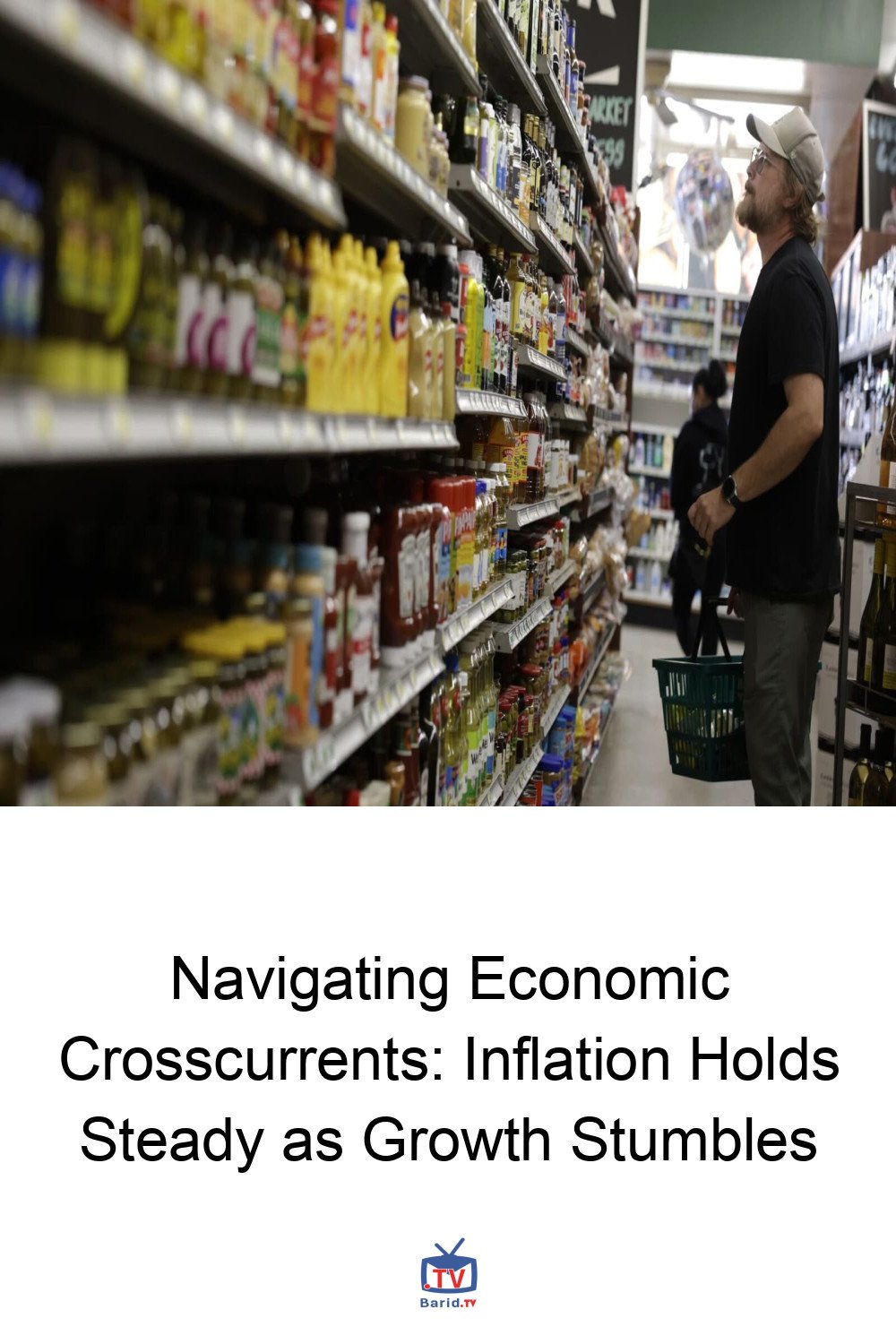
The latest economic data paints a complex picture for the U.S. economy, with inflation holding firm at expected levels while broader growth shows signs of deceleration. Fresh figures released Thursday reveal that the Federal Reserve’s preferred inflation gauge, the Personal Consumption Expenditures (PCE) price index, met forecasts in April, yet other indicators suggest a cooling economy that could test policymakers’ resolve.
Inflation’s Persistent Grip: A Closer Look at PCE
April’s data from the Commerce Department indicates that core PCE prices, which strip out volatile food and energy costs, rose by 0.2% for the month and maintained an annual rate of 3.3%. These figures align precisely with economists’ expectations. While the headline PCE index saw a monthly increase of 0.4% and an annual rise of 3.8%, these readings were slightly below the 0.5% and 3.8% anticipated by Dow Jones-surveyed economists. The modest monthly increases offer a glimmer of hope that the recent surge in prices may be beginning to moderate.
The Federal Reserve closely monitors the PCE index, particularly its core component, as a key barometer for long-term inflation trends. This preference stems from core PCE’s ability to filter out short-term price fluctuations in essential goods like gasoline and groceries, providing a clearer signal for monetary policy decisions.
Underlying Price Pressures
Digging deeper into the inflation landscape, goods prices saw a 0.7% jump in April, largely propelled by a significant 5.5% surge in gasoline costs. Services prices also climbed by 0.3%, with notable accelerations in housing and utilities (0.6%) and food services and accommodations (0.5%). Housing prices, in particular, recorded a 0.5% increase, marking their largest monthly gain since at least January 2025, indicating persistent upward pressure in this critical sector.
Economic Growth Stumbles in Q1
Beyond inflation, other economic reports delivered a mixed bag. The U.S. economy’s growth rate in the first quarter was revised downwards significantly. Gross Domestic Product (GDP) accelerated at an annualized rate of just 1.6%, a notable drop from the initial estimate of 2%. This revision was primarily attributed to downward adjustments in consumer spending and business investment, signaling a softer economic footing than initially perceived.
Consumer Behavior and Labor Market Signals
Despite the overall slowdown in Q1 GDP, consumer spending showed resilience in April, increasing by 0.5% and meeting forecasts. However, this spending surge appears to be fueled by a concerning trend: personal income remained flat, and the personal savings rate plummeted to 2.6%, its lowest level since June 2022. This suggests consumers are dipping into savings to maintain spending habits, a potentially unsustainable path.
The labor market offered further insights, with initial jobless claims for the week ending May 23 rising to 215,000, slightly above forecasts. Conversely, orders for durable goods—long-lasting items like aircraft and appliances—soared by an impressive 7.9% in April, far exceeding the 3.5% estimate. Excluding the volatile transportation sector, new orders still saw a healthy 1.1% increase, indicating underlying strength in certain industrial segments.
The Fed’s Dilemma: Rates on Hold?
The confluence of steady inflation, slowing growth, and shifting consumer behavior presents a complex challenge for the Federal Reserve. While the latest inflation readings offer some encouragement that underlying pressures might be easing, they are unlikely to sway market expectations for immediate policy changes. Traders largely anticipate the Fed to maintain its current stance until at least late 2026, with some even pricing in the possibility of a rate hike early next year, a stark contrast to earlier hopes for cuts.
Inflation’s journey back to the central bank’s 2% target has been complicated by geopolitical events, such as the Iran war, and the impact of tariffs. Policymakers are increasingly emphasizing the inflation risk, even as signs point to a stabilizing labor market. Intriguingly, new Fed Chair Kevin Warsh has voiced a belief that the benchmark rate could be lowered, a view that may face considerable opposition from the Federal Open Market Committee.
As the economy navigates these crosscurrents, the Fed’s path forward remains uncertain, balancing the need to tame inflation with the imperative to support sustainable economic growth.
For more details, visit our website.
Source: Link