

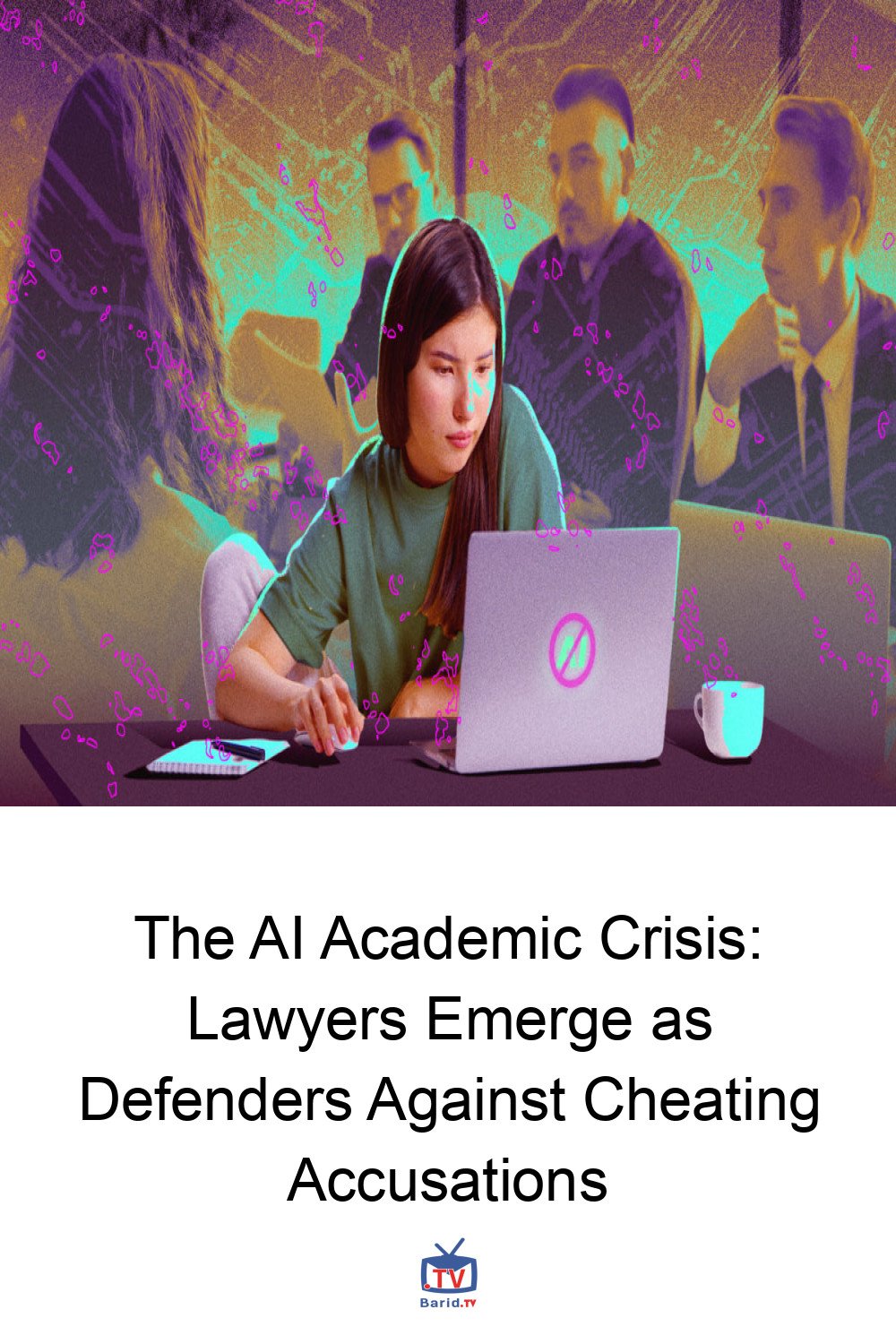
The AI Academic Crisis: Lawyers Emerge as Defenders Against Cheating Accusations
In an era increasingly shaped by artificial intelligence, a new and unexpected legal battleground has emerged: the hallowed halls of academia. As AI tools become more sophisticated and accessible, so too do accusations of AI-assisted cheating, thrusting terrified students into a desperate scramble for their academic and professional futures. This burgeoning crisis has given rise to a specialized legal ‘cottage industry’ – education law firms dedicated to defending students caught in the crosshairs of AI integrity allegations.
The Dire Stakes of an AI Accusation
For many college students, an accusation of using AI to cheat isn’t just a minor setback; it’s a potential career implosion. Attorney Adrienne Hahn, founder of Hahn Legal Group, APC, frequently encounters students who are “petrified and desperate.” The consequences of an academic integrity violation can be devastating: semester-long suspensions, marks on permanent records, and the chilling prospect of being disqualified from graduate schools, future employment, and professional licensing boards. As Hahn emphasizes, “Any of those consequences follow the student from that period on, unless you negotiate that away, somehow.”
While precise figures remain elusive, the sheer volume of inquiries at education law firms signals a significant and growing problem. These firms serve a diverse clientele, from students at elite universities with ample resources to those from modest backgrounds attending state colleges, often reliant on scholarships. For the latter, the fallout can be particularly catastrophic. What unites them all is the profound fear that an AI cheating accusation could dismantle their future before it even begins.
Navigating the Labyrinth: Truth, Policy, and Due Process
Unraveling the Accusations
Hahn’s firm, representing students across California, has seen a dramatic surge in cases over the past two years. A crucial aspect of their work involves uncovering the truth, which is often more complex than a simple yes or no. Many students accused of cheating genuinely did not use AI, or they inadvertently violated poorly communicated institutional policies. Others admit to AI use but present compelling extenuating circumstances, such as a student Hahn represented who turned to AI during a period of intense personal distress, juggling multiple jobs while both parents faced health crises. In such cases, skilled legal advocacy can lead to more sympathetic outcomes.
However, the process isn’t always straightforward. Hahn notes the challenge of clients withholding information: “I can’t give you the right advice unless I know the truth… I still have clients who lie to me. That’s a waste of their money and time.” The cost of legal representation, ranging from a few thousand to tens of thousands of dollars, underscores the gravity of these situations.
The Uneven Playing Field in Academic Hearings
Thomas Terrill, director of LLF National Law Firm’s National Education Defense Practice Group, reports that AI-related academic integrity violations now constitute a substantial portion of their caseload, with inquiries spiking predictably during midterm and final exam periods. While lawyers cannot directly represent students in administrative hearings, their expertise is invaluable in “leveling” what Terrill describes as an uneven playing field.
Many students find themselves in the unenviable position of having to prove their innocence, rather than the institution bearing a clear burden of proof. Investigations can be rushed, access to evidence limited, and judgments often based on a fundamental misunderstanding of how AI tools function. Andrew Miltenberg, senior litigation partner at Nesenoff & Miltenberg, critiques the “faculty fiefdom” dynamic, where professors wield significant power in making and adjudicating these charges. He further characterizes the AI detection programs relied upon by institutions as “primitive” and alarmingly prone to false positives, exacerbating the risk of wrongful accusations.
Building a Robust Defense in the Age of AI
Once accused, a student’s immediate need is a clear, strategic defense. LLF National Law Firm advises clients to meticulously gather evidence of their authorship and work process. This can include digital breadcrumbs like Google Docs or Microsoft Word history, complete with timestamps, as well as outlines, notes, and research materials. Such documentation can be critical in demonstrating genuine effort and independent thought, countering the often-fallible conclusions of AI detection software.
In this rapidly evolving landscape, education lawyers are not just defending students; they are advocating for fairness, due process, and a nuanced understanding of AI’s role in education. Their work is becoming increasingly vital in ensuring that a student’s future isn’t unjustly derailed by the complexities of modern technology and academic policy.
For more details, visit our website.
Source: Link