
A new dawn is breaking in America’s energy landscape, heralded by the successful criticality of Antares’ Mark-0 microreactor in June. This achievement, a key milestone in a Trump administration pilot program, signals the nation’s entry into a potential “second nuclear age.” Yet, as the insatiable energy demands of the burgeoning AI industry drive a nuclear renaissance, a critical vulnerability looms large: a woefully inadequate domestic nuclear fuel supply chain.
The Spark of a New Nuclear Age
The U.S. is witnessing an unprecedented surge in interest and investment in nuclear power. From next-generation light-water reactors to innovative small modular reactors (SMRs) and microreactors, developers are racing to meet future electricity needs. This momentum is fueled not just by climate goals but significantly by the AI boom, with hyperscalers actively signing contracts for new nuclear capacity. Major projects are underway, including Bill Gates-backed TerraPower breaking ground in Wyoming for the first commercial nuclear plant in 13 years, and Kairos Power building a demonstration plant in Tennessee. Even previously shuttered facilities, like Pennsylvania’s Three Mile Island, are being reborn as clean energy centers to power tech giants like Microsoft.
The White House has set an ambitious target: to quadruple U.S. nuclear capacity from 100 gigawatts to 400 gigawatts by 2050, enough to power nearly 300 million homes. This vision, while challenging, underscores the anticipated exponential growth in electricity demand, projected to surge 50% to 80% by mid-century.
America’s Achilles’ Heel: A Fragile Fuel Supply Chain
Despite this promising renaissance, the foundation is shaky. Almost the entire North American nuclear fuel supply chain—from uranium mining to fuel-pellet fabrication—is critically underdeveloped. A staggering 98% of the uranium consumed by U.S. reactors is imported. This reliance becomes particularly precarious with Congress’s impending ban on imports of enriched uranium from Russia by 2028, a nation that currently dominates the global enrichment market.
“The nuclear industry is in a total renaissance,” states Christo Liebenberg, co-founder and president of LIS Technologies, a laser uranium enrichment startup. “But it doesn’t matter what type of reactor; they all need nuclear fuel.” He emphasizes the ripple effect: “It trickles down to the whole fuel supply chain—all the way from uranium mining. I think [hyperscalers] need to jump in very urgently because the reactors need fuel. It’s for their own good to start developing that supply chain.”
While AI hyperscalers are eager to secure clean power, their investment has yet to extend to the upstream mining and refining crucial for nuclear fuel production.
From Ore to Energy: A Complex Journey
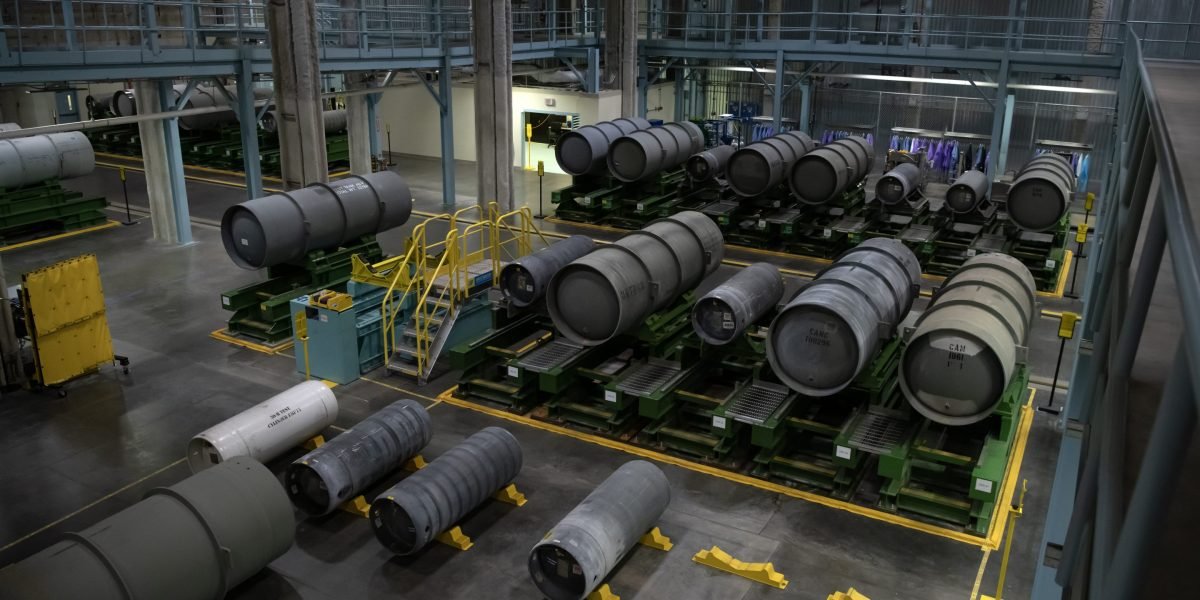
The nuclear fuel cycle is intricate: uranium ore is mined and milled into yellowcake concentrate. This yellowcake undergoes a conversion process into a gas for enrichment, which increases the concentration of the fissile uranium-235 isotope. A subsequent deconversion step returns the enriched uranium to a solid state, ready for fabrication into fuel pellets. Beyond this, significant advancements are still needed in nuclear waste disposal and fuel recycling to close the loop.
The Uranium Dilemma: Mothballed Mines and Long Lead Times
The alarm bells are already ringing from Canada-based Cameco, the top North American uranium miner. President Grant Isaac warns that substantial investment and long-term contracts are desperately needed to ramp up mining rates. Currently, some of Cameco’s mines remain mothballed due to a lack of buyers willing to commit to future supply.
“I’m getting increasingly worried about it,” Isaac told Fortune. “As the demand is going up, we need to embrace the notion of long-lead items and apply that to uranium as well, because we’re just not able to explore for, find, permit, construct, and commission mines in the timeframe that you build a nuclear reactor.” Bringing a new mine online can take 15 to 20 years, a timeline that starkly contrasts with the accelerated pace of reactor development. If these timelines don’t align, the inevitable consequence will be soaring uranium prices, ultimately impacting electricity costs.
Despite the excitement around new reactors, Isaac notes, “The demand that’s building for new reactors and all the excitement hasn’t found its way fully upstream to uranium.” He anticipates more attention on this critical issue in the coming year or two. Currently, about 30% of Cameco’s uranium mining capacity, particularly in the United States, is shut in.
Conversion and Enrichment: Bottlenecks Persist
The challenges extend beyond mining. Uranium conversion prices have rebounded from historic lows, yet many operations, including those run by Cameco, remain underutilized. “The conversion price had gotten so low over the years that production was shut in, and we still have a situation where not all of the Western conversion capability is up and running,” Isaac explained.
Enrichment, a highly specialized process, also faces significant hurdles. While several startups, including LIS Technologies, are aiming to build U.S. enrichment plants, North America currently boasts only one active commercial enricher: London-based Urenco’s National Enrichment Facility in Eunice, New Mexico. This facility supplies approximately one-third of U.S. enrichment demand, though Urenco announced plans in June to expand its capacity by nearly 50% by 2036.
Forging a Resilient Future: The Imperative for Domestic Strength
America stands at a crossroads. The promise of a clean, abundant energy future, powered by advanced nuclear technology and driven by the demands of AI, is within reach. However, realizing this vision hinges on a robust, resilient, and domestically controlled nuclear fuel supply chain. Urgent and coordinated investment across mining, conversion, and enrichment is not merely an economic opportunity but a strategic imperative for national energy security and technological leadership. The race to rebuild this vital infrastructure is on, and the stakes could not be higher.
For more details, visit our website.
Source: Link