
The promise was a beacon of economic optimism: a sweeping tax reform, dubbed the “One Big Beautiful Bill Act” (OBBBA), designed to inject billions into American households through historic tax refunds and ignite a consumer spending boom. For a brief period this winter, the vision seemed within reach. But then, the geopolitical landscape shifted dramatically, and bombs began to fall on Iran.
Wall Street’s Sobering Verdict: Refunds Drowned by Oil Prices
Now, the financial titans of Wall Street have delivered their unequivocal assessment. Leading economic research teams from Goldman Sachs and Morgan Stanley have meticulously crunched the numbers, arriving at a stark conclusion: the ripple effect of the Iran conflict on global oil prices has all but nullified the anticipated consumer tax windfall. For many lower-income Americans, the ledger may have even tipped into the red.
The Grand Promise of the OBBBA
When Congress enacted the OBBBA last year, economists were genuinely enthusiastic. The legislation, retroactively applied to the 2025 tax year, was comprehensive, featuring no taxes on tips and overtime, an enhanced child tax credit, a higher standard deduction, an expanded SALT deduction, and a new senior deduction. Even the Committee for a Responsible Federal Budget, a nonpartisan watchdog typically wary of deficit-increasing measures, conceded that the bill would deliver a “sugar high” to the economy, spurring short-term growth.
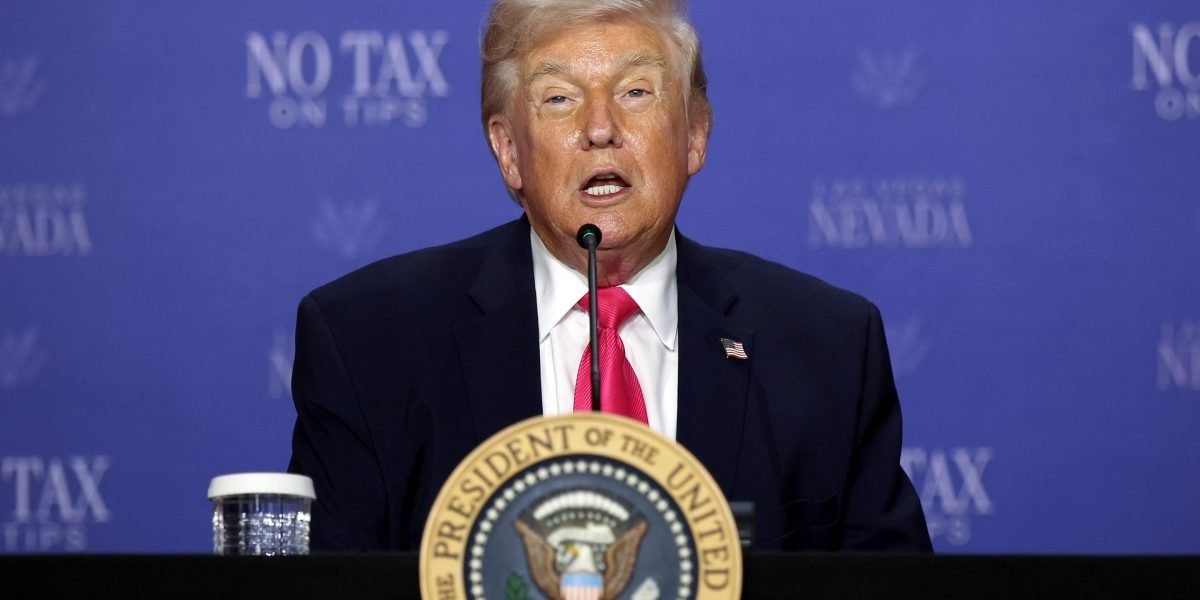
In late 2025 and early 2026, the White House, led by then-President Trump, launched an aggressive promotional blitz for the refund season. Trump himself took to Truth Social in February, proclaiming that refunds would be “substantially greater than ever before,” with some estimates suggesting “over 20% will be returned to the taxpayer.” His playful advice: “Don’t spend all of this money in one place!” The administration formally projected an average refund increase of $1,000 or more compared to 2025, with the House Ways and Means Committee citing a Piper Sandler analysis that forecast $91 billion in total refund growth. Early projections for total consumer tax relief ranged from $135 billion to $150 billion.
The Refunds Were Real, But Not Enough
Indeed, the refunds materialized. By April 10, federal tax refunds had reached $265 billion, marking a 16% year-over-year increase, with the average check climbing to $3,462—an 11.2% bump. Goldman Sachs estimates that total refunds will conclude the season approximately $50 billion higher than the previous year, with additional OBBBA benefits from lower tax payments bringing the combined relief to $75 billion to $90 billion. This is not insignificant. However, it falls short of the grand promises and, crucially, proved insufficient to withstand the coming economic shock.
The Geopolitical Shockwave: Iran and the Strait of Hormuz
The turning point arrived on February 28, when U.S. and Israeli forces launched strikes on Iran. Within days, the global energy market reeled. Brent crude prices soared past $120 a barrel as Iran moved to close the Strait of Hormuz, a critical chokepoint through which approximately 20% of the world’s oil supply traverses. The International Energy Agency swiftly labeled this development “the largest supply disruption in the history of the global oil market.”
The impact on American consumers was immediate and tangible. Gasoline prices, hovering around $3.54 a gallon in early March, surged to $4.11 by mid-April—a nearly 40% increase. Goldman Sachs quantified the economic toll, estimating that these elevated gasoline prices now represent a staggering $140 billion annualized headwind to household incomes. Morgan Stanley’s analysis was even more direct: a sustained 15% rise in gas prices is enough to completely negate the average increase in tax refunds. With prices having risen almost 40%, the math is grim.
“Rising gasoline prices on the heels of the conflict in the Middle East are likely to neutralize most, if not all, of the anticipated fiscal impulse to household spending,” stated Michael Gapen, head of the Morgan Stanley U.S. economics team, a sentiment echoed by economist Heather Berger.
The Disproportionate Burden: Lower Incomes Hit Hardest
The economic fallout from soaring energy costs is far from evenly distributed. Higher-income households, who largely benefited from OBBBA provisions like SALT deductions and bracket changes, are better insulated. Conversely, the gas price shock disproportionately burdens those at the bottom of the economic ladder. Goldman Sachs research reveals that households in the lowest income quintile allocate roughly four times as much of their after-tax income to gasoline compared to the wealthiest quintile.
Compounded by cuts to Medicaid and SNAP benefits, Goldman now projects a meager 0.7% real income growth for the bottom quintile this year. Adding to the uncertainty, the ceasefire announced on April 7 has not fully restored normalcy to the Strait of Hormuz, and a recent U.S. seizure of an Iranian cargo ship has kept regional tensions—and oil prices—elevated. Analysts are now questioning whether the Strait of Hormuz will ever return to its pre-conflict stability.
Wall Street Downgrades the American Consumer
In light of these developments, both Goldman Sachs and Morgan Stanley have revised their economic outlooks downward. Goldman now forecasts real consumption growth of just 1.2% for 2026 on a Q4/Q4 basis, significantly below the 1.8% Wall Street consensus. The second quarter is anticipated to bear the brunt of the oil price impact, painting a challenging picture for the American consumer.
For more details, visit our website.
Source: Link