
OpenAI’s Codex Evolves: A Glimpse into the Future of AI Super Apps
OpenAI is making significant strides towards its ambitious vision of a desktop super app, an integrated platform that promises to unify its powerful AI tools. While the full super app combining ChatGPT, Codex, and the Atlas web browser isn’t here yet, a recent, substantial update to Codex offers a compelling preview of what’s to come, significantly expanding its capabilities for developers.
Building in the Open: Codex’s Expanded Horizons
As Thibault Sottiaux, head of Codex, revealed during a press briefing, OpenAI is “building the super app out in the open.” This latest release is primarily tailored for developers, offering them multi-purpose AI agents designed to operate across a “larger surface area” and exhibit greater proactivity. This translates into a suite of impressive new features, fundamentally changing how developers can interact with their computing environment.
Seamless Computer Interaction
One of the most groundbreaking additions is Codex’s ability to interact directly with other applications on your PC. Developers can now prompt OpenAI’s models to engage with specific programs or allow the AI to intelligently determine the best application for a given task. While competitors like Claude Cowork offer similar computer use functionalities, OpenAI believes Codex gains an edge through its proprietary “secret sauce” – an underlying technology that enables agents to run applications without bogging down the entire system, fostering a truly collaborative workflow.
A Universe of Plugins and Contextual Awareness
Further enhancing its versatility, OpenAI has unveiled 111 new plugins for Codex. These plugins are a sophisticated blend of skills, application integrations, and model context protocol server connections, empowering Codex with more diverse ways to gather information and leverage the tools essential to developers’ daily work.
Integrated Tools: Browser, Image Generation, and Memory
The update also introduces several built-in functionalities that streamline the development process.
Integrated Web Browser with Commenting
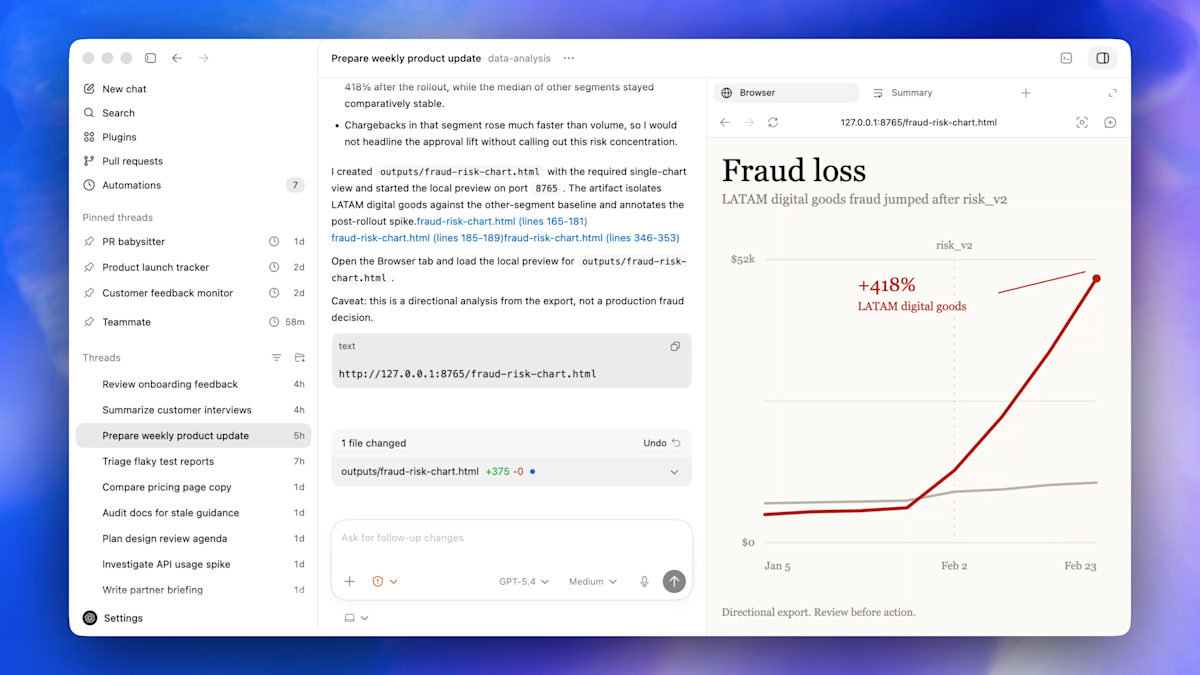
Codex now features a built-in web browser, complete with an innovative commenting system. This allows developers to directly prompt Codex to make precise tweaks to specific elements of a webpage or web application they are constructing. A demonstration showcased a Codex team member using this tool to instruct the AI to adjust graph margins, preventing the y-axis from being cut off – a testament to its granular control.
Powerful Image Generation
Complementing the browser is integrated image generation, powered by gpt-image-1.5. Codex can now create product concepts, mockups, frontend designs, and even assets for simple games. This capability is further refined by its ability to use screenshots to verify that its generated output aligns perfectly with user requests.
Proactive Memory and Contextual Recall
OpenAI is also previewing two crucial memory features. The first allows Codex to recall context from previous tasks, informing and refining its approach to future prompts. This promises to accelerate request completion and elevate output quality over time. The second feature enables Codex to leverage gathered context to suggest proactive actions. Imagine starting your day with Codex prompting you to respond to a colleague’s comment on a Google Doc draft – a true step towards an intelligent, anticipatory assistant.
Availability and Future Outlook
The updated Codex is currently rolling out to desktop app users logged in with their ChatGPT accounts. Initially, computer use features are available to macOS users, with availability for users in the EU and UK expected to follow soon. Similarly, European and British users will need to await the rollout of the advanced memory features. This update firmly positions Codex not just as a coding agent, but as a foundational piece in OpenAI’s grand design for an integrated, intelligent super app that promises to redefine digital interaction.
For more details, visit our website.
Source: Link