

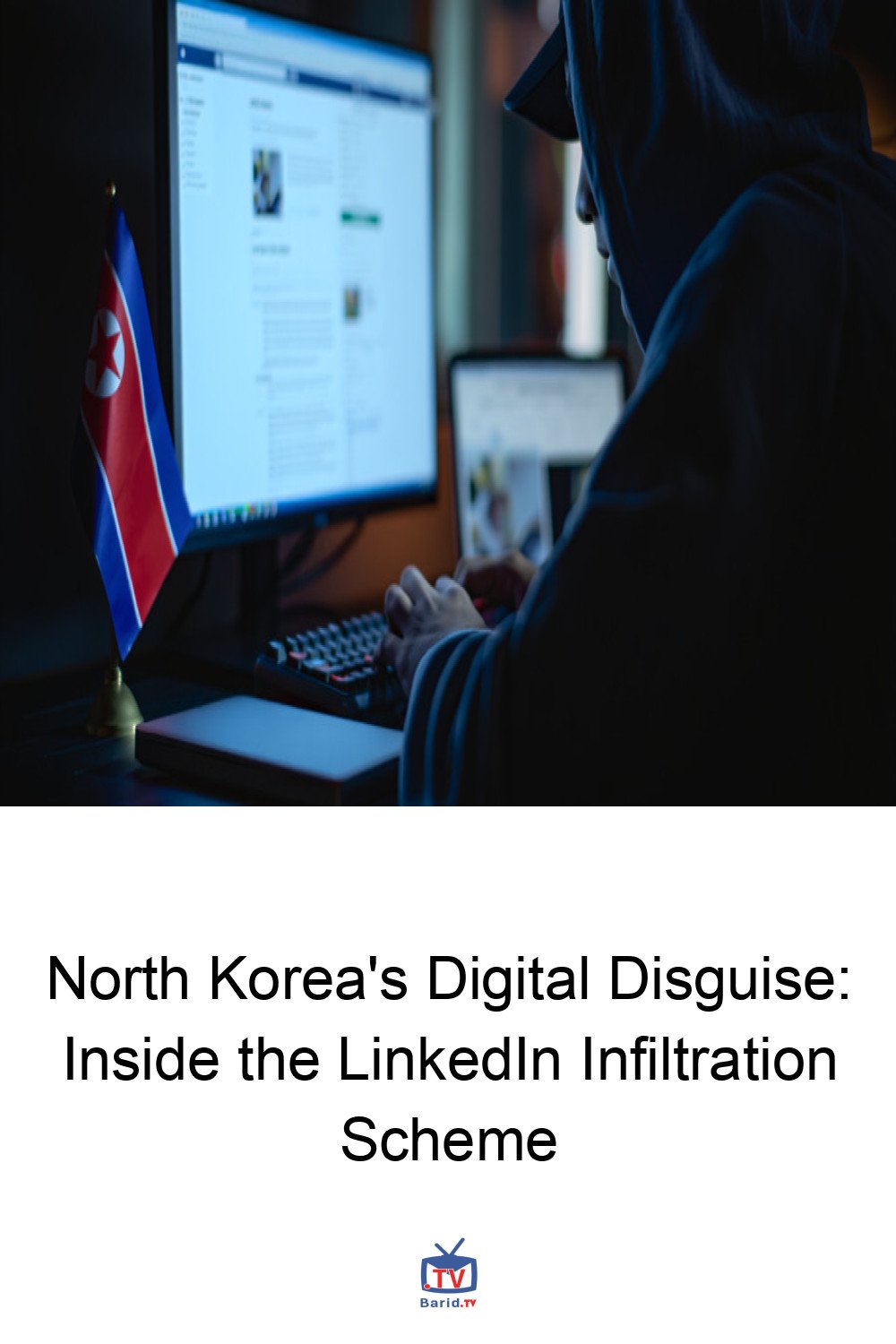
A sophisticated and escalating cyber threat is emerging from the Democratic People’s Republic of Korea (DPRK), as operatives are now leveraging the professional networking site LinkedIn to infiltrate global companies. This isn’t merely about creating fake profiles; it involves the audacious impersonation of real individuals, complete with verified workplace emails and identity badges, to secure remote IT positions within unsuspecting Western and international firms.
The Digital Deception: North Korea’s LinkedIn Infiltration Strategy
This long-running operation, tracked by the cybersecurity community under monikers like Jasper Sleet, PurpleDelta, and Wagemole, represents a calculated evolution in North Korea’s illicit activities. The primary objective is two-fold: to generate a crucial revenue stream for the nation’s illicit weapons programs and to conduct espionage by stealing sensitive data. In some egregious cases, this infiltration has escalated to ransom demands to prevent data leaks.
Security Alliance (SEAL) highlights the cunning nature of these fraudulent applications, noting that the use of legitimate-looking credentials is designed to instill trust and bypass initial scrutiny. Once embedded, these operatives gain administrative access to sensitive codebases and establish persistent footholds within corporate infrastructures, as described by cybersecurity firm Silent Push, which labels the DPRK remote worker program a “high-volume revenue engine” for the regime.
Funding a Regime: The Cryptocurrency Connection
The financial gains from these illicit employment schemes are meticulously laundered to fund North Korea’s ambitions. Blockchain analysis firm Chainalysis revealed in an October 2025 report that DPRK IT workers transfer their salaries, often paid in cryptocurrency, through a complex web of money laundering techniques. This includes “chain-hopping” and “token swapping,” leveraging smart contracts, decentralized exchanges, and bridge protocols to obscure the trail of funds, making tracing incredibly challenging for investigators.
Beyond Impersonation: Sophisticated Social Engineering Attacks
Parallel to the direct infiltration scheme, North Korean threat actors are deploying even more elaborate social engineering campaigns. One such operation, dubbed “Contagious Interview,” employs fake hiring processes to ensnare prospective targets. After initial contact on LinkedIn with enticing job offers, individuals posing as recruiters and hiring managers guide targets through a “skill assessment” that is, in reality, a conduit for malware execution.
Advanced Tactics: EtherHiding and Persistent Threats
A notable example involved a recruiting impersonation campaign targeting tech workers, mimicking the hiring process of a digital asset infrastructure company like Fireblocks. Candidates were instructed to clone a GitHub repository and execute commands to install an npm package, triggering malware deployment. This campaign notably utilized “EtherHiding,” a novel technique that leverages blockchain smart contracts to host and retrieve command-and-control infrastructure, significantly enhancing the malicious payload’s resilience against takedowns.
Recent variants of the Contagious Interview campaign have evolved, employing malicious Microsoft VS Code task files to execute JavaScript malware disguised as web fonts. This ultimately leads to the deployment of sophisticated tools like BeaverTail and InvisibleFerret, designed to establish persistent access and facilitate the theft of cryptocurrency wallets and browser credentials. Furthermore, the Koalemos RAT campaign, documented by Panther, involves malicious npm packages to deploy a modular JavaScript remote access trojan, enabling attackers to retrieve tasks, execute them, and exfiltrate encrypted responses from compromised systems.
Protecting Your Enterprise: Essential Countermeasures
The escalating sophistication of these threats demands heightened vigilance from both individuals and organizations. The Norwegian Police Security Service (PST) has issued an advisory, confirming “several cases” where Norwegian businesses have unknowingly hired North Korean IT workers, with their salaries ultimately financing the country’s weapons programs.
To counter these threats, Security Alliance advises several critical steps:
- If you suspect your identity is being misused in fraudulent job applications, post a warning on your social media accounts, listing your official communication channels and verification methods (e.g., company email).
- Always validate that accounts listed by candidates are genuinely controlled by the email they provide.
- Implement simple checks, such as asking candidates to connect with you directly on LinkedIn, to verify their ownership and control of the account.
Organizations must adopt robust hiring protocols, including multi-factor authentication for internal systems, thorough background checks, and continuous monitoring for unusual network activity. The digital landscape is a battleground, and only through proactive and informed defense can companies safeguard their assets against these cunning state-sponsored adversaries.
For more details, visit our website.
Source: Link