
The Luminous Paradox: Ronan Bouroullec and Giorgio Mastinu’s Inchiostri Exhibition
Transparency, in its myriad forms, holds an undeniable allure. From the crystal-clear waters of a mountain stream to the ephemeral beauty of a soap bubble, clarity often evokes a sense of honesty and wonder. It is within this delicate, yet profound, territory that the Inchiostri
exhibition by acclaimed designers Ronan Bouroullec and Giorgio Mastinu, crafted in collaboration with master glassblower Simone Cenedese, found its captivating essence.
At its heart, Inchiostri (meaning “inks”) explored the paradoxical nature of depth conjured through transparency, and luminosity born from what might appear as darkness. This groundbreaking showcase transformed handcrafted glass blocks into canvases for layered color, where light itself became an integral material, dancing within and through the meticulously arranged forms.
The Art of Layered Light and Form
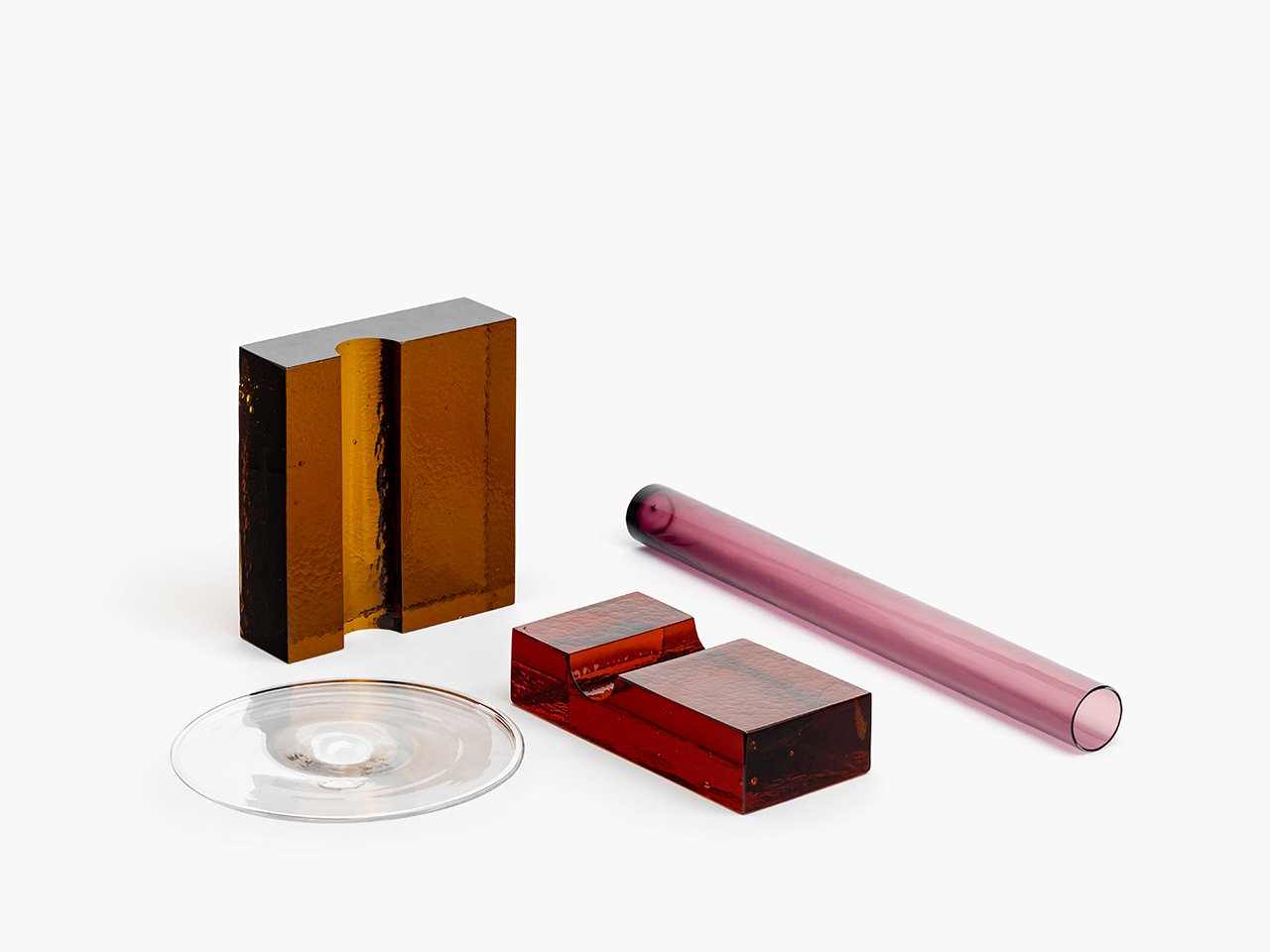
Each vase within the exhibition was a symphony of four distinct elements: two cast glass blocks, available in four sizes and two thicknesses (approximately 6 or 7 centimeters), a blown glass tube offered in two heights, and a shallow blown glass dish designed for stacking. The genius lay in the palette: every component boasted its own unique hue, drawn from an exquisite eleven-color spectrum. When assembled, these individual colors overlapped and refracted, giving rise to subtle, yet mesmerizing, chromatic vibrations.
Bouroullec and Mastinu’s attention to detail was paramount. Plane surfaces were deliberately left unpolished to intensify these vibrant interactions, while the edges were meticulously polished, ensuring light could pass cleanly through. This technique echoed ancient Venetian glazing traditions, creating an illusion of profound depth and richness that belied the inherent transparency of the material.
A Legacy of Combination and User Interaction
The principle of combination is a cornerstone of Ronan Bouroullec’s distinguished practice. His seminal 1997 Vases combinatoires, comprising eight polyurethane elements that were inert alone but brimming with potential when interlocked, pioneered a non-authoritarian relationship between object and user. This early exploration into combinatorics, influenced by artistic giants from Giorgio Morandi to Sol LeWitt, resonated powerfully within the Inchiostri collection.
From the near-infinite permutations offered by these versatile glass elements, Bouroullec thoughtfully curated twenty compositions. Each arrangement was a testament to assemblage without fasteners, a delicate balance between the robust solidity of cast glass and the ethereal fragility of blown glass, achieving elevation and presence through inherent weight and thoughtful placement.
Critical Acclaim and Conceptual Depth
The profound impact of Inchiostri extended far beyond its formal elegance. During its acclaimed run, the exhibition was honored with the fifth edition of the Premio Fondazione di Venezia for The Venice Glass Week. The discerning jury lauded the series for its “reduced formal vocabulary” of light, color, and treated surfaces, but, crucially, recognized its essence as “poetry, enchantment, and magic.” They celebrated Inchiostri
as a compelling bridge, uniting the global language of cast glass with Murano’s revered and ancient blown-glass tradition.
Positioned with exquisite grace between sculpture and functional vessel, Inchiostri occupied a unique conceptual threshold. The addition of a single stem, often delicate gypsophila, was enough to transform the work from a contemplative art object into a practical, yet still profound, vase. Crafted from cotissi
—irregular fragments salvaged from the glassblowing process—the blocks firmly rooted each piece in centuries-old material culture, even as they invited endless possibilities for contemporary reassembly.
Transparency as Collaboration
Ultimately, the exhibition redefined transparency not as emptiness, but as a dynamic collaboration. It was a dialogue between color and light, artist and artisan, object and viewer. Inchiostri invited us to look deeper, to see the intricate dance of elements, and to appreciate the profound beauty that emerges when clarity becomes a medium for connection.
To delve further into the Inchiostri Exhibition by Ronan Bouroullec and Giorgio Mastinu, visit bouroullec.com. Photography by Enrico Fiorese and Giorgio Mastinu.
For more details, visit our website.
Source: Link