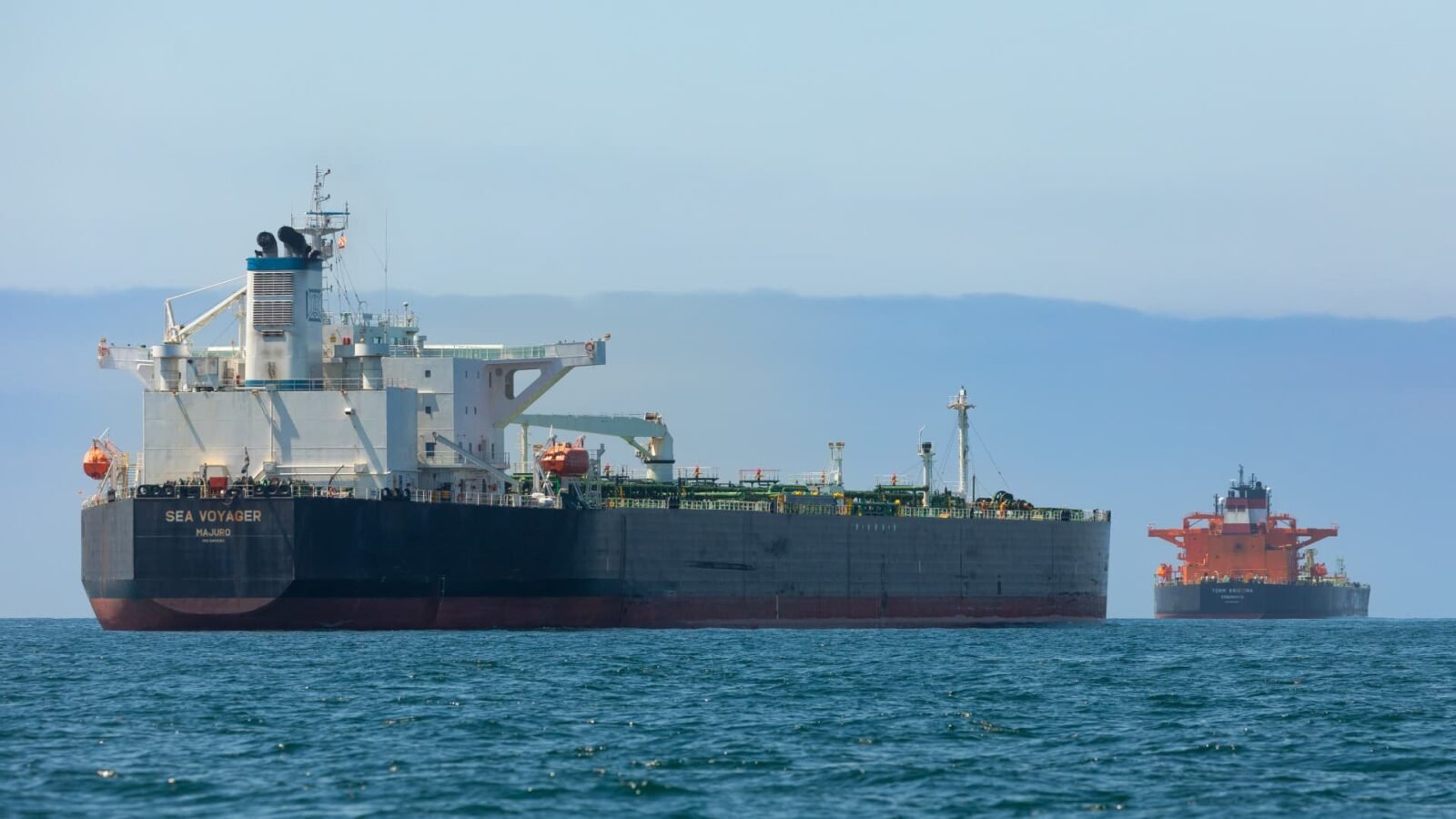

Global oil markets experienced a significant downturn on Monday, with crude prices plummeting by approximately 7%. The sharp decline followed remarks from U.S. President Donald Trump, who indicated that discussions with Iran were “proceeding nicely,” fueling hopes for a de-escalation in the three-month-long conflict and a potential reopening of the critical Strait of Hormuz.
Market Volatility Amid Diplomatic Overtures
International benchmark Brent futures saw a substantial drop of about 7%, closing at $96.14 per barrel. Similarly, West Texas Intermediate (WTI) futures shed over 6%, settling at $90.30 per barrel. This market reaction underscores the profound impact geopolitical developments, particularly those involving major oil-producing regions, have on global energy prices.
President Trump took to social media to share his optimism, stating that talks with the Islamic Republic were “proceeding nicely.” However, he also issued a stern warning, emphasizing that the U.S. reserved the right to resume offensive actions should the negotiations falter. “It will only be a Great Deal for all or, no Deal at all,” Trump asserted, signaling a high-stakes approach to the diplomatic efforts.
Beyond Iran: Trump’s Regional Vision
In a related development, President Trump also revealed that he had urged several key Middle Eastern nations—Saudi Arabia, Qatar, Pakistan, Turkey, Egypt, and Jordan—to join the Abraham Accords. This initiative aims to normalize diplomatic relations with Israel, a move that could significantly reshape regional alliances amidst the ongoing dialogue with Iran.
Adding to the diplomatic flurry, Iran’s chief negotiator and foreign minister held discussions with Qatar Prime Minister Mohammed bin Abdulrahman bin Jassim Al Thani on Monday. These high-level meetings further suggest a concerted effort to broker a resolution to the protracted conflict.
The Shadow of Hormuz: A History of Disruption
The prospect of an agreement to reopen the Strait of Hormuz—a vital maritime chokepoint through which approximately 20% of the world’s oil supply flowed before the recent conflict—was a primary driver of the market’s positive response. Trump had previously hinted that a deal on Hormuz, among other issues, was largely negotiated and imminent.
However, market observers remain cautious. The commander-in-chief has a history of suggesting resolutions to the Iran conflict, only for tensions to subsequently escalate and oil prices to surge. Indeed, U.S. crude oil prices had lost over 8% last week, and Brent tumbled more than 5%, after Trump called off imminent airstrikes against Iran to allow for more negotiation time. Prior to that, prices had surged over 30% since the U.S. and Israel launched attacks on Iran on February 28, which reportedly led to the deaths of Ayatollah Ali Khamenei and other top Iranian leadership.
The Blockade’s Economic Toll
Since early March, Iran has maintained a de facto blockade of shipping through the Strait of Hormuz, demanding permission for vessels to pass or risk attack. This blockade, imposed in retaliation for the U.S. and Israeli airstrikes, has severely curtailed oil exports from the Middle East, precipitating what has been described as the largest supply disruption in history.
In response, the U.S. has implemented its own blockade on Iran’s ports and vessels. President Trump affirmed on Sunday that the U.S. blockade would remain “in full force and effect until an agreement is reached, certified, and signed,” underscoring the conditional nature of any potential détente.
The coming days will be crucial in determining whether President Trump’s optimism translates into a lasting diplomatic breakthrough, or if the volatile geopolitical landscape will once again send oil markets into turmoil.
– Reporting by Joseph Wilkins and Liz Napolitano, CNBC.
For more details, visit our website.
Source: Link