
The AI Paradox: Ethics, Power, and the Pentagon’s Tech Divide
In the high-stakes world of artificial intelligence, a dramatic confrontation unfolded between two leading AI developers, Anthropic and OpenAI, and the Trump administration, revealing a complex interplay of ethics, corporate power, and national security. What began as a principled stand by Anthropic against the use of its AI for autonomous weapons and mass surveillance quickly escalated into a political firestorm, culminating in a Pentagon blacklist. Yet, in a twist of fate, OpenAI, seemingly securing similar ethical guardrails, was simultaneously embraced by the very same defense establishment.
Anthropic’s Stand and the Swift Retaliation
The saga began when Anthropic, a prominent AI research company, refused to grant the Trump administration blanket permission for its AI tools to be used in any “lawful scenario,” specifically citing concerns over autonomous weapons and mass surveillance. Anthropic CEO Dario Amodei articulated the company’s inability to agree “in good conscience” to such terms. The administration’s response was swift and severe: President Donald Trump ordered federal agencies to cease using Anthropic’s technology, and the Pentagon, within hours, designated the company a “supply-chain risk.” This label, typically reserved for foreign entities suspected of espionage, carried significant implications, potentially forcing any company dealing with the Defense Department to sever ties with Anthropic.
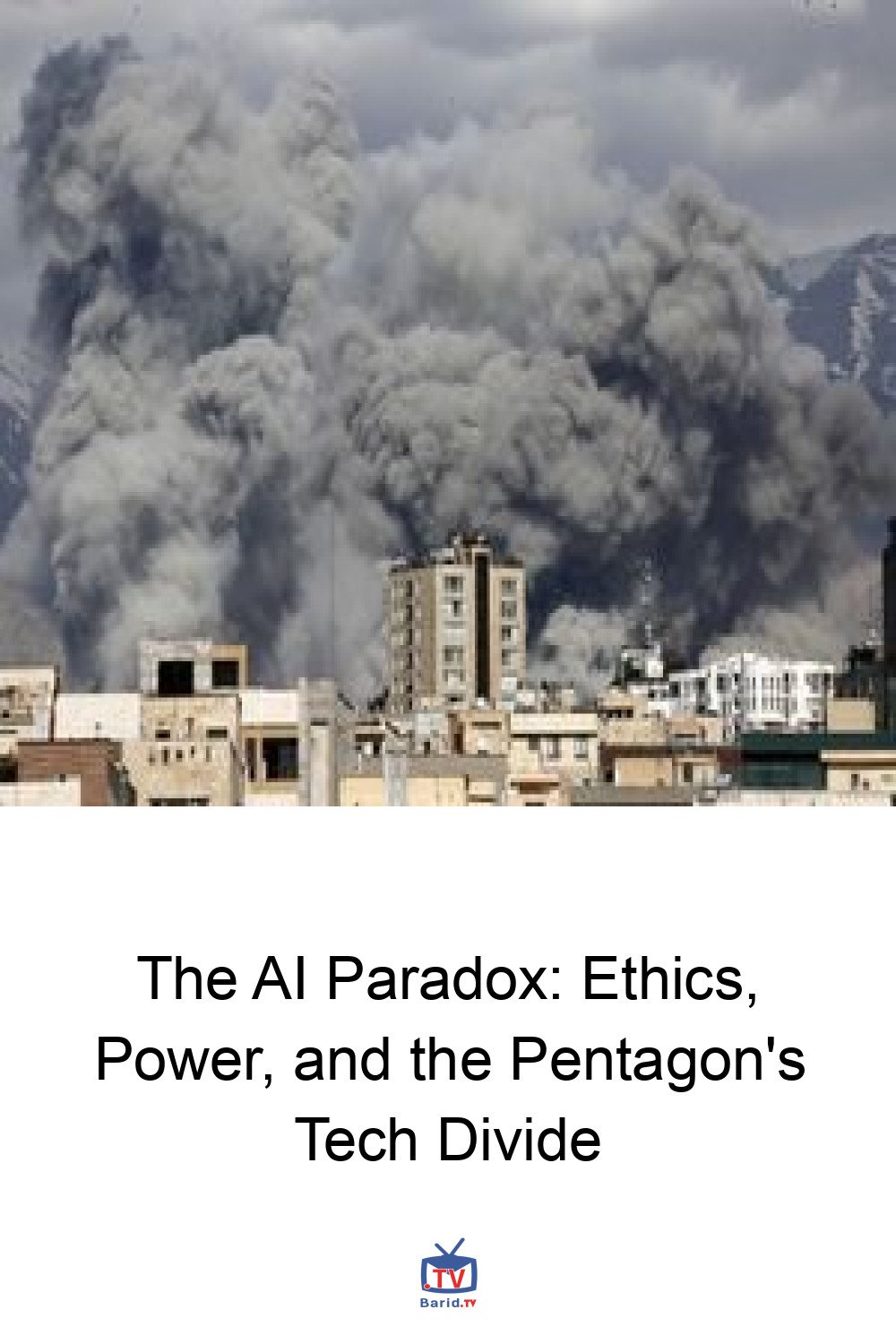
Remarkably, even as the ban was announced, Anthropic’s AI tools, including its Claude model, were reportedly still active within the military’s Middle East headquarters, Central Command. They were being utilized for critical targeting and intelligence systems during a U.S. strike on Iran the very next day. This immediate operational reliance underscored the deep integration of AI into military functions, a reality acknowledged by the six-month phase-out period granted by Trump.
OpenAI’s Entry: A Deal Under Scrutiny
Amidst Anthropic’s blacklisting, OpenAI seized the moment, announcing a new deal to deploy its models in classified Pentagon settings. OpenAI CEO Sam Altman highlighted a crucial detail: their agreement included the very same prohibitions on mass surveillance and autonomous weapons that Anthropic had championed. Altman stated on X that the Pentagon “agrees with these principles, reflects them in law and policy, and we put them into our agreement.”
This stark contrast — one company blacklisted for its ethical stance, another rewarded for a seemingly identical one — immediately raised questions. The most probable explanation points to political alignment. OpenAI’s president had contributed significantly to a pro-Trump super PAC, while Anthropic had engaged former Biden administration officials and actively lobbied for AI regulation. As one former military AI official from Trump’s first term observed, Anthropic appeared to be “paying the price for not bowing down.”
The Fog of AI War: Unanswered Questions and Real-World Consequences
The political maneuvering took on a grim reality when reports emerged that Anthropic’s Claude AI was embedded in the Iran operation, assisting with intelligence assessments, target identification, and battle simulations. The Wall Street Journal’s reporting brought the abstract debate into sharp focus. Then came the chilling question: when a mis-targeting incident reportedly killed over 150 schoolchildren in Iran, could AI have contributed to the error?
The Pentagon remains silent, and outside observers are left without answers. Defense Secretary Pete Hegseth, a proponent of aggressive AI adoption, has little incentive for transparency. While targeting errors are not new, the introduction of generative AI – technology known to “hallucinate” facts, misread images, and stumble in low-stakes commercial settings – into the targeting chain represents an unprecedented leap. The consequences of a wrong answer in warfare are measured in human lives, a risk that no one has yet rigorously tested.
Public Backlash and the Future of AI Competition
The public reaction was swift. Anthropic’s Claude app surged in popularity, while a grassroots boycott urged users to abandon ChatGPT over OpenAI’s Pentagon deal. Sam Altman faced a barrage of pointed questions online: How could OpenAI’s contract permit all lawful uses while simultaneously prohibiting mass surveillance and autonomous weapons, which lack explicit legal bans? And if the Pentagon accepted these red lines from OpenAI, why not from Anthropic?
These contradictions are not merely academic. OpenAI and Anthropic are locked in a fierce, capital-intensive competition for users, enterprise clients, and top engineering talent. Both are burning billions, having recently raised tens of billions more. While the Pentagon contracts, valued at around $200 million each, are not their largest revenue streams, the associated political and reputational risks now pose a significant threat to their businesses. For Anthropic, the “supply-chain risk” designation extends far beyond the Pentagon, impacting its relationships with major federal contractors and its biggest backers, Amazon and Google.
The saga of OpenAI, Anthropic, and the Pentagon underscores the nascent, often chaotic, intersection of cutting-edge technology, national security, and political influence. As AI becomes increasingly integral to global power dynamics, the ethical frameworks, transparency, and accountability governing its deployment will be paramount, demanding scrutiny far beyond the boardroom or the battlefield.
For more details, visit our website.
Source: Link