

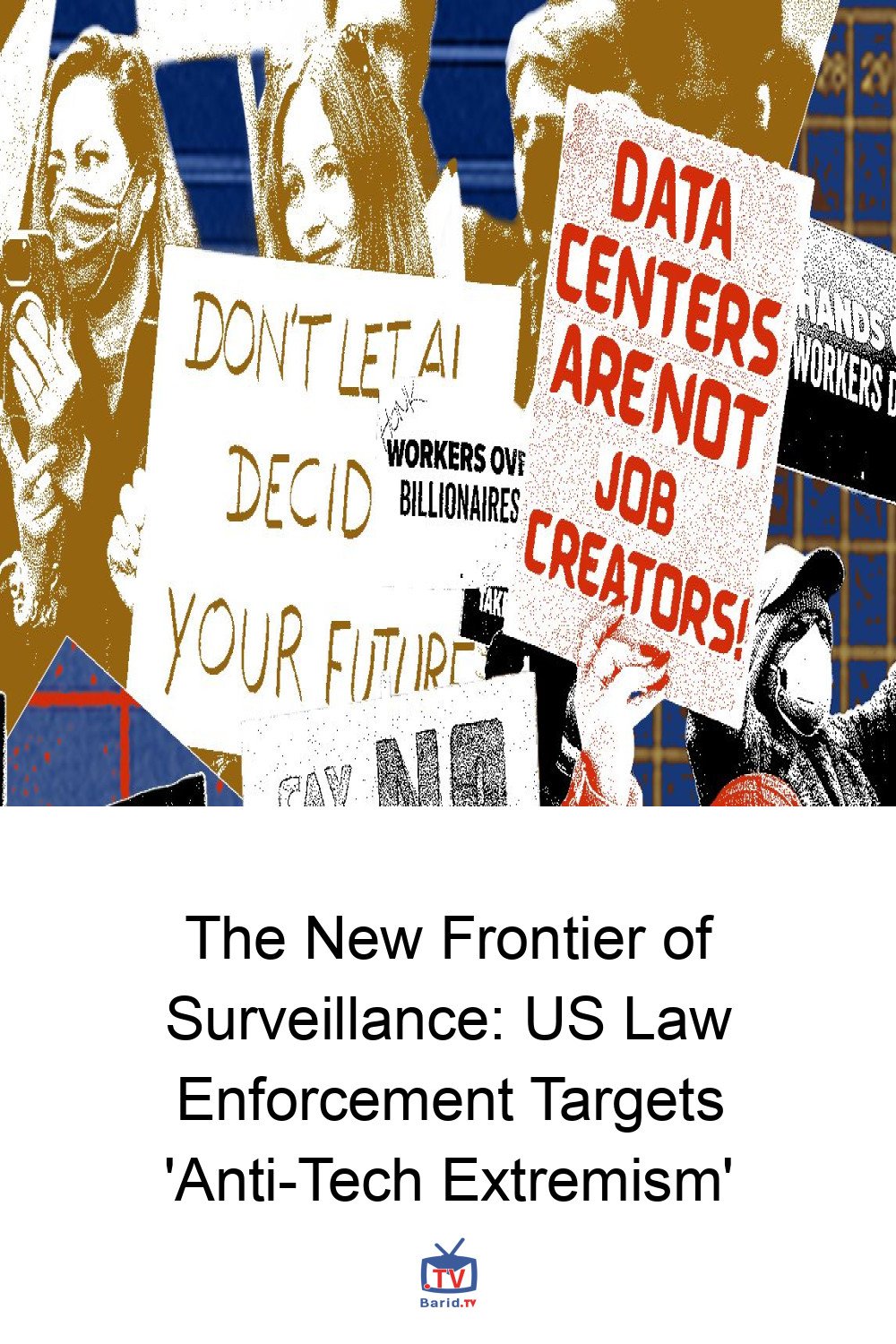
The New Frontier of Surveillance: US Law Enforcement Targets ‘Anti-Tech Extremism’
In an era marked by escalating anxieties over artificial intelligence, job displacement, and the pervasive reach of technology, federal intelligence agencies and domestic law enforcement in the United States are reportedly pivoting their focus to a novel domestic threat: ‘anti-technology extremists.’ This strategic shift comes amidst a backdrop of attacks on tech CEOs and a burgeoning protest movement against data centers, signaling a significant expansion of the domestic surveillance apparatus.
Over a thousand pages of previously unpublished reports, obtained by WIRED from the Department of Homeland Security (DHS), FBI, and various fusion centers, reveal a nationwide effort to monitor a broad and potentially ambiguous category of individuals and activities. This development is not isolated; it aligns with broader directives from the Trump administration, notably National Security Presidential Memo 7, which mandated the Department of Justice to target those holding “anti-American,” “anti-Christian,” and “anti-capitalism” beliefs. With a presidency that heavily invested in AI and data center proliferation, the inclusion of ‘anti-technology extremism’ marks an unreported yet critical addition to existing surveillance categories, potentially blurring the lines between legitimate dissent and perceived threats.
Defining the ‘Anti-Tech Violent Extremist’
Among the revealing documents is a New York Intelligence and Counterterrorism Bureau report that forecasts widespread societal unrest fueled by AI adoption within the next five years. The report introduces a concerning new term: ‘anti-tech violent extremism.’ It warns, “The chaotic atmosphere that may result from emergent AI technology in the next five years may fuel large-scale protests that devolve into civil unrest and anti-tech violent extremist activity, especially in large urban areas such as New York City.” Notably, this term is absent from any publicly available DHS or FBI domestic extremism reports, suggesting a deliberate and novel categorization of diverse ideologies under a single, potentially broad extremist label.
Further deepening this concern, the Intelligence Bureau’s assessment highlights a new threat emerging from the case of Ziz Laota, an extreme rationalist whose cult-like group, focused on the existential risks of AI, saw three members charged with murder. While the ‘Zizian ideology’ is undeniably extremist, the report acknowledges that less extreme versions of these fears are common among leading AI alignment experts, machine learning engineers, and even major AI companies. Nevertheless, the Bureau cautions against the proliferation of “paranoid views regarding AI” post-trial, particularly those stemming from beliefs about an imminent “godlike incarnation of AI” and the imperative to ensure its compliance with human morality to avert “existential consequences.”
Expanding Surveillance and Critical Infrastructure Concerns
The expansion of surveillance extends beyond ideological concerns. The NYPD’s intelligence assessment, for instance, follows a collaboration with the FBI to monitor the Signal chat of an activist group observing immigration court hearings. This operation, detailed in documents obtained by The Guardian, was part of a broader investigation into “anarchist violent extremist actors”—another category prioritized in the new counterterrorism strategy.
The network of 80 fusion centers, established post-9/11 to facilitate information exchange between federal, state, and local law enforcement, is now actively gathering intelligence on perceived threats to data centers. A Western Pennsylvania fusion center report, for example, warns that “adversarial actors, including state-sponsored entities, criminal groups, and extremists, such as homegrown violent extremists or environmental extremists, may target US data centers.” It further suggests these actors could exploit data centers’ strategic importance for activities like cryptocurrency mining or gaining access to US data via front companies.
Similarly, the Northern Virginia Regional Intelligence Center flagged AGAAVEs (anti-government, anti-authority violent extremists) as engaging in pre-operational planning against data centers and other critical infrastructure. Alarmingly, the report’s list of “Suspicious Activity Reporting indicators” includes activities that could easily be carried out by ordinary citizens or legitimate activists, raising significant questions about the potential for overreach and the criminalization of lawful expression and assembly.
Conclusion: Navigating the Future of Tech, Security, and Freedom
The emergence of ‘anti-technology extremism’ as a domestic threat category signals a profound shift in how US law enforcement perceives and responds to public sentiment regarding technological advancement. While genuine threats to critical infrastructure and public safety must be addressed, the broad and undefined nature of this new designation, coupled with its ties to previous directives targeting ideological beliefs, raises serious concerns about civil liberties, freedom of speech, and the potential for a chilling effect on legitimate debate and activism surrounding AI and technology’s societal impact. As technology continues its rapid evolution, the challenge for democratic societies will be to balance national security with the fundamental rights of its citizens, ensuring that surveillance does not inadvertently stifle the very discourse necessary for responsible technological development.
For more details, visit our website.
Source: Link