





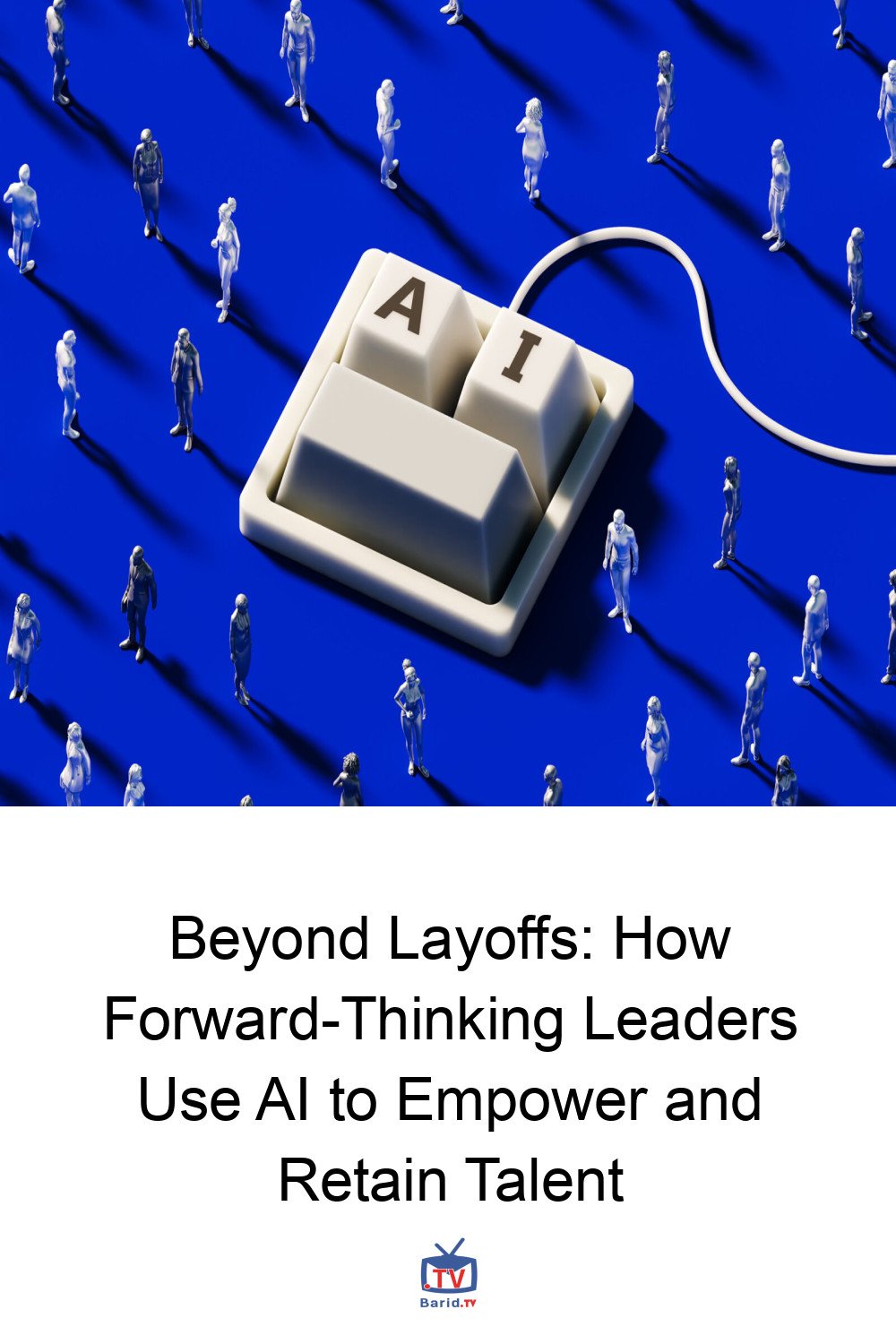
The AI Paradox: Layoffs vs. Empowerment
The rise of Artificial Intelligence has sparked a dual narrative in the corporate world. On one hand, it promises unprecedented efficiency and innovation. On the other, it casts a long shadow of fear, often cited as a justification for widespread layoffs. But what if this narrative is fundamentally flawed? What if AI isn’t a tool for headcount reduction, but rather a powerful catalyst for talent retention and employee empowerment?
When companies announce job cuts, attributing them to AI, a critical question emerges: Did AI truly necessitate these reductions by fundamentally altering work processes, or was it merely a convenient scapegoat for pre-existing cost-cutting agendas? The distinction is crucial, as it profoundly impacts employee morale and their willingness to embrace new technologies.
Leadership’s Choice: Capacity or Cuts?
AI’s capabilities are undeniable: it automates mundane tasks, streamlines workflows, and reshapes the skill sets required for various roles. However, AI does not independently decide who stays and who goes. That decision rests squarely with leadership. It is leaders who determine how the newfound capacity and efficiency generated by AI will be utilized.
Employees are keenly observing these decisions. If every AI implementation is followed by layoffs, the message is clear: efficiency equals job insecurity. This creates a natural resistance to adopting tools that are perceived as threats rather than aids. A different, more progressive path exists – one that prioritizes making people more capable, not expendable.
Removing Friction, Unleashing Potential
The principle of ‘removing the work before removing the person’ is not new. Decades ago, during the formative years of Amazon Web Services, engineers were bogged down by tedious tasks like server provisioning and infrastructure configuration. By automating these processes, developers were freed to focus on innovation, experimentation, and solving complex customer problems – the work they were truly hired to do.
Similarly, a junior attorney once spent countless hours on preliminary research and formatting. Generative AI can now produce a first draft in minutes, allowing her to dedicate more time to critical judgment, refining facts, and crafting compelling narratives for optimal client outcomes. These examples highlight AI’s true potential: to eliminate the frustrating, repetitive tasks that consume valuable time, thereby unlocking human potential for higher-value work.
Treating Recovered Time as a Strategic Asset
Imagine AI granting a team an additional 10% or 20% of its capacity. What becomes of this recovered time? It could be the long-delayed customer follow-up, a crucial improvement stuck in the backlog, or a relationship needing more attention. These opportunities are abundant within most organizations, often neglected because employees are too engrossed in repetitive duties.
Consider a customer service team that spent a significant portion of their day on form-filling and navigating cumbersome systems. An AI tool automated part of this, giving each agent roughly an hour back daily. Instead of using this efficiency to justify a smaller team, leadership chose to reinvest this time. Agents now spend more time engaging with customers, building stronger relationships, and tackling complex issues. AI removed the tasks they disliked, creating space for work where they could contribute more meaningfully and derive greater satisfaction.
Proactive Planning: People First, Automation Second
Effective talent retention in the age of AI demands proactive planning. Leaders must consider the human element at the inception of an AI initiative, not as an afterthought. Automating first and then scrambling to figure out what happens to employees sends a clear, negative message about priorities.
Before deploying AI, categorize tasks into three groups:
- Automate: Tasks with minimal human judgment, ideal for AI.
- Accelerate: Tasks where AI can assist and speed up processes, but still require human oversight and judgment.
- Amplify: Tasks that remain primarily human-driven, where relationships, creativity, and nuanced judgment are paramount.
Crucially, before any deployment, decide where the recovered human capacity will be directed. This could involve reallocating employees to customer relationship management, product development, advanced data analysis, or other growth-centric roles. The specific destination will vary, but leaders must have a clear vision for their people’s future roles before technology begins to transform them.
Cultivating AI Adoption Through Empowerment
The manner in which AI is introduced profoundly influences employee acceptance. If the initial message focuses on time savings, employees will naturally question leadership’s intentions for that freed-up time. Instead, lead with the promise of enhanced capability.
Strategies for Positive AI Integration:
- Address Frustration: Clearly communicate which tedious tasks AI will alleviate.
- Highlight Growth: Show employees what new, valuable accomplishments they will have more time for.
- Elevate Roles: Explain how AI will transform their roles, making them more strategic and impactful.
Demonstrate this commitment through consistent action. When employees see recovered time consistently reinvested into opportunities for better work, skill development, and career advancement, AI transitions from a perceived threat to a powerful tool for personal and professional growth.
Putting Principles into Practice
Leaders don’t need to acquire new AI tools to begin this transformation. Start with a single team. Map out how AI could potentially reshape their work, then collaboratively answer these fundamental questions before any deployment:
- What work should disappear? Break down roles into individual tasks and identify repetitive tasks that AI can fully automate.
- What work can be accelerated? Identify tasks where AI can assist and speed up human processes.
- What work should be amplified? Pinpoint tasks that require unique human skills like creativity, empathy, and complex judgment.
- Where will the recovered capacity go? Define new, higher-value activities or roles for employees whose time is freed up by AI.
By adopting this human-centric approach, organizations can harness the transformative power of AI not just for efficiency, but for building a more capable, engaged, and loyal workforce. This is how AI truly drives sustainable growth and innovation.
For more details, visit our website.
Source: Link






Leave a comment