




Voyager 1: An Unprecedented Journey Reaches a Cosmic Milestone
In a testament to human ingenuity and perseverance, NASA’s legendary Voyager 1 space probe has achieved an extraordinary milestone, now officially one light-day away from our home planet. After an astounding 49 years, two months, and 11 days since its launch, this intrepid explorer continues its solitary voyage into the cosmic unknown, pushing the boundaries of interstellar exploration.
The Significance of a ‘Light-Day’
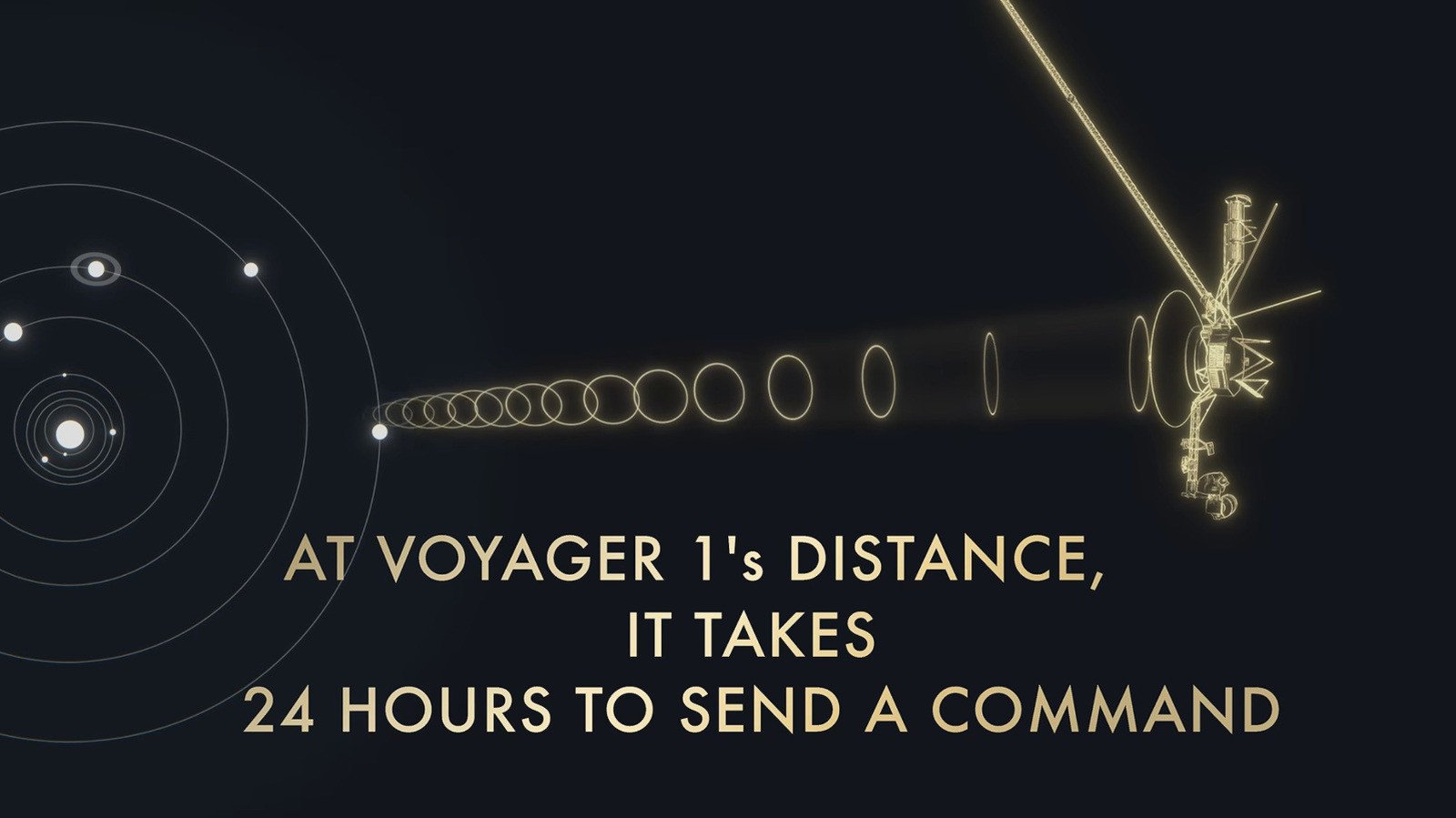
For the first time in history, a human-made object has ventured so far that the distance between it and Earth is measured in the time it takes light to travel. At precisely 5:16:07 AM Eastern time on November 18, 2026, Voyager 1 was estimated to have reached this incredible benchmark. What does this mean in practical terms? Since radio waves, like light, travel at the speed of light, it now takes a full 24 hours for a command sent from Earth to reach the probe, and another 24 hours for its response to traverse the immense void back to us. This unprecedented communication delay underscores the sheer scale of Voyager 1’s journey.
“It’s never happened before, and it may never happen again — it’s that kind of extraordinary,” remarked Kareem Badaruddin, Voyager mission manager, encapsulating the profound significance of this achievement.
A Legacy of Exploration: From Our Solar System to Interstellar Space
Launched in 1977, just 16 days after its twin, Voyager 2, Voyager 1 was designed to explore the outer reaches of our Solar System and beyond. It quickly surpassed its sibling, becoming the farthest human-made object from Earth. Its most significant achievement came in 2012 when it officially crossed the heliopause, entering interstellar space—the vast region between star systems—a feat Voyager 2 would accomplish years later.
The journey hasn’t been without its challenges. Over its nearly five-decade mission, Voyager 1 has endured technical glitches and diminishing power from its plutonium generator, necessitating the shutdown of some features to conserve energy. Yet, against all odds, it perseveres, a silent sentinel sending back invaluable data from the uncharted territories of our galaxy.
Onward to Gliese 445: A Journey Spanning Millennia
Currently estimated to be approximately 16 billion miles from Earth, Voyager 1’s journey is far from over. Its ultimate destination is the star Gliese 445, located about 17 light-years away in the Ursa Minor constellation. While 17 light-years might seem a short hop in cosmic terms, the timescales involved are staggering. Voyager 1 is projected to pass within 1.7 light-years of Gliese 445 in roughly 40,000 years—a timeframe that dwarfs human existence. By then, none of us will be here to witness its close encounter, but its legacy will continue, a testament to humanity’s insatiable drive to explore and understand the universe around us.
For more details, visit our website.
Source: Link








Leave a comment