



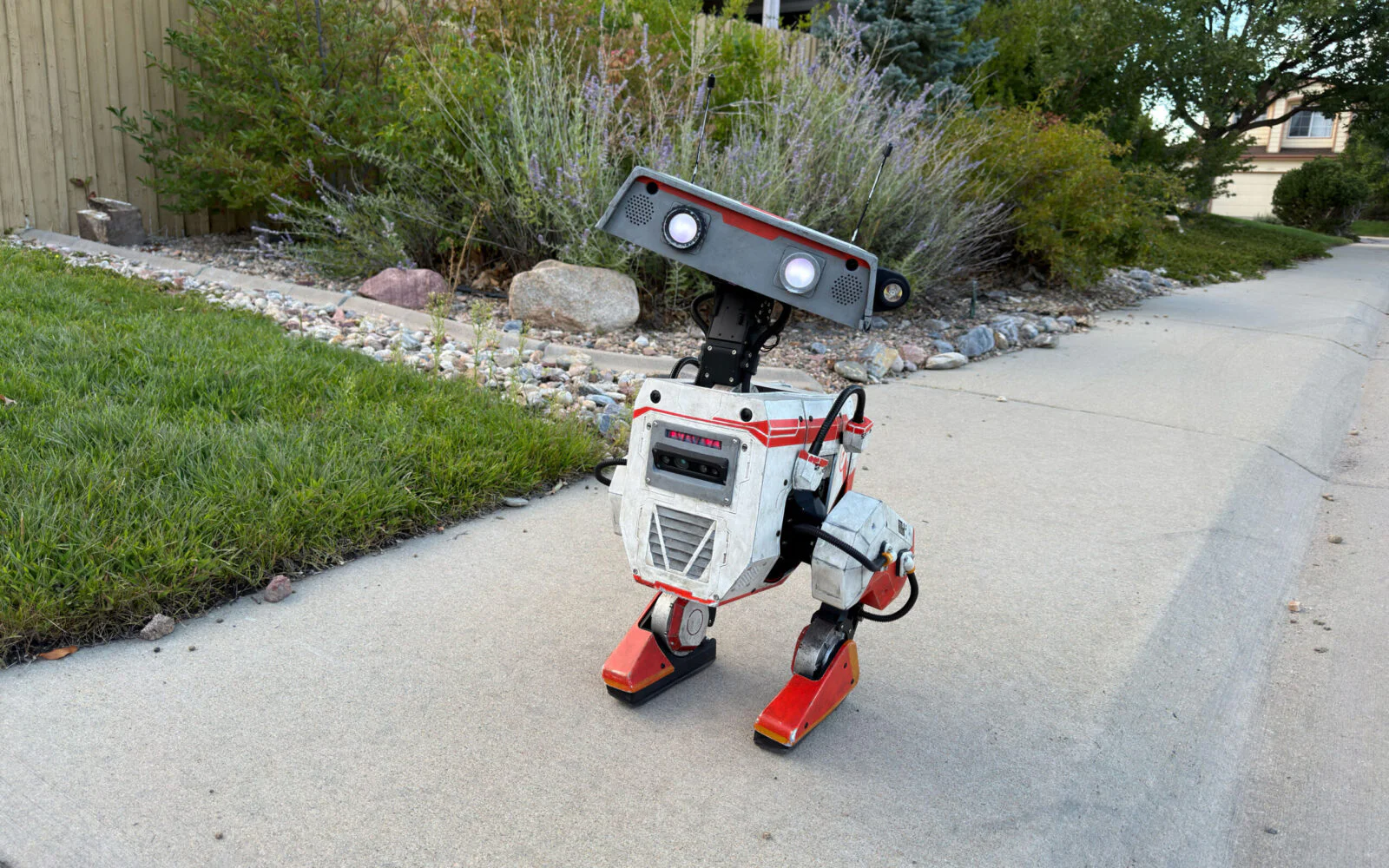

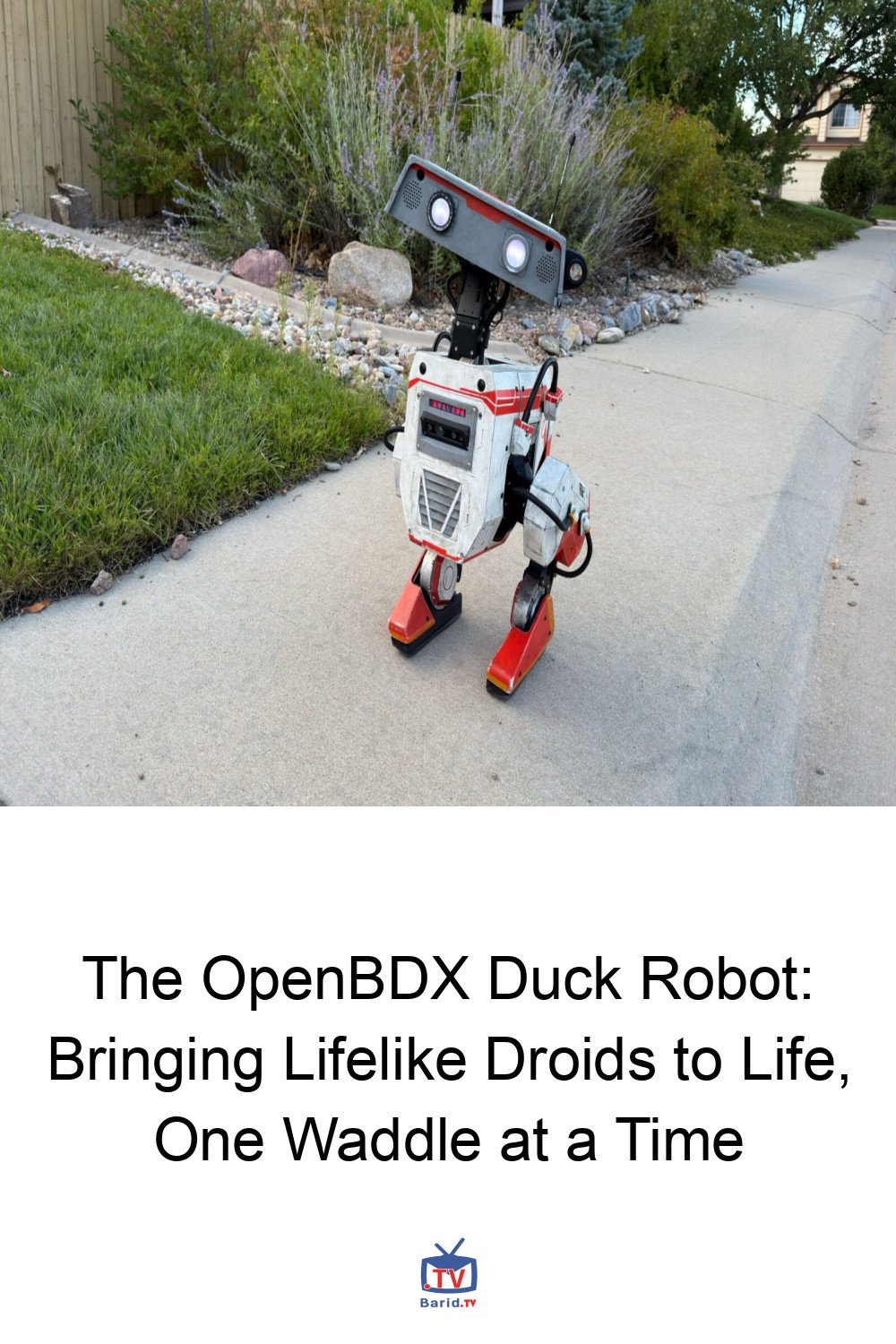
From Disney’s Vision to Open-Source Reality: The OpenBDX Duck Robot
Imagine a robot so lifelike, so imbued with personality, that onlookers instantly forget the intricate machinery beneath its surface and see only a character. This was the profound impact of Disney’s BDX droids, first unveiled at Nvidia GTC in March 2024. Three captivating figures – Besh (blue), Grek (green), and Oskar (orange) – demonstrated not just advanced robotics, but an uncanny ability to connect with people. For many, including our intrepid builder, the desire to possess such a marvel was immediate. For a select few, that desire ignited a mission: to build one.
This article, originally featured in Make: Vol. 99, delves into the fascinating journey of the OpenBDX Duck Robot, a community-driven project dedicated to recreating these enchanting bipedal characters. For full files and a comprehensive build guide, enthusiasts are encouraged to register at OpenBDX.org.
The Spark of Inspiration: Seeing Droids as Characters
The initial encounter with Disney’s BDX droids, presented by Moritz Bächer of Disney Research, was transformative. The droids weren’t merely performing tasks; they were exuding personality. This immediate human connection, bypassing the technical complexities, planted a powerful seed. The potential for these droids in heartwarming scenarios, such as children’s hospital visits or engaging with Star Wars costuming groups, was evident. The dream of owning one, however, quickly evolved into the audacious goal of building one.
Disney’s research paper, “Design and Control of a Bipedal Robotic Character,” became the blueprint. While it offered crucial insights into actuation, mechanical design, and control strategies, it also left ample room for practical exploration, setting the stage for an ambitious open-source endeavor.
Forging a Path: The Genesis of OpenBDX
The droid-building community had, until this point, largely focused on cost-effective replicas. The OpenBDX project, however, adopted a different philosophy: prioritize known-good hardware and system validation before optimizing for cost. This pragmatic approach aimed to manage the inherent complexity of the project.
For a software engineer venturing into mechanical design, the challenge was significant. The solution came in the form of Shapr3D, an iPad-based CAD tool that made intricate design accessible and intuitive. The initial mechanical version, a personal quest to translate theoretical paper into tangible reality, soon outgrew a single individual’s capacity.
A Community United: Collaboration and Specialization
A pivotal moment arrived in June 2024 at DroidCon in Indianapolis, with a meeting between the project’s initiator and Mimir Reynisson. Mimir had already made significant strides, developing a moving droid, designing PCBs for Nvidia Jetson-motor communication, and creating a head PCB for eye, lamp, sound, and ear servo control. This collaboration solidified the project’s potential to transcend a mere replica.
The vision for OpenBDX expanded to encompass mechanical design, electronics, firmware, software, simulation, animation tools, and a replicable build process. Recognizing that no single person could master all these domains, the team specialized:
- ROS Integration: Focused on robot description, camera interfaces, visual odometry, mapping, object detection, SteamDeck control, and the bridge to Mimir’s PuddleDuck runtime.
- Hardware & Core Systems: Mimir led the charge on hardware, firmware, runtime, reinforcement learning, and web tooling, including OpenBDX Studio, Duckmation, GaitForge, and Waddlescope.
- Mechanical Redesign: Florian Bieregger joined to address weaknesses in the printed leg parts, leveraging his mechanical engineering expertise to spearhead a full mechanical redesign and comprehensive build guide.
Anatomy of a Waddle: The BDX Droid Up Close
While visually reminiscent of Star Wars droids, the OpenBDX is mechanically akin to a real-world humanoid, demanding complex balancing, weight shifting, and coordinated leg motion, all while maintaining its characterful demeanor. The OpenBDX build guide, available at openbdx.org, meticulously details each step of construction.
Each leg boasts five degrees of freedom: hip yaw, hip roll, hip pitch, knee, and ankle. The angled foot pad cleverly compensates for the absence of a separate ankle roll joint. The upper body adds four more degrees of freedom for neck pitch, head pitch, head yaw, and head roll, complemented by two small servos for the antennas.
The main leg actuators adhere to the Disney-inspired hardware: Unitree A1 motors for the knee, hip pitch, and hip roll, and Unitree Go-M8010-6 actuators for the ankles, hip yaw, and neck pitch. The head utilizes Dynamixel XH540 servos (12V or 24V), with XC330 or XL330 servos for the antennas.
Compute power is distributed across two Nvidia Jetson Orin NX modules, one in the chest and one in the head, connected via Ethernet. This robust setup provides ample processing for perception, mapping, state estimation, navigation, and advanced behaviors, ensuring critical control timing remains undisturbed. The OpenBDX project is a testament to what passion, collaboration, and open-source principles can achieve in the exciting world of robotics.
For more details, visit our website.
Source: Link






Leave a comment