



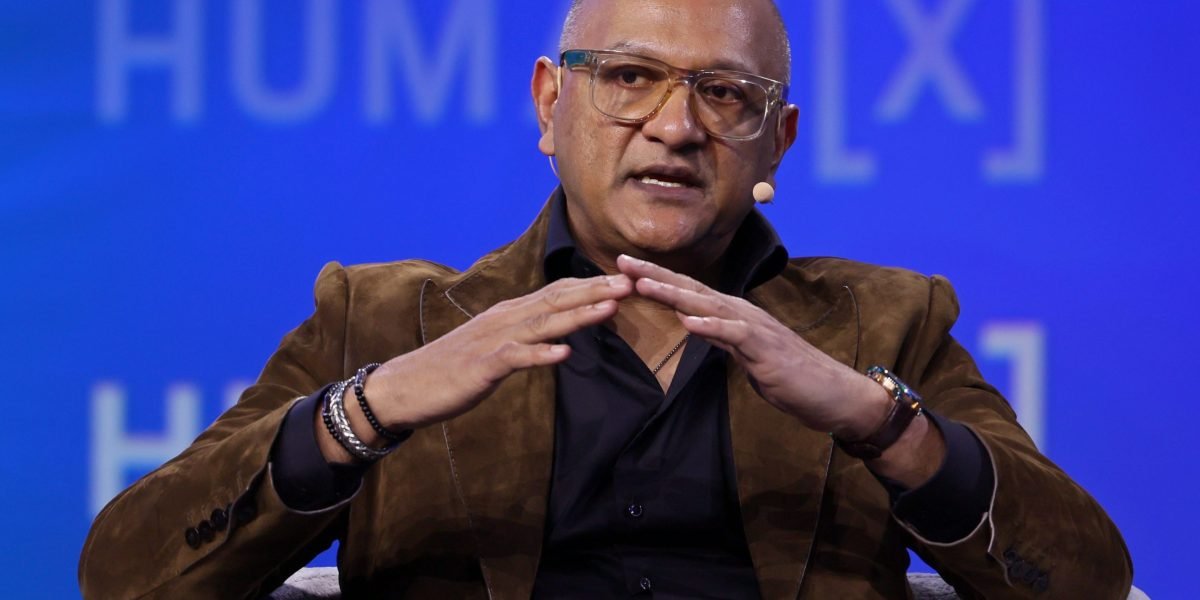

In an era where Gen Z often faces skepticism in the professional world—from vanishing entry-level roles to accusations of lacking work ethic—Cisco’s President and Chief Product Officer, Jeetu Patel, is championing a radically different perspective. Instead of dismissing young talent, Patel is actively seeking it out, believing that fresh eyes and unconventional thinking are the keys to unlocking unprecedented innovation. His latest, and perhaps most audacious, move involves entrusting a 27-year-old former startup founder with one of the company’s most critical technological transformations.
A Bold Vision for Cisco’s Future
From Startup Founder to Code Revolutionary
The individual at the heart of this story is Padmanabhan Krishnamurthy, affectionately known as “Paddy.” He joined Cisco in 2025 following the acquisition of EzDubs, the real-time translation startup he co-founded. Despite his entrepreneurial background and CEO experience, Paddy found himself, in Patel’s words, “buried away in the organization doing something unstrategic.”
However, a chance encounter in Cisco’s San Francisco office changed everything. Paddy proposed an audacious plan: to rewrite 98% of Cisco’s sprawling legacy code with a lean, two-person team. This idea, which even surprised Patel’s most AI-forward internal experts, immediately caught the chief product officer’s attention. “I’ve given him unlimited tokens because he’s going to refactor code,” Patel told Fortune, signaling a profound trust in Paddy’s vision and capabilities. With an initial four-week sprint to prove his concept, the ultimate goal is to complete this monumental refactoring within 24 months.
The Power of Unconventional Thinking
Embracing Productive Tension
Patel’s philosophy challenges the conventional wisdom that only decades of experience can tackle projects of this magnitude. He argues that relying solely on seasoned veterans stifles innovation. “If you don’t hire the early-in-career [workers], and you just let your workforce continue the way that they were, where do fresh ideas get injected? How do you challenge the status quo?” he posits. While experienced staff bring invaluable knowledge, it’s the unburdened perspective of newcomers that can ask the truly disruptive questions.
This approach isn’t without its challenges. Patel openly admits that pairing a Gen Zer with a long-tenured Cisco employee can create friction. Yet, he sees this “tension” as a positive force. “I actually try to create tension in the teams because you want to have enough friction on the ideas. You don’t want to have friction with people and personalities,” he explains. The key, he emphasizes, is building enough trust to encourage “unreasonable goals” and “think outside of the box.”
Reverse Mentorship and The Hunt for “Energizer Bunnies”
Patel isn’t just empowering a select few; he’s actively cultivating a culture of reverse mentorship. He treats every intern as a “reverse mentor” and frequently visits colleges to scout for “hungry” students eager to challenge norms. He’s on a mission to find more “Paddys”—young hires who act as “an energizer bunny that just goes out and kind of revs everyone up,” pushing the boundaries of what’s possible.
A compelling example of this philosophy in action is Baya, a 17-year-old Stanford scholarship student Patel met during a college talk. While others peppered him with questions, Baya quietly observed. Impressed by her thoughtful approach, Patel challenged her to email him monthly with her AI learnings. Her unwavering commitment led to a Cisco internship where she redesigned “something” that had stumped experienced staff. “We brought her in so that she could actually teach our people how to think completely differently,” Patel proudly states, underscoring his belief that Gen Z should be leading, not just doing grunt work.
A Growing Trend: Industry Leaders Bet on Youth
Cisco isn’t alone in recognizing the untapped potential of Gen Z. Josh Kushner, founder of Thrive Capital and an early investor in OpenAI, actively seeks out talent with less than four years of industry experience. Having launched his own venture capital firm at 26, Kushner understood the challenge of attracting seasoned professionals to work for a young leader. His solution: recruit the “smartest people that we knew who were our ages.” This strategy paid off handsomely, with Thrive Capital making billion-dollar early investments.
Similarly, Alon Chen, CEO of Tastewise—a generative AI platform trusted by industry giants like PepsiCo and Nestlé—is also deliberately recruiting Gen Zers with zero prior experience. These leaders share a common conviction: that a lack of ingrained industry habits can be a significant asset, fostering agility, innovation, and a willingness to disrupt the status quo.
The Future is Young
The narrative around Gen Z in the workplace is rapidly evolving. As leaders like Jeetu Patel, Josh Kushner, and Alon Chen demonstrate, the perceived “lack of experience” in young professionals is increasingly seen not as a deficit, but as a powerful catalyst for change. By embracing fresh perspectives, fostering productive tension, and empowering the next generation, companies like Cisco are not just adapting to the future—they are actively building it.
For more details, visit our website.
Source: Link







Leave a comment