



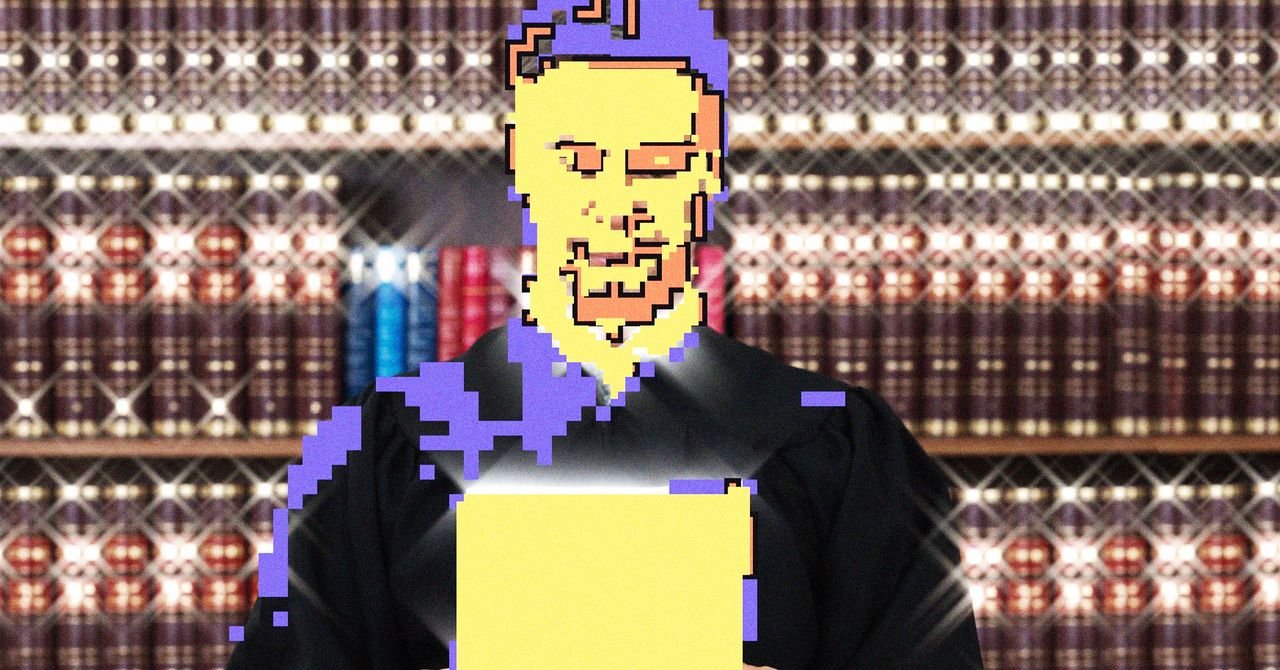

As England’s Master of the Rolls, the most senior civil judge, Geoffrey Vos is on the cusp of retirement. Yet, instead of quietly stepping away, he’s igniting a profound debate that could redefine the very fabric of justice: should artificial intelligence be allowed to decide your court case?
The Vision: AI-Powered Justice from Shenzhen
While current English guidance limits judges to using AI for administrative tasks – a practice Vos himself embraces with tools like Microsoft Copilot for document retrieval and summarization – his recent visit to Shenzhen, China, offered a glimpse into a radically different future. There, civil disputes are already being adjudicated with significant AI assistance, a model that left Vos deeply impressed and convinced that global courts should take note.
Vos envisions a future where AI could swiftly and affordably resolve a swathe of civil disputes. While complex commercial cases and sensitive family matters would undoubtedly remain the domain of human judges, he believes that personal injury claims and low-value professional negligence cases are ripe for AI adjudication. “What most people desperately want in civil disputes is resolution,” Vos told WIRED. “The question is, where is the line to be drawn?”
The Perilous Path: Hallucinations, Misuse, and Integrity
This bold vision, however, is not without its formidable challenges. The road to AI integration in the judiciary is, as Vos acknowledges, “littered with pitfalls.” The legal world has already witnessed instances of lawyers citing non-existent case law fabricated by AI, and the UK recently saw a legal professional lose their license partly due to technology misuse. Furthermore, the accessibility of AI chatbots as ‘legal counsel’ is leading to an unprecedented surge in claims, some of which are undoubtedly spurious.
Maintaining public confidence in the justice system, which hinges on the absolute integrity of its judges, is paramount. Vos stresses the need for transparency and broad consensus when adopting new technologies. “In order not to lose that integrity, you have to explain how you’re adopting technology and achieve a broad consensus that it is appropriate.”
A Judge’s Perspective: Navigating the Digital Shift
WIRED sat down with Judge Vos at the Royal Courts of Justice to delve deeper into his perspective on AI’s burgeoning role.
On Retirement and Technological Evolution
Approaching retirement, Vos reflects on a career spanning significant technological shifts. “When I started as a lawyer, we had foolscap paper, typists, and Tipp-Ex. We moved rapidly into word processors, faxes, and eventually computers.” He characterizes lawyers as “conservative with a lowercase c,” implying a cautious but open-minded approach to change. For Vos, staying technologically relevant isn’t optional; it’s essential for providing effective access to justice. “You can’t be effective in providing access to justice if you’re not on the same technological wavelength.”
AI in Practice: A Tool, Not a Judge
Vos clarifies his personal use of AI: “I don’t use it for writing judgments, but I use it for finding things out, navigating large quantities of material, and checking things. It saves me time.” He recounts using Copilot daily to locate crucial documents for his numerous meetings, saving valuable time. While he is more cautious about AI reading papers for his most important cases, the administrative benefits are clear.
The Surge in Claims: A Double-Edged Sword
The impact of AI is already palpable in the courts. Vos notes a 10 percent annual rise in county court cases, attributing it to the ease with which individuals can now generate legal claims using tools like Gemini, ChatGPT, or Claude. While this presents a challenge in terms of volume and potential for frivolous claims, Vos sees a silver lining.
“In a way it’s a good problem, because it shows there’s greater access to justice because of technology. One of the problems with justice in the past is that it’s only been available to rich people.” He suggests that if someone takes the time to consult a chatbot about a legal problem, they likely genuinely believe they have a claim, even if the specifics need refinement by human oversight.
The Future is Now: Adapting the Justice System
For Judge Vos, his impending retirement makes this debate largely philosophical. But for the myriad professionals involved in the justice system – from lawyers and coders to cybersecurity experts and academics – the rules are changing at an unprecedented pace. The question is no longer if AI will integrate into the courts, but how responsibly, ethically, and effectively it can be harnessed to serve a new generation raised alongside this transformative technology.
For more details, visit our website.
Source: Link








Leave a comment