



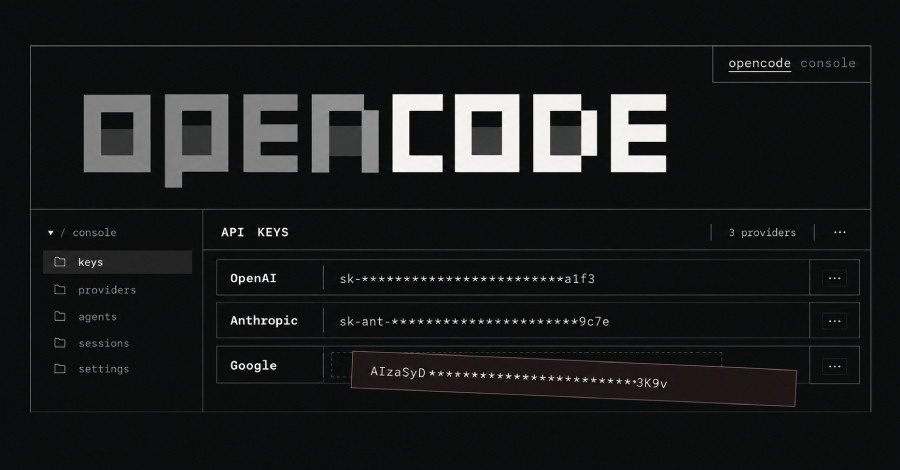

A recent security incident at OpenCode Console has sent ripples through the AI development community, potentially exposing sensitive API keys for major platforms like OpenAI, Anthropic, and Google. The breach, which occurred on October 16, has prompted urgent warnings to a segment of OpenCode’s user base, with some already reporting significant financial losses due to unauthorized usage.
A Critical Vulnerability Uncovered
On the night of October 16, an intruder successfully accessed a legacy system within OpenCode’s infrastructure. This unauthorized access may have compromised third-party AI provider keys that users had entrusted to OpenCode Console, the company’s optional hosted service. OpenCode Console is designed to streamline team collaboration, allowing workspaces to store API keys for OpenAI, Anthropic, or Google. This setup enables team members to utilize these powerful AI models without directly handling or even seeing the sensitive credentials.
The OpenCode Console: A Double-Edged Sword
The convenience offered by OpenCode Console, where API keys are centrally managed, unfortunately became its Achilles’ heel. While the intention was to enhance security by abstracting key access, the compromise of the underlying system put these very keys at risk. It’s crucial to note that this breach specifically targeted the “OpenCode Console, not OpenCode itself,” as co-founder Dax Raad clarified on X. Users of OpenCode’s command-line and desktop applications, which store provider keys locally in a SQLite database, were reportedly unaffected.
Immediate Fallout and Affected Users
OpenCode swiftly moved to notify the affected cohort, which represents 1.4% of its Console users – specifically those who had linked an external AI provider. Emails, dispatched on the morning of October 17 under the subject line “Action Required: Potential provider key breach,” urged these users to immediately revoke their compromised keys and generate new ones. The company assured that any user who did not receive this email was not impacted by the incident.
The Peril of Bearer Credentials
An API key functions as a “bearer credential,” meaning anyone in possession of a copy can execute billable requests against the owner’s account until that key is officially revoked by the provider. This critical detail underscores the severity of the OpenCode Console breach. Simply deleting a key from the Console interface does not revoke it with the original provider, nor can a Console budget effectively cap unauthorized external usage, as Console only monitors requests routed through its own gateway.
Why Revocation is Paramount
The nature of API keys makes immediate action imperative. Unlike a password that might require a login, a stolen API key grants direct access, allowing malicious actors to rack up charges on the legitimate owner’s account. This is why OpenCode’s guidance, echoed by the providers themselves, emphasizes direct revocation at the source.
Essential Steps for Compromised Users
For any user whose key was stored in an OpenCode Console workspace, the following steps are non-negotiable:
- Revoke and Replace: Access the provider’s (OpenAI, Anthropic, or Google) dashboard, revoke the old key, and generate a brand new one.
- Update All Integrations: Replace the old key with the new one across every application, script, and service that previously utilized it.
- Monitor Usage and Billing: Scrutinize usage and billing statements from the provider for any unauthorized requests, dating back at least to October 16.
Furthermore, experts recommend implementing spend limits or alerts directly with providers and assigning unique keys to each tool or application. This strategy can significantly mitigate potential damage and simplify the tracing of unauthorized activity should another breach occur.
Beyond Exposure: Financial Repercussions and Broader Threats
While OpenCode’s official statement cautiously notes that keys “may have been exposed” and has not confirmed any key was copied or used, anecdotal evidence from users suggests a more direct impact. Several individuals have already reported substantial financial losses.
Mounting Losses for Unsuspecting Users
Reports from various sources highlight the immediate financial toll. Colin Parsons, for instance, shared on X that his OpenAI key incurred $281 in unauthorized charges, while his Anthropic key was used for $168. Preston Zeller reported even higher losses, totaling $1,700. A Reddit user claimed $400 in unauthorized Anthropic usage, and another cited approximately €200 in Google usage before their project was suspended. These incidents underscore the real-world consequences of compromised API keys, directly impacting users’ personal accounts.
The Shadow of Distillation Attacks
OpenCode’s October 17 post also described the breach as “related to a large-scale distillation attack.” In the realm of AI, “distillation” refers to campaigns where attackers make vast numbers of requests to a model to harvest its outputs, which are then used to train a rival AI model. Anthropic previously warned in September that such campaigns often leverage networks of fake accounts, stolen credit cards, login credentials, and crucially, harvested API keys to access their models. This connection suggests a sophisticated and targeted effort, not merely random opportunism.
Ongoing Cyber Onslaughts
The threat to OpenCode’s systems appears to be persistent. As of October 18, co-founder Dax Raad indicated that attackers were still relentlessly attempting to breach their defenses, describing “non stop trying to attack our systems for the past 48 hours.” While this ongoing pressure is concerning, Raad noted a “side effect is everything is getting hardened,” suggesting an intensified focus on bolstering security measures.
The Unanswered Questions
Despite the gravity of the situation, OpenCode has remained tight-lipped on several critical details. The company has not disclosed when the unauthorized access truly began, how the legacy system was specifically compromised, how many keys it held, or the exact number of users represented by the 1.4% figure. Furthermore, the precise connection between the breach and the “large-scale distillation attack” remains largely unexplained. This lack of transparency leaves many questions hanging for affected users and the broader tech community.
For more details, visit our website.
Source: Link





Leave a comment