



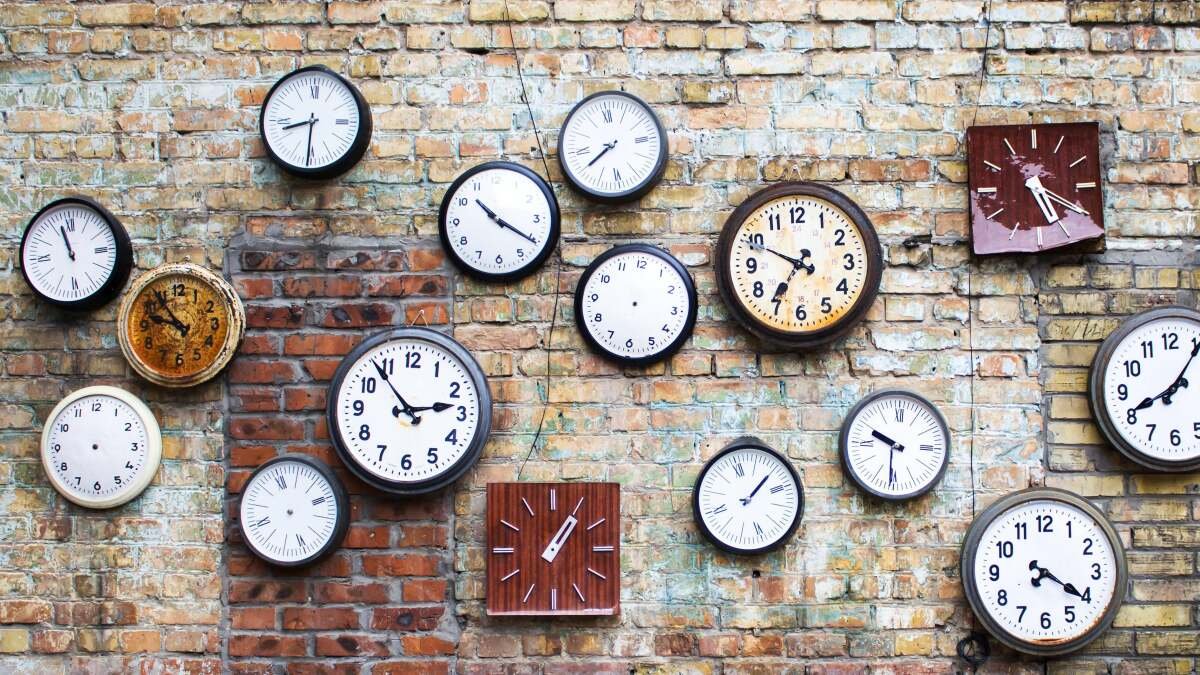

The Perpetual Pendulum: Why America Still Changes Its Clocks
As autumn leaves begin to fall, so too will our clocks, marking the familiar “fall back” into standard time. November 1st, 2026, will see most of the U.S. once again adjust their schedules, an annual ritual that persists despite growing public frustration, compelling health warnings, and repeated legislative attempts to abolish it. Why, then, are we still stuck on this temporal treadmill?
The Ticking Health Bomb: Why Experts Want Change
The biannual shift between Daylight Saving Time (DST) and standard time is far from a benign inconvenience; it’s a public health concern. Medical professionals and researchers have increasingly vocalized the detrimental effects these changes have on human biology. A significant study from the Stanford School of Medicine, for instance, links the time shifts to increased rates of stroke and obesity. The disruption to our natural circadian rhythms, the body’s internal clock, is a key culprit.
Circadian Rhythms vs. Clock Changes
The American Academy of Sleep Medicine (AASM) has taken a firm stance, publishing a position paper asserting that scientific evidence overwhelmingly supports the elimination of seasonal time changes. Their recommendation? A permanent switch to standard time, which they argue aligns most harmoniously with human circadian biology. While permanent DST might offer some improvements over the current system, the AASM contends that permanent standard time is the optimal choice for our collective health and safety.
Legislative Labyrinth: The Quest to Abolish Clock Changes
Despite the scientific consensus and public sentiment, efforts to end the clock-changing tradition have repeatedly stalled in the halls of Congress. The most prominent recent attempt was the “Sunshine Protection Act.”
The Sunshine Protection Act: A Near Miss
This federal bill aimed to make Daylight Saving Time permanent across the nation. Had it been enacted, it would have taken effect on November 5, 2023, eliminating the “fall back” for good. The proposed change promised an hour more of daylight in winter evenings, albeit at the cost of darker winter mornings. The bill enjoyed bipartisan support, passing the Senate in March 2022, a moment that sparked hope for many. However, it ultimately failed to be taken up by the House of Representatives, leaving the nation in its familiar time-shifting pattern.
Renewed Calls and Stalled Momentum
More recently, in July 2026, a similar bill did pass the House. Former President Trump also weighed in, urging Senate Republicans to advance what he dubbed the “No More Changing of Clocks Act.” Yet, the Senate Majority Leader indicated a lack of sufficient support, citing concerns over permanently dark mornings for commuters and schoolchildren awaiting buses as a primary obstacle. This highlights the deep division and practical challenges in finding a universally acceptable solution.
The Great Debate: Standard Time vs. Daylight Saving
The core of the legislative deadlock often boils down to a fundamental disagreement: which time should we adopt permanently? The U.S. currently operates under two distinct systems: standard time (our winter setting) and daylight saving time (our summer setting), each with its own designated time zones (e.g., EST vs. EDT).
The Health Argument for Standard Time
While the Sunshine Protection Act championed permanent DST, the American Academy of Sleep Medicine advocates for permanent standard time. Their reasoning is rooted in health: aligning our clocks with the sun’s natural cycle minimizes the disruption to our circadian rhythms, which is crucial for overall well-being. If their recommendation were adopted, we would “fall back” one last time and never “spring forward” again.
States Take the Lead (or Try To)
In the absence of federal action, states have explored their own temporal solutions. Current federal law, established in 1966, allows states to opt out of Daylight Saving Time and remain on permanent standard time. Hawaii and Arizona (with the exception of the Navajo Nation) have exercised this option, enjoying a consistent clock year-round.
The Push for Permanent DST at State Level
However, states are not permitted to unilaterally switch to permanent Daylight Saving Time. This requires a change in federal law. Nevertheless, nineteen states have passed laws or resolutions expressing their readiness to adopt permanent DST should federal approval ever come. These include Alabama, Colorado, Delaware, Florida, Georgia, Idaho, Louisiana, Maine, Minnesota, Mississippi, Montana, Oklahoma, Oregon, South Carolina, Tennessee, Texas, Utah, Washington, and Wyoming. Several other states, like Kentucky, Ohio, and California, have seen similar legislative attempts or voter authorizations, though none have yet been fully enacted due to the federal constraint.
The Unending Cycle
For now, the biannual clock change remains a fixture of American life. Until a federal consensus emerges, states eager for change are bound by existing regulations. For those truly fed up with the temporal gymnastics, a move to U.S. territories like the Virgin Islands or Puerto Rico, which do not observe Daylight Saving Time, offers the only immediate escape from the perpetual spring forward and fall back.
For more details, visit our website.
Source: Link








Leave a comment