




America’s recent economic surge has been significantly fueled by an unprecedented boom in data center construction. Yet, this high-octane growth engine, largely driven by the insatiable demands of artificial intelligence, faces a potential slowdown that could send ripples through the construction sector and financial institutions alike.
The Foundation of the AI Economy: Concrete and Code
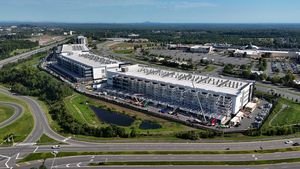
In rural Richland Parish, northeast Louisiana, Kayla Caskey exemplifies the entrepreneurial spirit spurred by this boom. She transformed her inherited land into South Stuart RV Park, a bustling hub for the thousands of construction workers building Meta’s colossal $27 billion Hyperion data center. While her 12 spaces quickly filled, Caskey remains acutely aware of the temporary nature of this prosperity. “It may just be land out there again,” she shared with Fortune in March, hoping the venture pays off before the crews depart.
A Pillar of U.S. Economic Growth
The scale of investment in data centers is staggering. Private companies are constructing these digital fortresses at an annual rate of approximately $85 billion, marking a 73% increase year-over-year. This spending now constitutes a substantial portion of the nation’s economic expansion. Researchers at the St. Louis Fed revealed that AI-related expenditures—encompassing equipment, software, research, and data centers—accounted for a remarkable 39% of all U.S. growth in the first nine months of 2025. This share even surpasses the peak of dot-com era spending in 2000.
However, this growth narrative is unique. It’s largely a “buildout phase,” as Federal Reserve Board economists noted in July, driven by companies investing heavily in chips and infrastructure for an AI movement that has yet to yield substantial commercial returns. This means a significant chunk of America’s economic vitality hinges on continuous, escalating AI investment.
The Potential Fallout: Who Pays When the Boom Cools?
Should the pace of AI investment decelerate, the consequences would extend far beyond tech giants. Construction workers, currently enjoying a surge in demand, would face idle hands. Households could be burdened with the costs of power infrastructure built to serve these data centers, and banks that financed their construction would grapple with potential losses.
Construction’s Unsung Heroes
While other commercial construction sectors like offices, warehouses, and hotels face cutbacks, data center projects remain a lifeline for contractors. In August, spending on data centers nearly doubled that on new office spaces. This shift has created a highly competitive labor market, with 60% of firms engaged in data center construction reporting worker additions, compared to just 36% of others. The demand is so high that about half of these builders feel pressured to raise wages, reflecting a tight labor market where the construction unemployment rate hit a 26-year low of 3.1% in August.
Yet, the long-term picture for communities like Richland Parish is less certain. While 3,700 workers were on-site during construction, Meta projects only “more than 500 permanent jobs” once Hyperion is operational. The RV parks and local businesses that thrived on the construction influx will soon need new customers.
The Financial Tightrope: Betting on Future AI Returns
Despite heavy spending, AI’s economic boost began to wane last year. Growth contributions from AI-related spending dropped from 1.3 percentage points in Q1 2025 to less than half a point by Q3, not because spending decreased, but because its rate of increase slowed. To sustain growth, each year’s AI investment must outpace the last—a challenging prospect when major players are already committing nearly all their incoming revenue.
Consider Meta: in Q2, it spent $31.1 billion on buildings and equipment, almost matching its $31.9 billion cash intake. The company anticipates spending $130 billion to $145 billion this year, funding this through borrowing and halting stock buybacks. Meta’s long-term debt soared by $25 billion in the first half of this year to $83.7 billion, a stark illustration of tech giants making massive bets on AI sales that are still years away. The chasm between current investment and future revenue remains a significant concern.
For more details, visit our website.
Source: Link







Leave a comment