



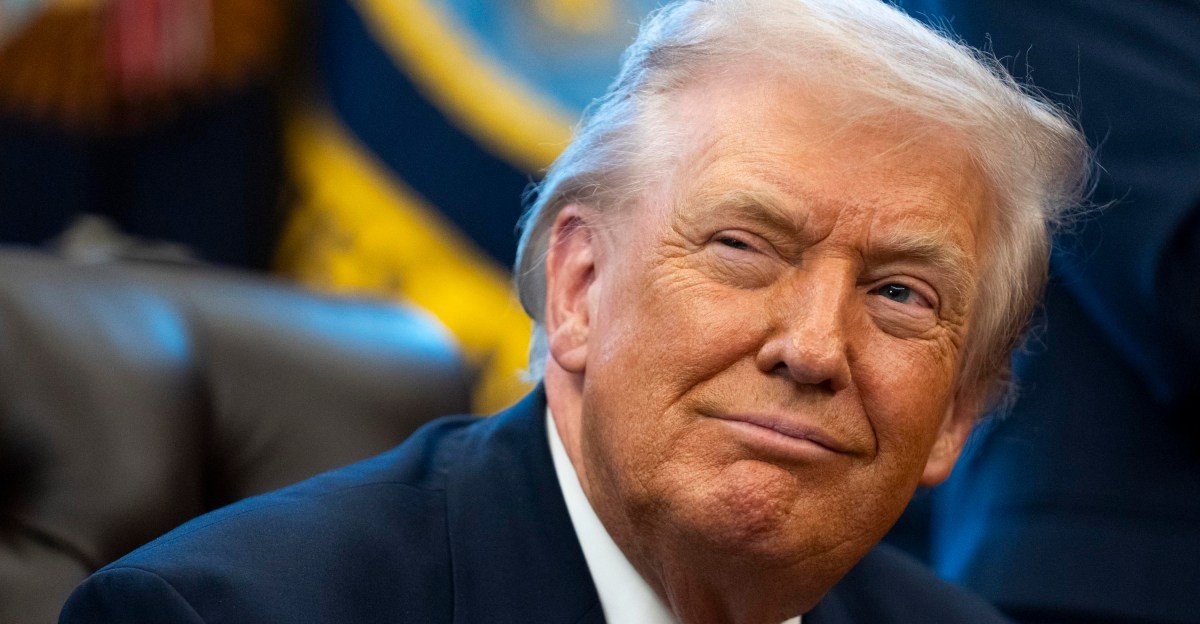

In a move that has sent ripples through the technology and policy sectors, President Donald Trump has issued an executive order mandating a fundamental shift in how the U.S. government refers to artificial intelligence. Henceforth, all official policy websites, documents, and press releases from the executive branch will exclusively use the term “Super Intelligence,” effectively erasing “artificial intelligence” from the federal lexicon.
A Semantic Shift: Why “Super”?
President Trump unveiled the rebranding initiative during an event marking the launch of America.gov, asserting that “The word super is the best word of all, and it’s the simplest.” He elaborated on his disdain for the term “artificial,” likening it to “fake news” and arguing that the technology is anything but artificial. “We don’t want to hear artificial. Because it’s not artificial. It’s very powerful, it’s very brilliant. It’s going to mostly be put to good use and we’ll stop the bad use,” Trump stated, echoing sentiments he first shared at the United Nations General Assembly last week. The President also noted that Chinese President Xi Jinping, who recently visited the White House, “loves it” too, suggesting a bipartisan, or perhaps even international, appeal for the new nomenclature.
This semantic pivot, announced on September 29, 2026, aims to quell growing public anxieties surrounding the rapid advancement and potential risks of AI. While “superintelligence” is an existing industry term typically reserved for hypothetical AI far surpassing human intellect, the Trump administration’s order broadens its application to encompass the entire spectrum of what was previously known as AI. Federal officials are now expected to refrain from using “artificial intelligence” or “AI” in any relevant official context.
Tech Titans and the Path to “Self-Regulation”
The executive order followed a high-profile White House luncheon hosted by President Trump, bringing together prominent tech CEOs and government officials to discuss the burgeoning field of “Super Intelligence.” Among the attendees flanking the President during brief post-meeting remarks were Nvidia CEO Jensen Huang and Tesla and SpaceX CEO Elon Musk. Trump characterized the gathering as “very productive” and “extremely friendly,” underscoring a seemingly harmonious dialogue between government and industry leaders.
Industry Oversight: A Hands-Off Approach?
A key takeaway from the discussion, according to Trump, was a shared belief in “tremendous self-regulation.” He suggested that existing federal bodies like the Department of Justice and the FBI already provide sufficient oversight, implying a less interventionist approach from the administration. Furthermore, addressing concerns at the local level regarding the expansion of massive data centers—critical infrastructure for “Super Intelligence” operations—Trump expressed confidence that tech firms would “work to make the community happy” through resource provision and economic support. He optimistically concluded that “data centers are going to be very popular.”
The Road Ahead for “Super Intelligence”
While the executive order does not necessitate changes to past regulations or documents, its implications for future policy, public perception, and international discourse are significant. The shift from “artificial intelligence” to “Super Intelligence” is more than a mere linguistic preference; it signals a deliberate attempt to reshape the narrative around advanced technology, emphasizing its power and potential for good while downplaying any perceived “artificiality” or inherent risks. As the U.S. government embraces this new terminology, the world watches to see how this redefinition will influence the development and governance of these transformative technologies.
For more details, visit our website.
Source: Link








Leave a comment