





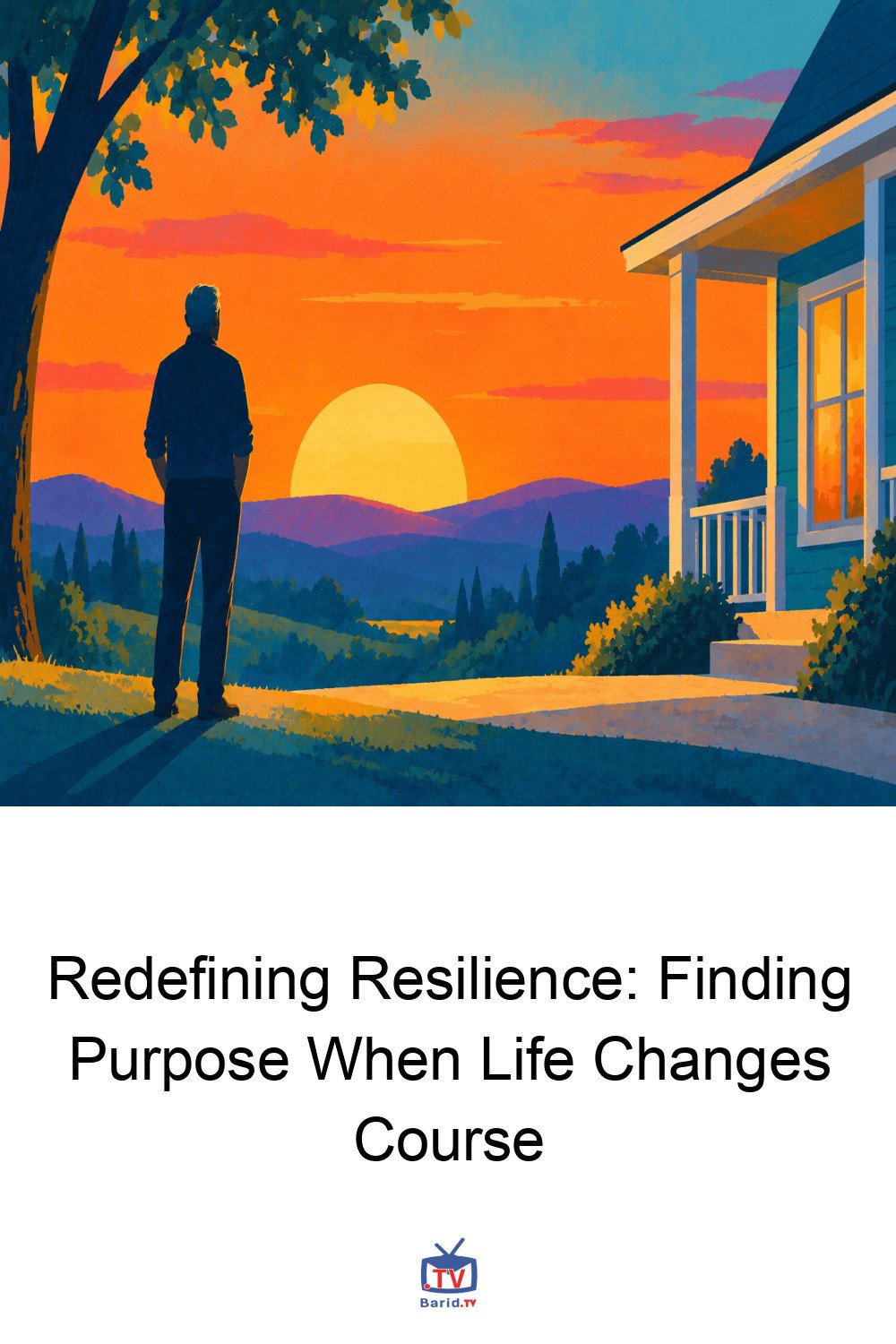
“What stands in the way becomes the way.” ~Marcus Aurelius
Life has a peculiar way of reshaping our paths, often without our consent. For me, that reshaping came in the form of two strokes, each a profound interruption that demanded a complete re-evaluation of how I navigated the world. Simple acts like walking became a conscious effort, balance a persistent challenge, and the clarity of thought I once took for granted sometimes gives way to a frustrating fog. My body, once a reliable instrument, now often marches to a different beat than my mind. Over the years, a cascade of other health issues has only added to this complex symphony of adaptation.
Embracing a New Rhythm: The Art of Adaptation
This isn’t a plea for sympathy; it’s an exploration of resilience. My health journey has, paradoxically, sharpened my appreciation for what I can still do, even if the ‘how’ has fundamentally changed. The old mantra of working tirelessly until a task was complete has given way to a more measured approach. Now, a project might demand frequent breaks, a moment to sit, to recalibrate. The mental blueprint of an endeavor, once a clear path, often clashes with my body’s current capabilities. And yes, that can be profoundly frustrating.
There are countless moments when I look at a task and think, “I should be able to do this.” The internal dialogue shifts, and I remind myself: “Perhaps not the way you used to.” This isn’t a surrender, but an acceptance that the timeline might stretch, the effort might be different, but the goal remains attainable. Learning that sometimes, simply getting one thing done is a victory has been one of the most challenging, yet liberating, lessons.
Building a Home, Rebuilding a Life: A Parallel Journey
This philosophy of incremental progress and redefined success has found its most tangible expression in the renovation of my home. When we acquired it, the sheer volume of work was daunting. Overwhelm was a real possibility. But instead of seeing a mountain, I saw individual stones. I started somewhere, anywhere. The kitchen, the floors, the bathroom, the walls, the wiring, the porch, the windows – each became a chapter in an ongoing story. There’s always another task, another corner needing attention. And honestly, I’m not convinced this house will ever be truly “finished.”
And that, I’ve come to realize, is perfectly fine. Perhaps a home isn’t meant to be a static, completed entity. It’s a living canvas, evolving with the lives it shelters. You live in it, you change things, you fix things, you make mistakes, you change your mind. Kids grow, people come and go, things break, life happens. These are the brushstrokes that give it character, that make it a home, not just a house. It’s not about pristine perfection; it’s about the vibrant imprint of lives lived within its walls.
The Soul of a Home: More Than Just Bricks and Mortar
Many aspects of my home might not impress a casual observer, but to me, they are imbued with profound meaning. I remember the “before” – the impossible challenges, the daunting state of disrepair. So, when I gaze upon a newly painted wall or a refurbished floor, I don’t just see the surface. I see the cumulative effort, the days I felt strong enough to work, and the days I pushed through exhaustion. I see the moments of frustration giving way to breakthroughs, and the helping hands of family and friends. A house is a structure; a home is the rich tapestry of experiences woven within it. It’s not about having the grandest dwelling or a perfectly finished space. It’s about taking what you have and pouring your heart into making something good, something meaningful.
Finding Purpose in the Unforeseen
My health shifted, my capabilities changed, my plans diverged. Yet, the innate desire to build, to create, to contribute to my family’s well-being, remained steadfast. So, I pressed on. Sometimes, that meant tackling tasks myself, adapting methods to suit my new reality. Other times, it meant acknowledging my limitations and seeking assistance. And, crucially, there were times when it meant doing absolutely nothing, accepting that my body simply couldn’t comply. That last one, the forced inactivity, has been the most arduous lesson, but I am, slowly, learning to embrace it.
This journey isn’t unique to me. Many face similar crossroads: job loss, divorce, bereavement, financial hardship, the inevitable march of age, or dreams that simply didn’t materialize. Life throws curveballs, and the future we envisioned suddenly dissipates. I offer no miraculous cure, no secret formula. My approach has been simple: keep finding something to work on. Whether it’s a house project, tending the yard, a small personal goal, or simply navigating the complexities of a single day, having something to anticipate, something to engage with, makes all the difference.
The Quiet Triumphs of Rebuilding
For me, anticipation often manifests as a new project. I’ll visualize a change, measure, plan materials, and imagine the outcome. Even if immediate action isn’t possible, the mental engagement, the forward-looking thought, provides a vital anchor. I’ve also discovered that the most significant acts of rebuilding are often the least obvious. A new ability gained, a good day after a string of difficult ones, stepping outside to breathe fresh air, sharing laughter with loved ones – these might seem insignificant to an outsider. But when life has been profoundly interrupted, these small, quiet triumphs are everything. They are the rediscovered joys, the moments of gratitude for what was once taken for granted, and the profound realization that even when the path changes, the journey continues, rich with new meaning.
For more details, visit our website.
Source: Link





Leave a comment