




Step into the hallowed halls of Industrial Light & Magic (ILM), and you’re immediately surrounded by the magic of cinema. From the epic sagas of Star Wars to the groundbreaking visuals of Jurassic Park and Terminator 2, ILM’s corridors are a testament to their legendary craft. Yet, amidst the iconic displays, a floor-to-ceiling poster of Darth Vader recruiting for the Imperial army hides a secret far more captivating than its imposing presence suggests.
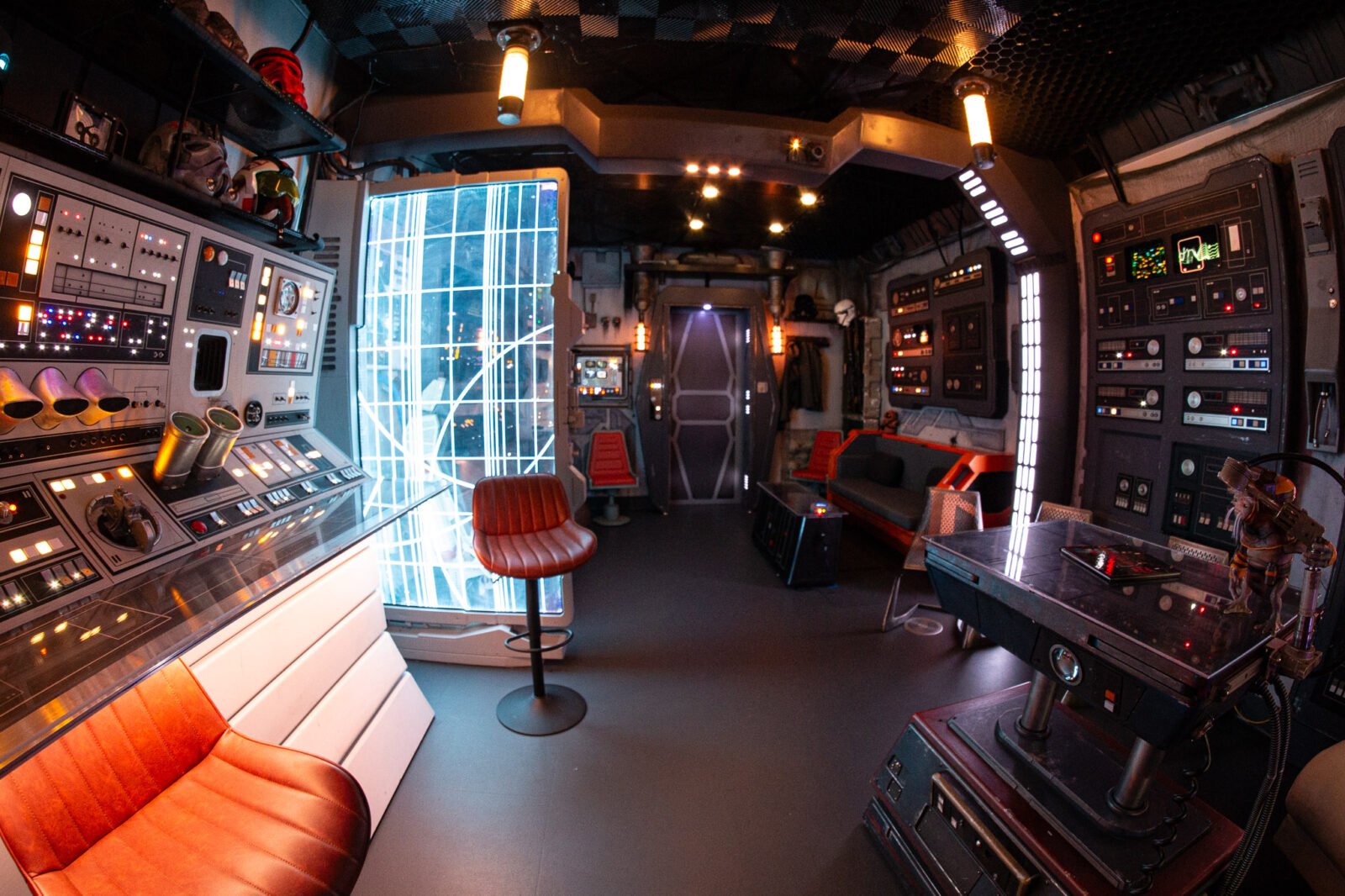
Slide behind that poster when no one’s looking, and you’re not just in another office space; you’re transported into a clandestine Rebel Hideout, meticulously constructed behind enemy lines within ILM’s own headquarters. This isn’t just a themed lounge; it’s an immersive experience, a literal slice of a galaxy far, far away.
A Dream Decades in the Making
The concept of a themed lounge at ILM wasn’t a fleeting thought; it was a decades-long aspiration championed by Staff R&D engineer Mike Jutan and Head of Computer Graphics Michael DiComo. Their unwavering vision, though long deferred, finally found its moment during an unexpected catalyst: a global pandemic. Integrated subtly into an office remodel, the project initially raised a few eyebrows – a conference room with a sink? But thankfully, no one intervened to halt its progress.
The Force Behind the Hideout
The Rebel Hideout is a testament to passion and collaborative ingenuity. Systems engineer Trent Bateman, alongside Tim Dobbert, spearheaded the intricate electronics and software development. Bateman, Paul DeBaun, and former AV design engineer Greg St. Germain brought the immersive soundscape to life. “There was a day when they turned on the soundtrack, and everybody in the room was like, oh my God, it just came to life,” recalls R&D engineer David Hirschfield. What appears as seamless paneling on the outside conceals countless hours of dedicated work from employees who, as fans themselves, poured their hearts into this dream project.
Crucially, former workplace services specialist Kyle Johnson facilitated access to an on-campus workshop, providing the team with essential tools like table saws and drill presses, and ample space for painting and fabrication. This was no ordinary office makeover; the team was determined to create something far beyond a cool secret entrance leading to mundane furniture. They envisioned a space that truly felt alive.
From Archives to Authenticity: Sourcing the Galaxy
With the vastness of the Star Wars universe, selecting a setting for their hideout was a daunting task. A Rebel base, a bustling cantina, or an Imperial starship? The possibilities were endless. The solution arrived unexpectedly: a call from the Lucasfilm archives. Practical sets, it turns out, consume immense space, and retaining every prop from every production is simply impractical. With Rogue One: A Star Wars Story, Andor season 2, Solo: A Star Wars Story, and Star Wars: Episode IX – The Rise of Skywalker having wrapped, a treasure trove of surplus set pieces became available.
The team received a PDF catalog, a veritable goldmine of items far exceeding their wildest expectations. Each entry featured a low-resolution thumbnail and a technical description of its original use and current condition. The challenge swiftly shifted from conceptualizing what to create to deciding what to omit. After poring over photos, estimating scales, and requesting to inspect around 30 different pieces, they acquired incredible artifacts: the Millennium Falcon’s navigation console from Solo, radar screens from Rogue One, and even a vending machine affectionately dubbed “Admiral Snackbar.” These authentic props dictated the dramatic setting of the room, firmly placing it within the era of the original trilogy, adorned with a compelling blend of Rebel and Imperial accoutrements.
Crafting the Lived-In Look
Initially, Regal Robot, renowned replica makers, were enlisted to craft custom furniture like a Millennium Falcon holochess table. However, with the influx of actual film props, their role evolved into curating the available pieces. They provided invaluable guidance on interior design, advising the ILM team on how to authentically decorate and “weather” items that were too pristine, including the room itself. Anything too shiny received a meticulous application of lived-in grime from Senior Look Development Technical Director Rebecca Forth’s dedicated team of volunteers, ensuring the walls perfectly matched the grimy realism of the set pieces.
Throughout the entire layout process, storytelling remained paramount. No piece of furniture was included unless it served the narrative, regardless of its aesthetic appeal. To optimize the space, a virtual layout was created, allowing for quick rearrangement and visualization. The goal was clear: not a conference room adorned with Star Wars memorabilia, but a hideout ripped straight out of the Star Wars universe.
For more details, visit our website.
Source: Link






Leave a comment