





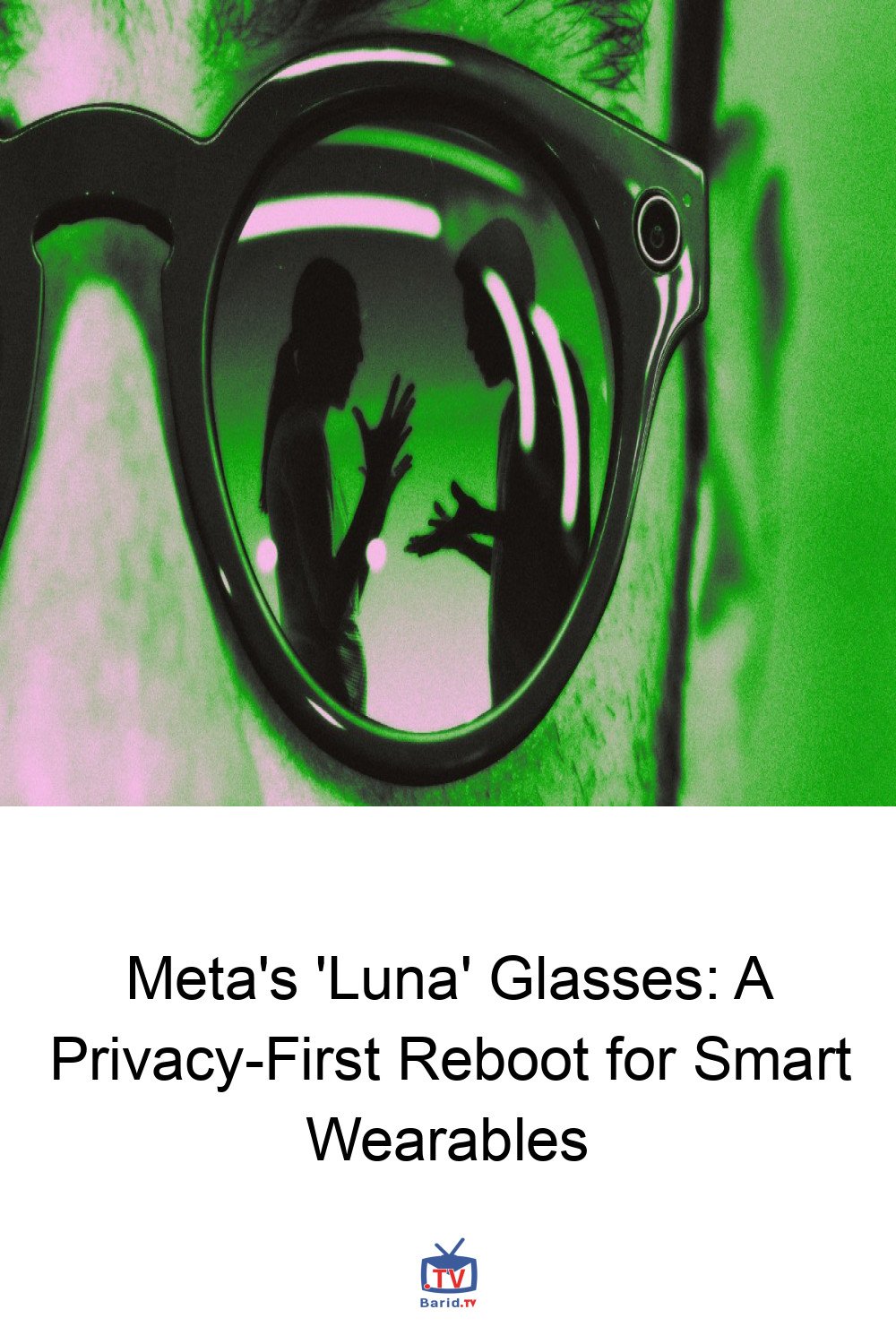
Meta is reportedly preparing to unveil a significant shift in its smart glasses strategy, with a new model designed to sidestep the privacy controversies that have plagued its predecessors. According to a report from The Information, the tech giant is set to introduce camera-free smart glasses, codenamed “Luna,” potentially as early as next week’s Meta Connect event. This move comes amidst a persistent public relations challenge for Meta, largely stemming from the video recording capabilities of its current smart eyewear.
Introducing Luna: A Focus on Audio and AI
The upcoming Luna glasses represent a distinct departure from Meta’s existing camera-equipped frames. Instead of visual recording, these new wearables will reportedly emphasize audio interaction and artificial intelligence. Equipped with six microphones, the Luna glasses are designed to facilitate seamless conversations with Meta AI and the company’s new Muse AI agent. Users will also benefit from integrated speakers for audio playback, transforming the glasses into a sophisticated, voice-controlled personal assistant.
A key advantage of omitting the camera is the ability to craft a more discreet and aesthetically pleasing design. The report suggests that stripping out the camera module has allowed Meta to significantly reduce the size of the glasses’ arms, making them appear much closer to conventional eyewear. Meta is reportedly aiming for an October shipment, with the Luna glasses expected to be available in two classic styles: Clubmaster and Burbank.
Confronting the “Pervert Glasses” Predicament
The introduction of camera-free glasses directly addresses the “pervert glasses” moniker and the widespread privacy backlash that has shadowed Meta’s smart eyewear venture. While existing frames have garnered some popularity, their video recording capabilities have led to significant public and institutional resistance. Instances of bad actors using the glasses for surreptitious recording, and even harassment for social media virality, have been well-documented. Consequently, Meta’s smart glasses have faced bans in various locations, from New York courtrooms to major pub chains across Britain.
Despite Meta’s efforts to mitigate these concerns, such as equipping glasses with a recording LED and implementing safeguards against tampering, the company has been caught in a continuous struggle. A dedicated group of users has reportedly developed workarounds to disable the recording LED, allowing for covert recording and intensifying the privacy debate.
Beyond Luna: A Glimpse at Future AR
The Information also indicates that the Luna glasses won’t be the only innovation unveiled at Meta Connect. New augmented reality (AR) glasses, codenamed “Phoenix,” are expected to make an appearance. These advanced AR glasses, slated for a 2027 release, promise to project virtual workspaces or movie screens directly into the user’s field of vision, building upon earlier AR concept devices from 2024. This broader roadmap underscores Meta’s long-term commitment to the wearable tech space, even as it navigates immediate privacy challenges.
New Features, Enduring Trust Issues
While the removal of the camera is a strategic step, it may not entirely resolve Meta’s privacy dilemmas. The recent launch of new Apple Watch models, for instance, sparked criticism over their always-on audio recording capabilities. Similarly, Meta’s Luna glasses, with their array of microphones and a design that makes them indistinguishable from regular frames, could still trigger new privacy concerns related to constant audio capture. Furthermore, Meta’s history with user data and privacy means the company often struggles to earn the benefit of the doubt from the public, making any new wearable launch a high-stakes endeavor.
This pivot towards camera-free smart glasses signals Meta’s attempt to redefine its wearable technology narrative, prioritizing user comfort and privacy perception. Whether this strategic shift will successfully rebuild trust and pave the way for broader adoption remains to be seen, but it certainly marks a pivotal moment in the evolution of consumer smart eyewear.
For more details, visit our website.
Source: Link





Leave a comment