




In a landmark move poised to reshape global alliances, the European Union has formally invited Canada to become its first-ever ‘associate member’. This unprecedented offer, extended by European Commission President Ursula von der Leyen, signals a profound deepening of ties between Brussels and Ottawa, arriving at a critical juncture as Canada navigates an escalating trade dispute with the United States.
A Strategic Pivot Amidst Trade Tensions
The proposal comes as Canadian Prime Minister Mark Carney actively seeks to forge a closer economic and security relationship with Europe. Speaking during her annual State of the Union address in Strasbourg, France, President von der Leyen underscored the bloc’s ambition to elevate the EU-Canada relationship “to the highest level possible.”
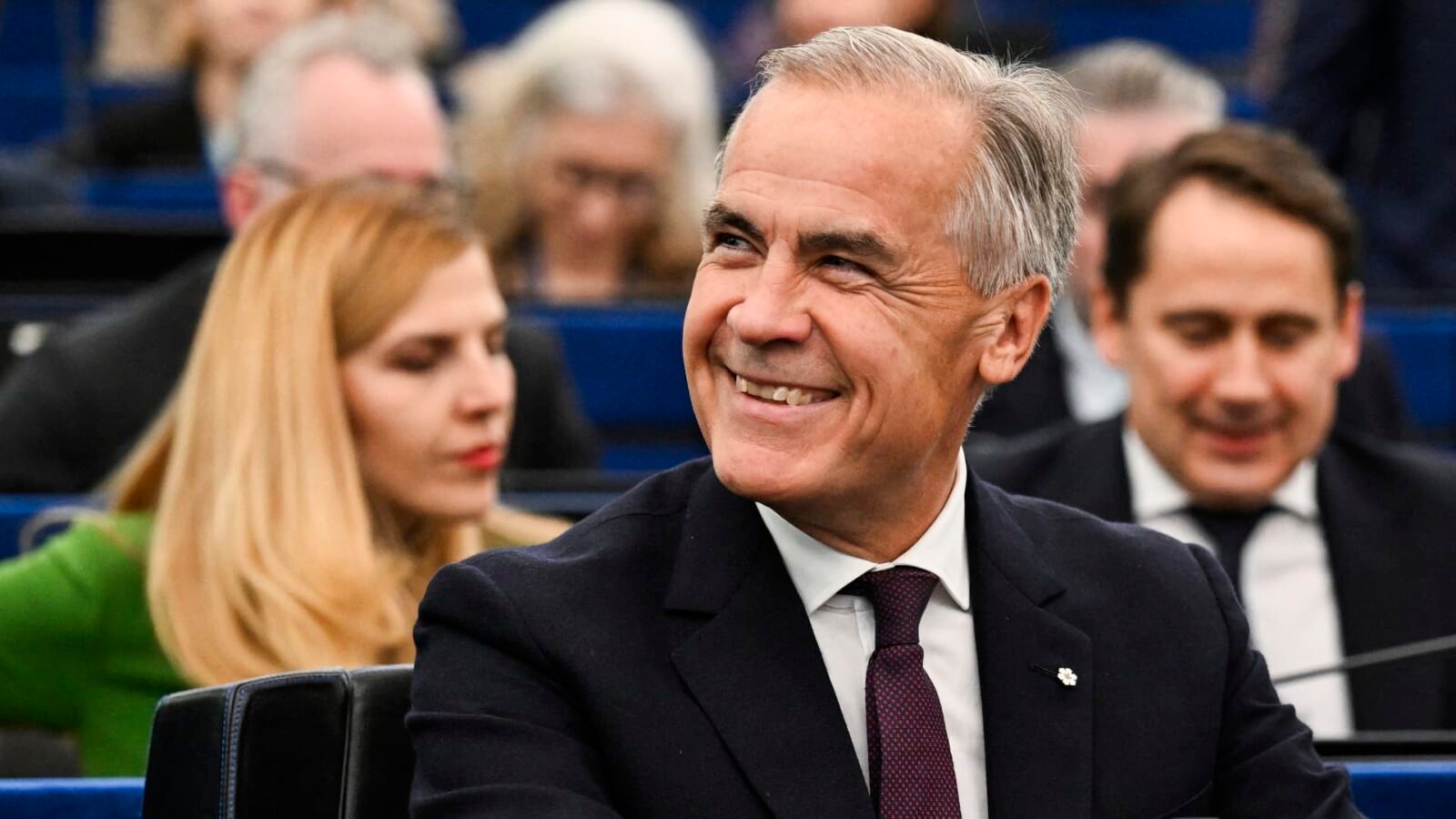
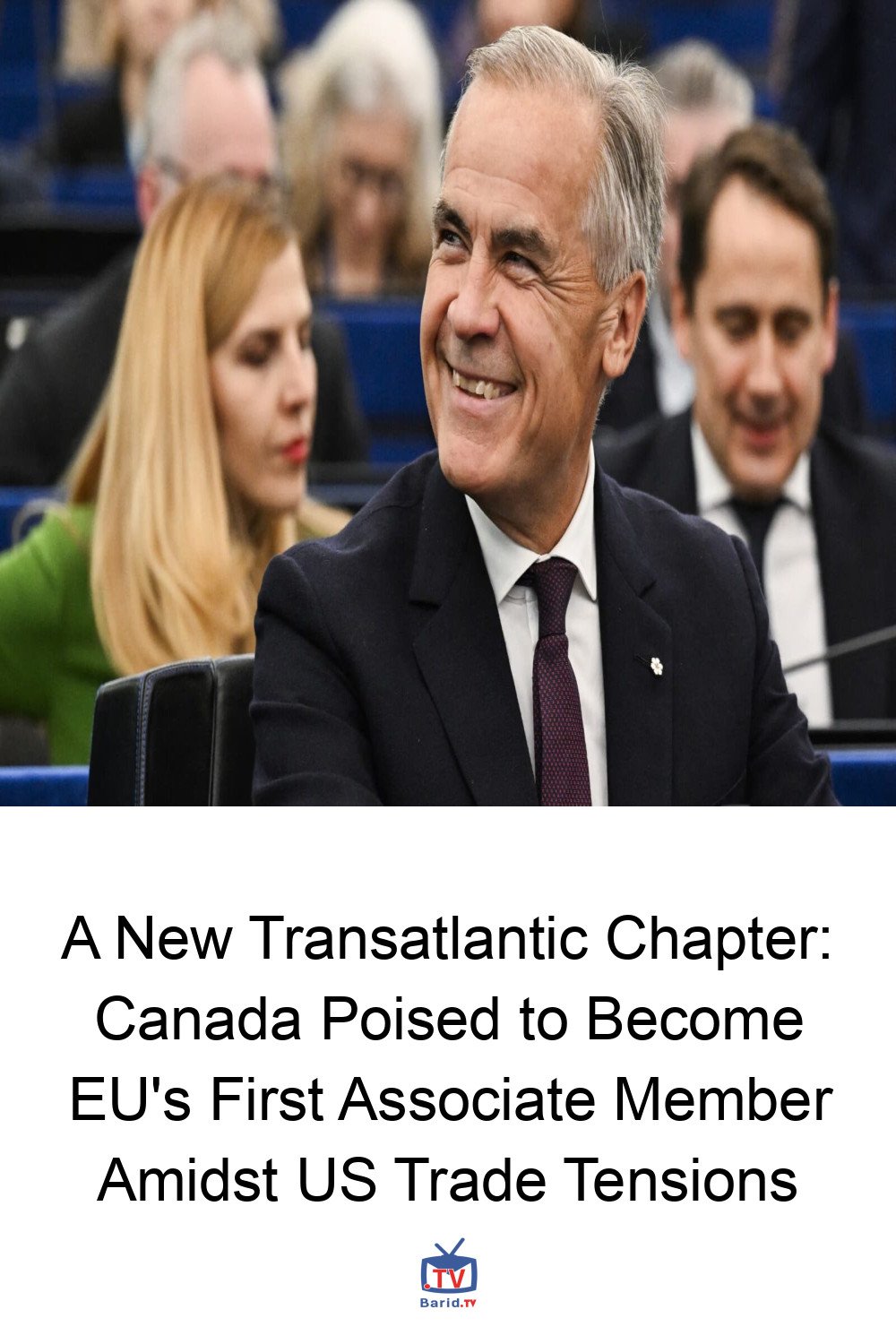
“And, dear Mark, I said we must urgently reimagine our partnerships so I would like to work with you on opening the door for Canada to being the first associate member of the European Union,” von der Leyen declared, directly addressing Prime Minister Carney, who was present for the address and is scheduled to speak to EU lawmakers.
Canada’s pursuit of a “unique security and economic alliance” with Europe, as previously articulated by Carney, aligns perfectly with this new overture. While Ottawa has clarified it is not seeking full membership, the associate status offers a pathway to significantly enhanced cooperation without the full obligations of a member state.
Canada’s Stance Against US Tariffs
The timing of this invitation is particularly salient. Canada is currently embroiled in a bitter trade war with the U.S., having pledged to retaliate against President Donald Trump’s tariffs dollar for dollar. This economic friction with its southern neighbour makes a stronger European partnership an increasingly attractive proposition for Canada.
Von der Leyen emphasized a shared global outlook, stating that the EU and Canada “see the world with the same eyes.” She committed to collaborative efforts on pressing global issues, including artificial intelligence, climate change, geopolitics, and Arctic security – areas where both entities have significant common ground.
Building on Existing Foundations: Beyond CETA
The relationship between the EU and Canada is already robust, anchored by the Comprehensive Economic and Trade Agreement (CETA). This free trade pact, provisionally enacted in 2017, eliminated 99% of all tariff lines, fostering substantial economic exchange.
However, the new associate membership aims to transcend mere trade. “We will move from CETA to an alliance for the future, to create a common prosperity and economic security space,” Von der Leyen articulated, signaling a vision for a comprehensive strategic partnership.
A Shifting Global Landscape
This move marks a notable evolution in EU policy. Historically, the bloc has shown reluctance towards flexible membership categories, as evidenced by earlier discussions regarding associate membership for Ukraine. However, the current geopolitical climate appears to be prompting a re-evaluation.
Expert Insights on a New Era of Partnerships
Holger Schmieding, chief economist at Berenberg, hailed the development as “a big step, indeed.” He explained, “Europe is trying to openly form new partnerships or deepen partnerships with all countries in the world that are sort of like-minded.”
Schmieding further elaborated on the strategic rationale: “It is not necessarily against the U.S., but it is clearly in favor of making us less dependent on the U.S. and less dependent on China, and that deeper partnership with other countries, like-minded democracies, is actually something we see in the economic re-arm.” This perspective highlights a broader European strategy to diversify its international dependencies and strengthen its position on the global stage.
Visions of a Larger EU
The idea of expanding the EU’s reach has been gaining traction. Earlier this year, Finnish President Alexander Stubb advocated for a “much larger European Union,” envisioning a bloc of up to 40 states to project greater global power. Stubb provocatively suggested, “Wouldn’t it be lovely if Canada was the 28th state of the European Union rather than the 51st state of the United States?” – a clear reference to perceived US ambitions.
The Rise of ‘Middle Powers’
Prime Minister Carney himself has been a vocal proponent of international cooperation among “middle powers.” At the World Economic Forum in Davos, he urged such nations to unite to counter the rise of hard power and foster a more cooperative and peaceful global order. The EU’s invitation to Canada could be seen as a direct manifestation of this philosophy, creating a powerful new bloc of like-minded democracies committed to shared values and mutual prosperity.
For more details, visit our website.
Source: Link








Leave a comment