
From Cinder Blocks to Custom Chic: The Lavish Dorm Room Revolution
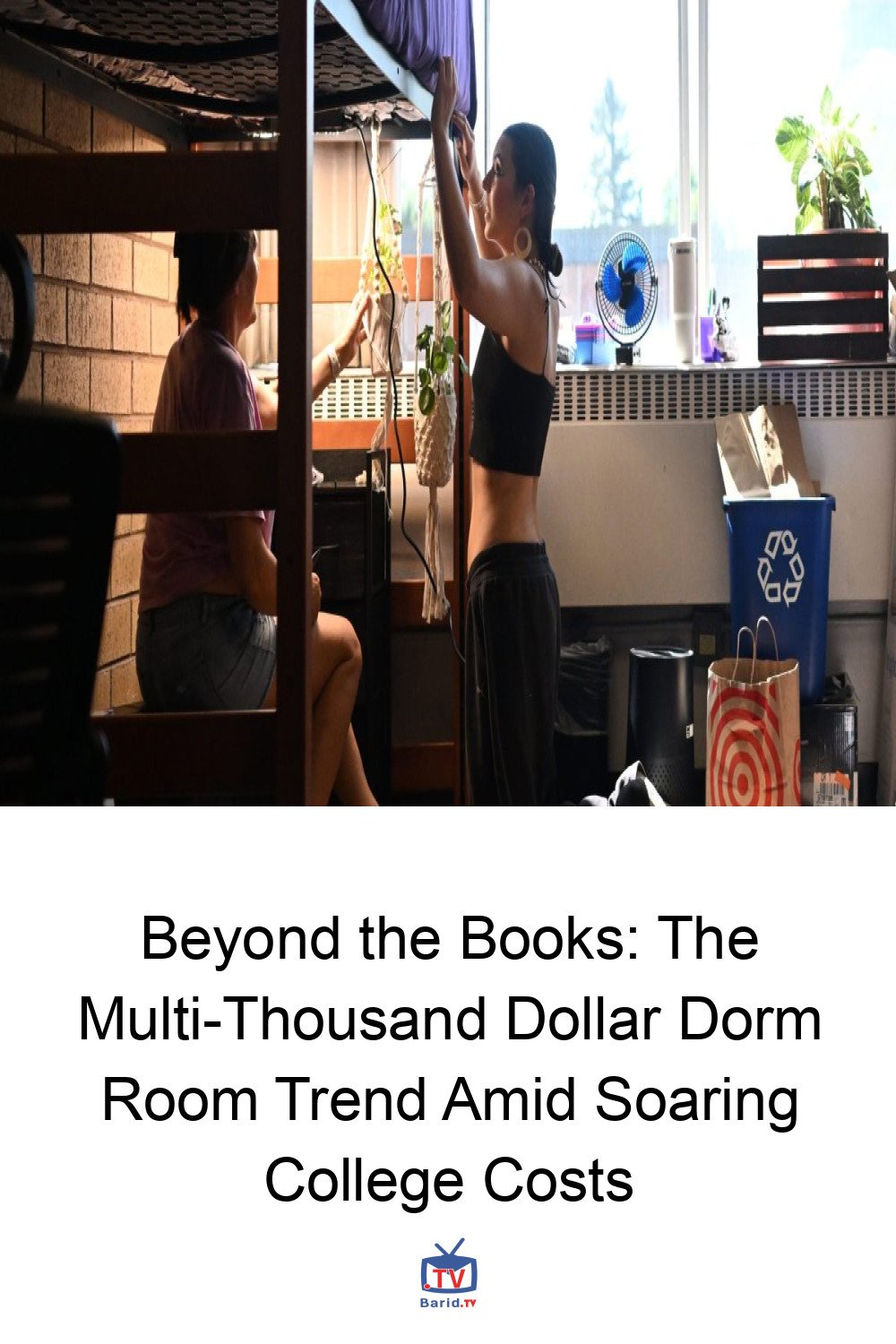
Gone are the days when college move-in meant little more than a stack of twin XL sheets, a basic shower caddy, and a few band posters clinging precariously to a cinder-block wall. Today, for a growing number of families, preparing for university life involves a significantly more elaborate, and expensive, undertaking: transforming temporary dorm rooms into meticulously designed, high-end living spaces.
This burgeoning trend sees parents shelling out thousands of dollars on custom headboards, designer wallpaper, matching bedding ensembles, and even professionally installed decor. It’s a phenomenon that has not only spawned an entirely new ‘dorm-design’ industry but also fuels a relentless stream of aspirational room reveals across platforms like TikTok and Instagram.
The Paradox: Luxury Dorms vs. Six-Figure Tuition
This surge in discretionary spending on student accommodations unfolds against a backdrop of unprecedented financial strain in higher education. A recent CNBC analysis reveals that the annual sticker price at dozens of U.S. colleges and universities now approaches or even exceeds a staggering $100,000. This all-encompassing figure covers tuition, fees, room and board, books, transportation, and other essential expenses.
The financial commitment doesn’t stop at tuition. The National Retail Federation and Prosper Insights & Analytics report that college students and their families are projected to spend a record $103.5 billion on back-to-school preparations this year, a significant jump from $88.8 billion last year. A remarkable $14 billion of this sum is earmarked for dorm and apartment furnishings alone, up from $12.8 billion.
While the average family budgets around $194 for this category, the increasingly elaborate nature of dorm decor can easily push that bill into the thousands, prompting many to question the priorities of such expenditures.
Comfort as an Investment: A Student’s View
Despite the eyebrow-raising price tags, students themselves often advocate for the investment in their living spaces. Henley Bedwell, an incoming freshman at James Madison University, articulated this perspective to Axios: “No matter how people think how absurd spending all this money on your dorm room is, your kid’s gonna be here for the next nine months. Why would you not rather them be comfortable?”
Meet the Architects of Dorm Dreams
The demand for bespoke dorm interiors has given rise to a specialized industry, exemplified by entrepreneurs like Shelly Gates, founder of Mary Margaret Designs. What began as a personal project – decorating her daughter’s dorm at Mississippi State in 2020 and sharing photos on Facebook – quickly blossomed into a full-time career. Gates, who vividly recalls her own Louisiana State University dorm as “essentially a prison cell,” now crafts rooms featuring custom desk canopies, remote-controlled chandeliers, and commissioned artwork.
Gates is set to design approximately 35 dorm rooms this year, with some past projects reaching up to $20,000. She frames these expenditures as a four-year investment, aiming for decor that serves as a lasting memory of college, rather than something quickly outgrown.
Navigating the $100,000 College Experience
It’s crucial to note that a $100,000 sticker price doesn’t always translate to every student paying that exact amount. However, crossing the six-figure threshold is a significant symbolic milestone for an industry already grappling with pressing questions about affordability and the inherent value of a college degree.
Interestingly, the families investing heavily in dorm decor aren’t necessarily the same ones shouldering the full six-figure tuition burden. Sara Harberson, author of the college admissions guide
Soundbite and CEO of Application Nation, observes that the designer-dorm trend is particularly prevalent at large public universities in the South. Here, even out-of-state tuition can be considerably less than at some private institutions, leaving families with more financial flexibility for discretionary spending post-tuition.
Merit aid further widens this gap. Many large public Southern universities offer substantial merit scholarships, even to out-of-state students, a stark contrast to the more elusive awards at some elite private universities. For these families, choosing a less expensive institution can free up funds for everything from elaborate dorm decorations to increased savings.
“In the end, families are making it clear where and what they want to spend their money on, when it comes to college,” Harberson told Fortune, highlighting a shifting landscape of priorities in higher education spending.
For more details, visit our website.
Source: Link