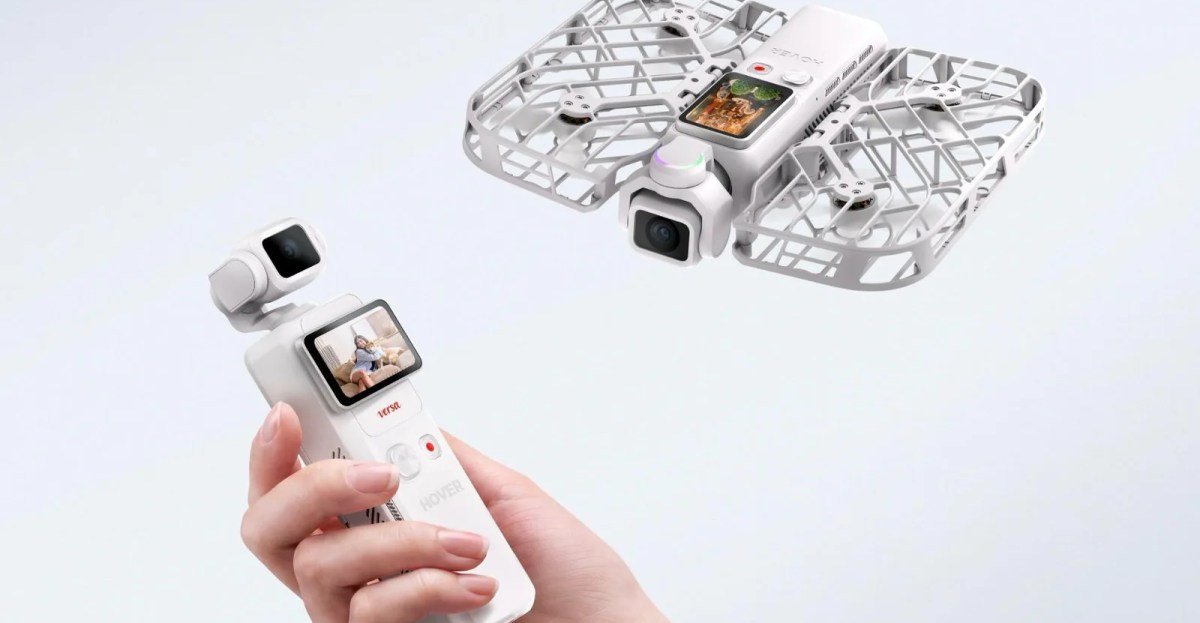

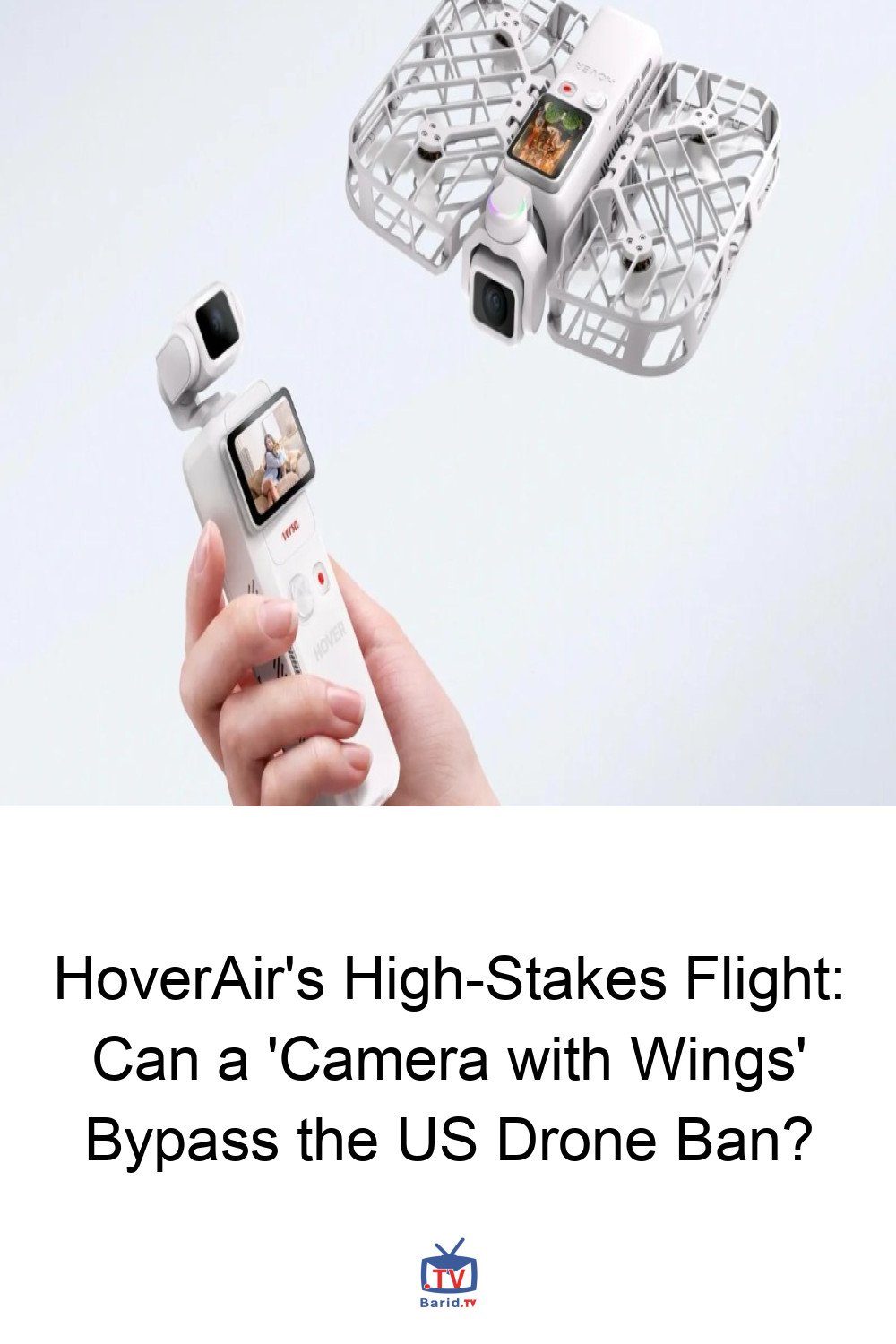
In a bold move that challenges the very definition of a drone, Zero Zero Robotics, the company behind the innovative HoverAir brand, is attempting to navigate the stringent new US foreign drone ban with its latest offering: the HoverAir Versa. This $750 device, marketed as a DJI Pocket-style mini steadycam with optional snap-on propellers, raises a crucial question for regulators and consumers alike: can a camera with wings truly dodge the FCC’s watchful eye?
The Ingenious Gambit: A Camera, Not a Drone?
HoverAir has a history of introducing gadgets with unique selling points, from pocket-sized foldable drones to aquatic models. However, the Versa represents their most audacious strategy yet. Following the December 2025 US government ban on future foreign drones—a measure that saw HoverAir’s Aqua drone grounded—Zero Zero Robotics believes it has found a clever workaround.
According to Anita Facundo, HoverAir’s global marketing director, the “Flight Kit” is merely an accessory that extends the Versa’s capabilities. “Therefore, HOVERAir is in full compliance with the applicable regulatory requirements for the full product configuration offered to US customers,” Facundo stated to The Verge. Public records indicate that the FCC granted approval for the HoverAir Versa on August 9th, with the company promptly launching it on Indiegogo, assuring customers of its regulatory clearance.
Unpacking the FCC’s Foreign Drone Ban
The December 2025 ban significantly altered the landscape for foreign drone manufacturers. It specifically prevents the FCC from automatically approving the radios of any foreign-made drone unless the company can prove US manufacturing or demonstrate no national security threat. Notably, the ban’s camera restrictions were initially limited to DJI and Autel Robotics, explicitly named in the 2025 National Defense Authorization Act (NDAA).
This distinction forms the bedrock of HoverAir’s strategy. When submitting its paperwork, HoverAir focused solely on the camera component of the Versa. They truthfully informed the FCC’s agent—a private Telecommunications Certification Body (TCB)—that HoverAir was not on the banned list for camera certifications. The TCB, acting on this information, signed off on the approval.
The Propeller Paradox
The detachable propellers, the very components that transform the Versa into a flying machine, present another layer to this regulatory puzzle. Since these propellers connect physically via copper contacts and do not contain wireless radios, HoverAir may argue they fall outside the FCC’s direct certification purview. This technicality is central to the perceived loophole.
The Looming Threat: A Loophole Under Scrutiny
While HoverAir’s initial success seems promising, the reality is far more complex. A deeper dive into the FCC’s orders reveals a potential Achilles’ heel for the Versa. The foreign drone ban extends beyond just “drones” to include “UAS critical components.” Crucially, the FCC has explicitly identified cameras as one such critical component.
Given that the HoverAir Versa’s camera contains wireless radios, it undeniably falls under the FCC’s jurisdiction. The agency, which typically outsources initial certification decisions to private bodies, is now likely to take a closer look at HoverAir’s ingenious interpretation of the rules. Should the FCC determine that the Versa is indeed a “UAS critical component” in its full, flying configuration, it possesses a rarely used but potent tool: the ability to reverse a certification within 30 days. As of the article’s original publication, HoverAir remains within this critical window.
What This Means for Consumers and the Future of Tech Regulation
HoverAir has demonstrated good faith in the past, offering refunds for the Aqua drone when its US shipment became untenable. The company also sells the Versa camera independently, though it appears few customers are opting for the non-flying version. For prospective buyers of the HoverAir Versa in the US, caution is advised. Investing in the device before the FCC definitively clarifies its stance could lead to disappointment.
This saga underscores the dynamic and often unpredictable nature of tech regulation. As innovation pushes boundaries, regulatory bodies like the FCC are constantly challenged to adapt, define, and enforce rules in an ever-evolving technological landscape. The HoverAir Versa’s flight path through US regulations is far from clear, making it a compelling case study in the ongoing dance between innovation and oversight.
For more details, visit our website.
Source: Link