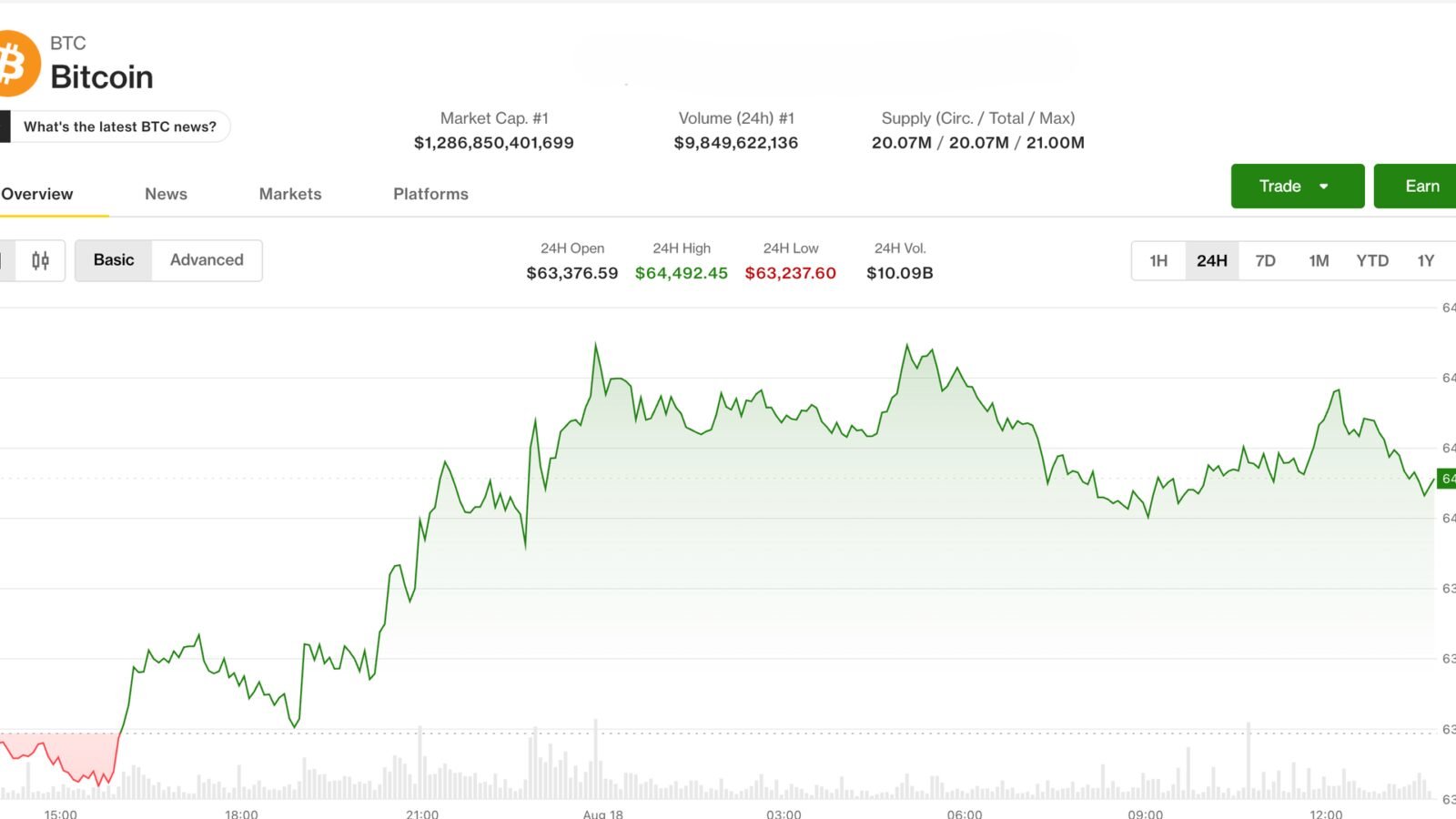

In a financial landscape increasingly defined by volatility, Bitcoin (BTC) is demonstrating remarkable resilience, holding firm above the $64,000 mark. This steadfast performance comes despite a brewing storm of macroeconomic pressures, including surging bond yields and escalating oil prices, which typically dampen investor appetite for risk assets. While traditional markets falter, the world’s leading cryptocurrency appears to be carving its own path, prompting analysts to question the underlying drivers of this unexpected divergence.
Global Headwinds Mount: A Perfect Storm for Risk Assets
The broader financial markets are currently grappling with significant challenges. The 30-year Treasury yield has climbed to an alarming 5.33%, a level not seen since 2007. This surge reflects growing investor demands for higher returns to offset persistent inflation and the increasing burden of government debt. This upward trend in long-dated yields is a global phenomenon, contributing to a third consecutive day of losses for S&P 500 futures, which dipped by 0.5%.
Adding to the economic unease, Brent crude oil prices have soared past $91 a barrel. This sharp increase is largely attributed to escalating geopolitical tensions, specifically the heightened US-Iran conflict, with reports of former President Trump’s threats regarding interference in US operations. Higher oil prices are a direct precursor to increased inflation, which in turn pushes bond yields higher, creating a feedback loop that tightens borrowing costs and typically siphons capital away from speculative investments.
The Crypto Market’s Mixed Signals
While Bitcoin maintains its ground, the wider cryptocurrency market presents a more varied picture. Ether (ETH) hovers around $1,893, and most other major altcoins remain relatively flat. An interesting outlier this week is Hyperliquid, which has seen an impressive 8.3% gain, indicating that selective pockets of the crypto market can still thrive amidst the broader macro environment.
Bitcoin’s Divergence: A Sign of Strength or Temporary Lull?
What truly stands out in this scenario is Bitcoin’s ability to not only hold its value but even post a modest 1% gain on the day, remaining in the green for the week. This contrasts sharply with the downturn in traditional stocks and the generational highs in bond yields. Such relative firmness suggests a potential decoupling, or at least a strong underlying demand that is absorbing the macroeconomic headwinds.
Many observers point to the “returning-ETF-demand thread” as a crucial factor. The influx of institutional investment through exchange-traded funds (ETFs) could be providing a robust floor for Bitcoin’s price, allowing it to withstand pressures that would typically send other risk assets tumbling. This narrative suggests that new buyers are actively entering the market, seeing Bitcoin as a distinct asset class rather than just another speculative play.
The Road Ahead: Key Levels and Potential Tests
For investors and enthusiasts, the coming days will be critical in determining whether Bitcoin can sustain this impressive divergence. A decisive break above the $64,500 mark would significantly strengthen the argument that fresh capital is indeed flowing in, effectively neutralizing the macro pressures. Conversely, any further escalation in oil prices towards $100 a barrel or continued upward movement in bond yields would undoubtedly put Bitcoin’s current resilience to a severe test. The market watches closely to see if Bitcoin can truly forge its own path in an increasingly turbulent global economy.
For more details, visit our website.
Source: Link