





NEAR Intents Blocks Millions in Bitget Hacker Funds, Igniting DeFi Debate
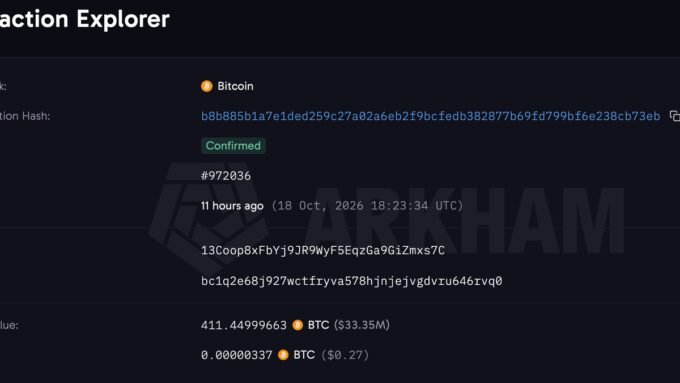
In a significant development that has sent ripples through the decentralized finance (DeFi) community, cross-chain swap platform NEAR Intents successfully intercepted over $50 million in attempted transfers linked to the recent $388 million Bitget exchange hack. While the majority of these illicit funds ultimately sought other routes, NEAR Intents managed to freeze a substantial $503,000 mid-transaction, sparking a fervent discussion about the very definition of a ‘permissionless’ protocol.
The incident, detailed in a report by NEAR Intents’ General Manager Alex Shevchenko, highlights a proactive stance against cybercrime that contrasts sharply with the approach of other platforms like THORChain, which has historically resisted requests to block attacker addresses. This intervention by NEAR Intents, a platform that proudly touts itself as open and uncensorable, has put its core principles to the ultimate test.
The SHIELD System: A New Frontier in Crypto Security
The attackers, who exploited Bitget on September 24, 2026, attempted to launder a significant portion of their stolen gains through NEAR Intents. However, the protocol’s proprietary “SHIELD” system sprang into action, blocking most of the suspicious transfers. According to Shevchenko, SHIELD automatically detects deviations in transaction flows, leveraging inputs from various Know Your Transaction (KYT) and intelligence providers, independent researchers, and major centralized players in the industry.
“NEAR Intents routinely processes $100M+ of a crosschain trading volume in a day. Yet in this case, only a negligible fraction of the hacked funds were flowing through us,” Shevchenko stated. “The reason for this behaviour is SHIELD. Based on these signals the protocol can decide how to handle a transaction.”
While approximately $166,000 of the hacked funds did manage to pass through the service, the frozen $503,000 remains on hold, awaiting legal and recovery proceedings. This action underscores a critical nuance: for NEAR Intents, being ‘permissionless’ doesn’t equate to offering a free pass for malicious actors.
The ‘Permissionless’ Paradox: A Community Divided
NEAR Intents’ decision to block funds has ignited a heated debate across social media and within the broader crypto ecosystem. Critics argue that a service capable of holding funds cannot truly be described as permissionless, as it implies a centralized authority capable of intervention.
Voices of Concern
Vini Barbosa, a technical writer and documentation engineer at Ramp Labs, articulated this sentiment on X (formerly Twitter), stating, “Permissionless does mean neutral. It’s the whole point of building something ‘permissionless’.” While acknowledging the product’s utility, Barbosa cautioned that restrictions, even on illicit users, could set a precedent that might impact individuals resisting government repression in the future.
Defending the Stance
Conversely, NEAR Cofounder Illia Polosukhin offered a counter-argument, clarifying the platform’s interpretation of permissionless. “Permissionless means nobody needs permission to own and transfer assets, or deploy contracts on NEAR,” he wrote on X. “It does not mean every application or liquidity provider must process every transaction.” This perspective suggests that while the underlying blockchain is open, applications built upon it retain the right to implement their own security and ethical policies.
Broader Implications for Crypto Recovery and Ethics
The Bitget hack itself saw attackers bypass security controls, leading to a significant loss of funds. Bitget has since announced fixes, published attacker addresses, and offered bounties for recovery efforts. Beyond NEAR Intents, other major players have also taken action; Circle and Tether, issuers of USDC and USDT respectively, have frozen approximately $320,000 in stablecoins linked to the breach.
This incident forces a critical re-evaluation of what ‘decentralized’ and ‘permissionless’ truly mean in practice, especially when confronted with large-scale criminal activity. As the crypto landscape matures, the balance between absolute neutrality and proactive security measures will continue to be a defining challenge for protocols aiming for both innovation and integrity.
For more details, visit our website.
Source: Link







Leave a comment