




Major Crypto Heist Rocks Bitget, Stablecoin Issuers Respond
In a swift, albeit limited, response to the colossal $351.6 million Bitget cryptocurrency heist, stablecoin giants Circle and Tether have moved to freeze a hacker’s wallet containing approximately $318,000 in USDT and USDC. This decisive action, while a mere fraction of the total stolen sum, highlights the ongoing cat-and-mouse game between cybercriminals and the blockchain ecosystem’s security protocols.
The incident, which saw attackers compromise Bitget’s backend systems and spoof transaction data, underscores the persistent vulnerabilities within the rapidly evolving digital asset landscape. While Bitget CEO Gracy Chen has assured users that a robust $464 million protection fund will cover all losses, the freezing of funds by Circle and Tether offers a glimpse into the potential for centralized intervention in a decentralized world.
The Freeze: A Drop in the Ocean?
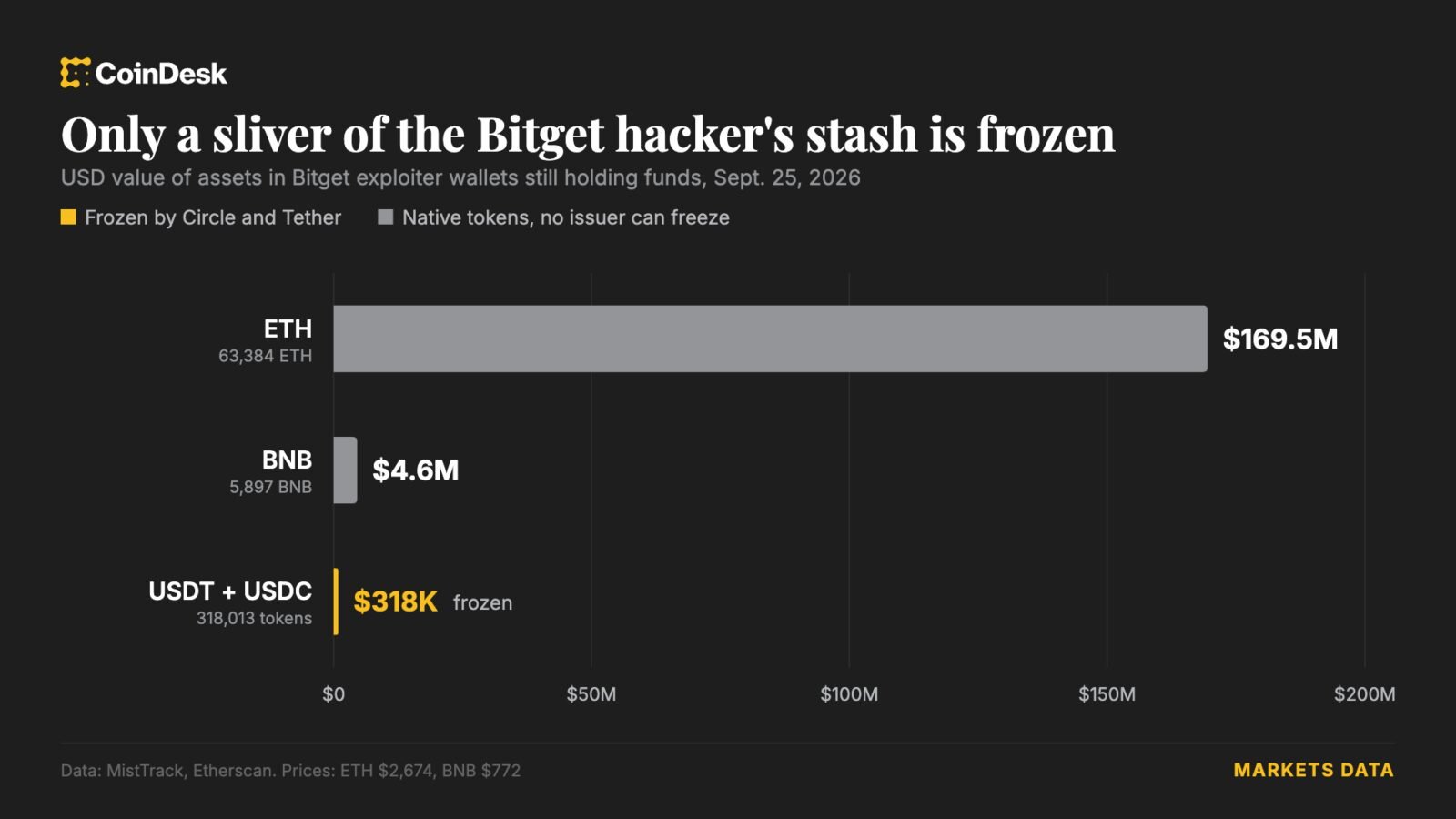
On-chain data reveals that Circle blacklisted the address, labeled “Bitget Exploiter 8” on Etherscan, at 05:00 UTC on Friday. This wallet held roughly 170.47 ETH, 218,023 USDT, and 99,990 USDC. Blockchain security firm MistTrack confirmed that Tether subsequently followed suit, banning the same wallet. The combined stablecoin value, approximately $318,000, is now effectively immobilized.
However, the vast majority of the stolen assets remain beyond the reach of such measures. MistTrack’s tracker indicates that other exploiter addresses still hold over 63,000 ETH. Unlike stablecoins, which are centrally issued and thus susceptible to blacklisting by their creators, Ether (ETH) cannot be frozen by any single entity, presenting a significant challenge for recovery efforts.
Bitget’s Defense and the Attack Vector
Gracy Chen, Bitget’s CEO, clarified that the breach was not a result of compromised private keys. Instead, attackers exploited a vulnerability within the exchange’s wallet infrastructure, manipulating transaction data to trigger its authorization process and illicitly transfer funds. This distinction is crucial, as it points to a sophisticated attack on the exchange’s operational security rather than a direct compromise of individual user wallets.
Chen’s swift communication and the assurance of a user protection fund are critical steps in maintaining user trust following such a significant security event. The fund, exceeding $464 million, is intended to act as a safety net, ensuring that users are not left to bear the brunt of the sophisticated attack.
Circle’s Evolving Stance on Freezing Funds
This incident also brings into focus Circle’s evolving approach to freezing stolen assets. The company’s prompt action in the Bitget case stands in stark contrast to its response during April’s $285 million Drift hack. In that prior event, critics, including prominent blockchain investigator ZachXBT, argued that Circle was slow to act, allowing approximately $232 million in stolen USDC to move across chains via its cross-chain transfer protocol without immediate intervention.
At the time, Circle maintained that it only freezes assets when legally required. The more rapid response in the Bitget scenario suggests a potential shift in strategy or a more immediate legal impetus, reflecting the growing pressure on centralized stablecoin issuers to play a more active role in combating crypto crime.
The Broader Implications for Crypto Security
The Bitget hack and the subsequent freezing of stablecoins underscore the dual nature of the cryptocurrency world: its decentralized ethos often clashes with the practical need for centralized intervention in times of crisis. While the ability to freeze assets offers a layer of protection against theft, it also raises questions about the extent of control centralized entities wield over digital assets. As the industry matures, finding a balance between security, decentralization, and regulatory compliance will remain a critical challenge for exchanges, stablecoin issuers, and users alike.
For more details, visit our website.
Source: Link







Leave a comment