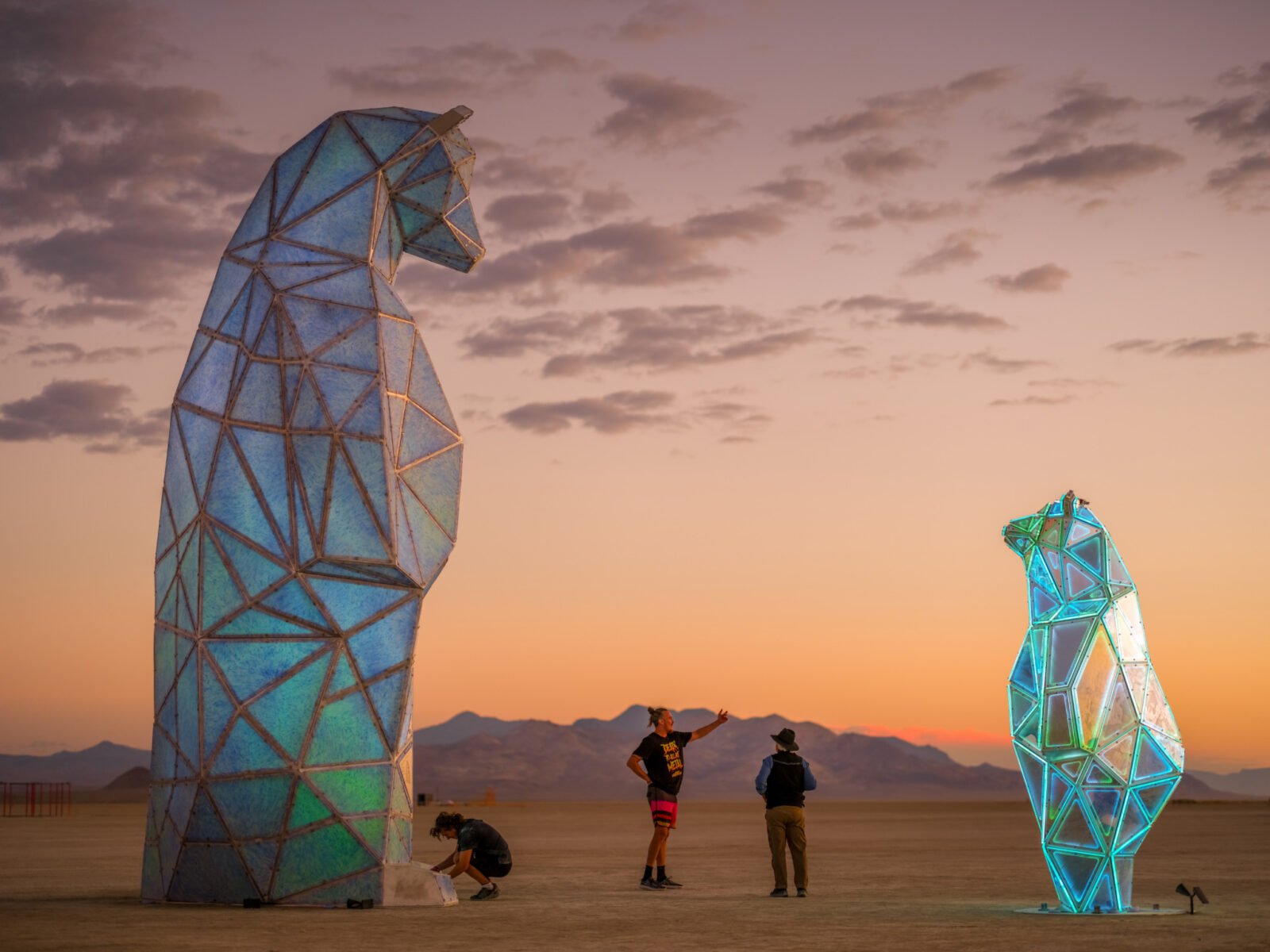

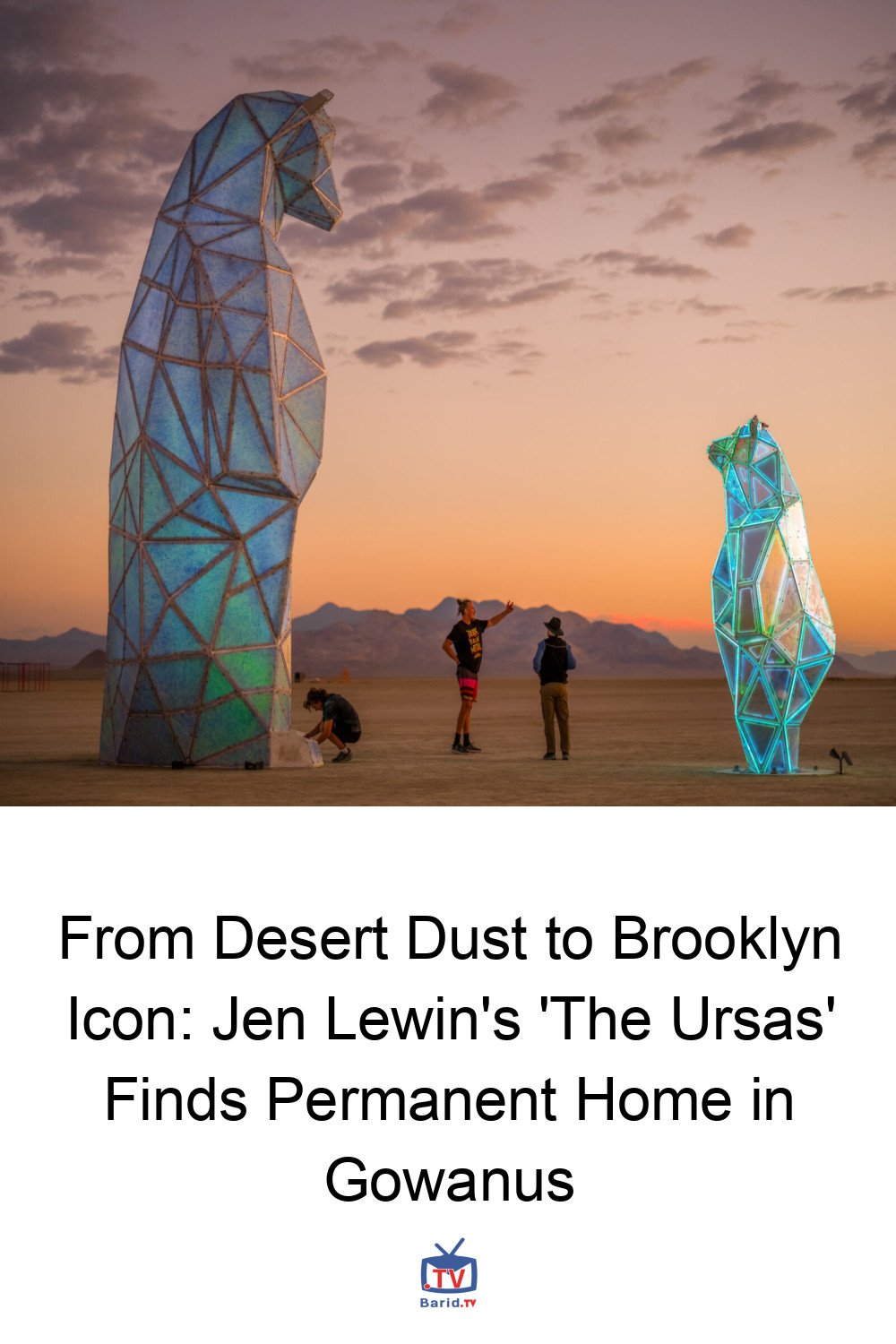
In the dynamic world of public art, true permanence is a rare and coveted achievement. Yet, Jen Lewin’s magnificent ‘The Ursas’ has defied the odds, transitioning from its temporary spectacle at Burning Man to a lasting landmark along Brooklyn’s rapidly evolving Gowanus waterfront. These monumental sculptures now stand as a powerful anchor for a newly accessible stretch of the canal, blending art, technology, and a profound environmental message into the urban fabric.
A Celestial Pair Anchoring Urban Transformation
Installed on August 1st at Nevins Landing, ‘The Ursas’ — a captivating pair of sculptures — command a prominent position between the burgeoning residential towers and the historic Gowanus Canal. This installation is a key component of the larger Gowanus Wharf campus, a visionary development by Charney Companies and Tavros, designed by Fogarty Finger with waterfront landscape architecture by Field Operations. It signifies more than just an art placement; it’s a statement about the neighborhood’s dramatic physical and cultural metamorphosis, as industrial vestiges give way to vibrant housing, green spaces, and vital civic areas.
Inspired by the Stars, Rooted in Earthly Concerns
Drawing inspiration from the celestial navigation points of the Ursa Major and Ursa Minor constellations, Lewin’s ‘The Ursas’ delve into profound themes of orientation, guidance, and, critically, environmental stewardship. The larger of the two,
Ursa Major, soars an impressive 30 feet skyward. Its construction is particularly poignant, crafted from reclaimed ocean plastic, a material first utilized in Lewin’s impactful 2022 installation, ‘The Last Ocean’.
Visitors are invited to step inside Ursa Major, where an infinity-mirrored chamber creates a mesmerizing illusion of endless depth. Within this reflective space, intricate hand-drawn illustrations depict species listed as extinct or presumed extinct on the IUCN Red List, serving as a stark, beautiful reminder of humanity’s impact.
Adjacent to its towering counterpart, the 13-foot-tall Ursa Minor shimmers with its own infinity mirrors and programmable LED lighting. This smaller bear creates an ever-shifting spectacle of light and reflection, a dynamic beacon in the urban landscape.
A Reckoning with Environmental Change
Lewin articulates the genesis of ‘The Ursas’ with a compelling narrative: “The Ursas grew out of my research into the melting Ross Ice Shelf while developing The Last Ocean. What began as scientific inquiry became a personal reckoning with the scale and speed of environmental change.” She envisions Ursa Minor as a “beacon” searching for the North Star, symbolizing direction and hope, while Ursa Major solemnly honors lost species. “Together, the works hold two realities at once: grief and responsibility, but also direction,” Lewin explains. “They ask us not only to reflect, but to decide how we move forward.”
Public Art as a Catalyst for Urban Renewal
The arrival of ‘The Ursas’ is a landmark moment for Gowanus, signaling a shift where public art is no longer an afterthought but an integral component of comprehensive neighborhood redevelopment. These sculptures are among the first permanent artworks to define the identity of the expansive four-building Gowanus Wharf campus, a project slated to introduce over 2,200 residential units along the waterfront.
Their journey to this Brooklyn home was an epic one, involving a dramatic traverse across the Verrazzano-Narrows Bridge, followed by a meticulous hoisting over Brooklyn’s Union Street Bridge, before finally being lowered into their designated place along the canal. What began as a temporary, awe-inspiring installation in the Nevada desert in 2023 has now seamlessly woven itself into the daily fabric of New York City, inviting contemplation and inspiring action for generations to come.
For more details, visit our website.
Source: Link