
For any motorsport enthusiast, the pursuit of speed is relentless. Whether you’re navigating the tight turns of an autocross course or pushing the limits on a sprint track, one crucial element dictates performance: your tires. They are the sole point of contact with the asphalt, translating every ounce of power, braking force, and steering input into grip. Understanding and optimizing their condition is paramount to shaving off precious seconds and dominating the competition.
This project, originally featured in Make: Vol. 98, delves into the construction of a DIY recording tire pyrometer. Utilizing an affordable ESP32 microcontroller, this device allows you to accurately measure and log tire temperatures, providing invaluable data to fine-tune your vehicle’s setup for peak performance. And for those whose passion lies outside the racetrack, this versatile design can be adapted into a compact, portable data recorder for a myriad of other applications – from monitoring soil moisture to tracking GPS coordinates, sound levels, or air quality, simply by swapping out the attached sensors.
The Unseen Edge: What Your Tires Are Telling You
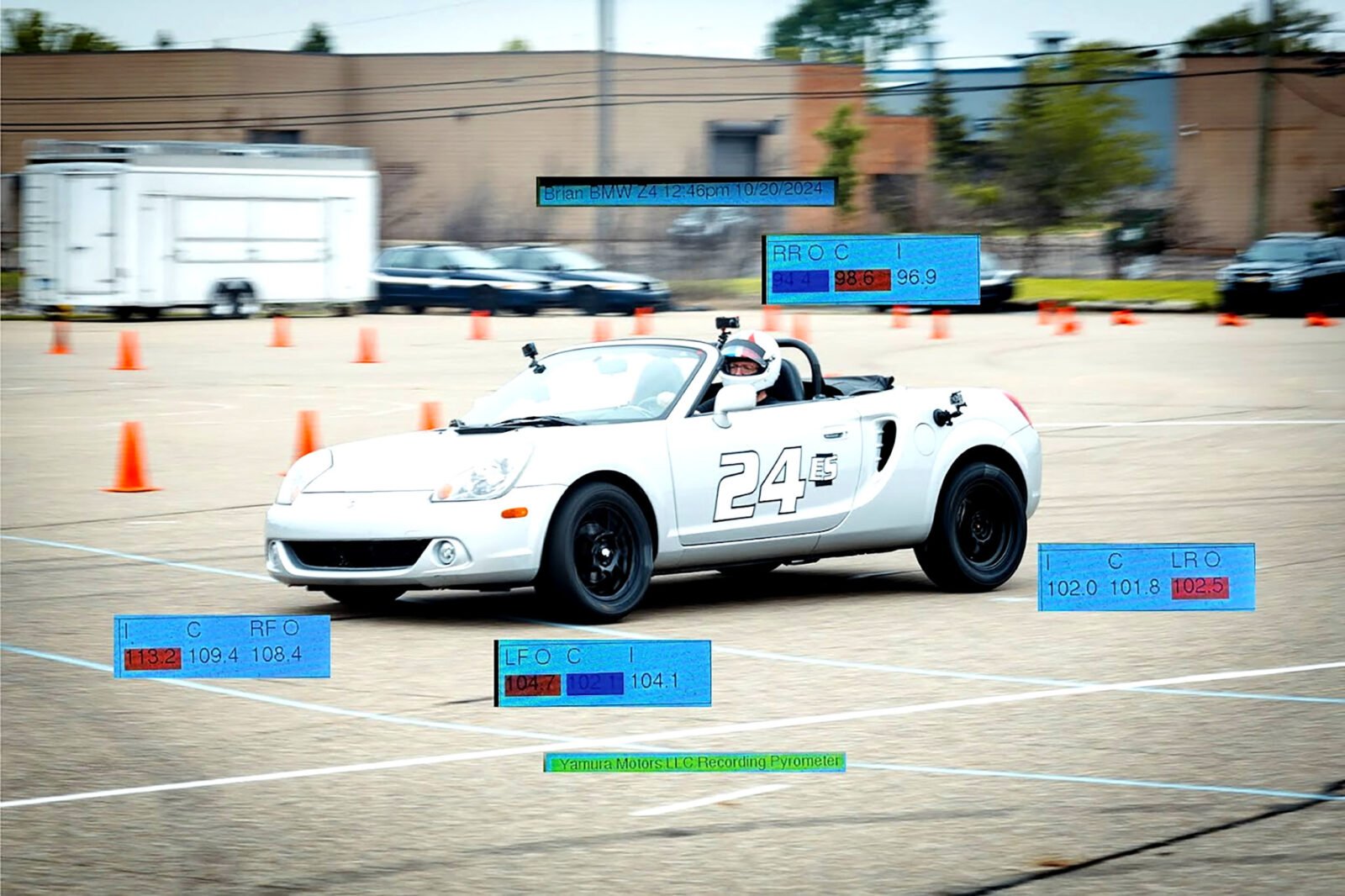
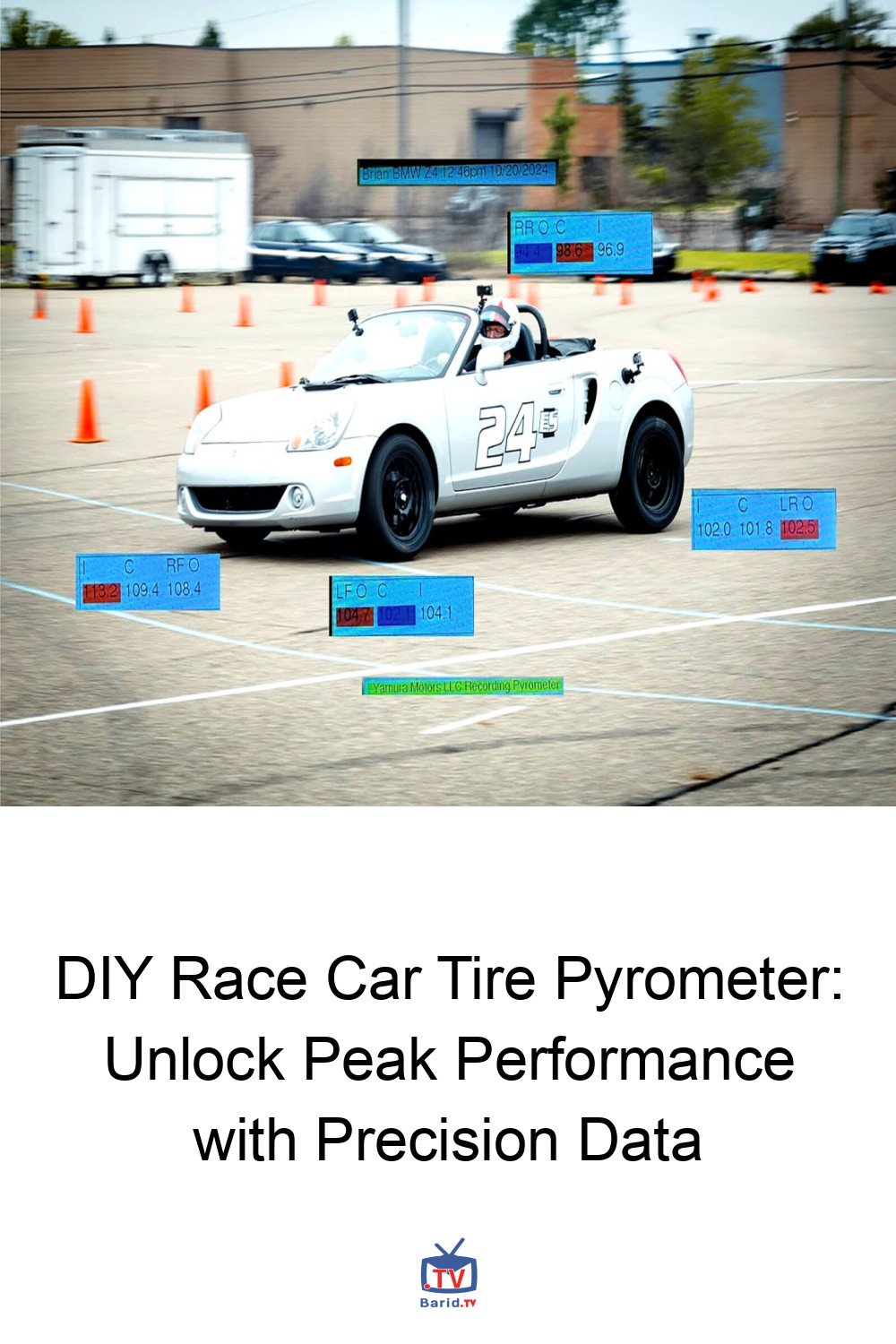
In the high-stakes world of racing, tire temperatures are a critical diagnostic tool. Racers meticulously monitor the inside, center, and outside sections of the tire tread. The fundamental principle is simple: maximum grip is achieved when the tire’s contact patch is evenly loaded and operating within its optimal temperature range.
The Critical Contact Patch: Pressure and Load Distribution
Air pressure plays a pivotal role in shaping the tire’s contact patch – the actual area touching the ground. Too much pressure causes the tire tread to “crown,” drastically reducing the effective contact patch to primarily the center. Conversely, insufficient pressure leads to the sidewalls bearing more load, causing the inside and outside edges to work harder. The ultimate goal is a balanced load distribution across the entire tread, ensuring consistent grip and maximizing the tire’s potential.
Furthermore, as tires heat up during a session, the internal air pressure naturally increases. This means starting a session with slightly lower than ideal cold pressures is often a strategic necessity. By diligently measuring both temperature and air pressure immediately at the end of a run, drivers can deduce the optimal starting cold pressures for each tire, ensuring they reach their sweet spot during competition.
Heat Maps of Performance: Temperature Gradients
Friction, the very source of a tire’s grip, inherently generates heat. By measuring the temperature at three distinct points (inside, center, outside) across the tread, you gain invaluable insight into how hard each section of the tire is working. An ideal setup will show consistent temperatures across the tread, indicating an even workload and optimal grip generation. Deviations from this ideal offer clear tuning directives:
- Too Cool? If a tire section is consistently too cool, it might not be working hard enough. This could suggest the need for adjustments to camber, toe, or even a switch to a softer compound tire, which generates more heat and grip at lower operating temperatures.
- Too Hot? Conversely, if temperatures are excessively high, the tire might be overheating, leading to reduced grip and accelerated wear. A harder compound tire or suspension adjustments could be the solution, offering better performance and longevity at elevated temperatures.
While non-contact infrared thermometers offer a quick glance, a dedicated tire pyrometer with a probe that physically penetrates the tread provides a far more accurate and reliable temperature reading. This DIY project empowers you to build a recording pyrometer that rivals, and often surpasses, the features of commercially available units costing significantly more.
Build Your Own Precision Tool: The DIY Recording Pyrometer
This recording tire pyrometer (RTP) is ingeniously designed with functionality, affordability, and versatility in mind. Here’s a breakdown of the core components and their roles in delivering actionable data:
- Accurate Temperature Measurement: A K-type tire pyrometer probe paired with a K-type thermocouple amplifier ensures precise, penetrative temperature readings from the tire tread.
Clear Visual Feedback:
A high-contrast TFT display provides clear, outdoor-visible temperature readouts, even under bright trackside conditions.- Robust Data Storage: An integrated microSD card slot allows for extensive temperature logging over multiple sessions, providing a rich dataset for analysis.
- Seamless Connectivity & Control: An ESP32 microprocessor forms the intelligent brain of the unit, enabling web-based setup and convenient data display on smartphones or tablets via a local network.
- Precise Timekeeping: A real-time clock (RTC) module timestamps all recorded data, ensuring accurate session-to-session and lap-to-lap comparisons.
- Durable & Ergonomic Design: A custom 3D-printed enclosure ensures the unit is robust, portable, and perfectly suited for the demanding environment of trackside use.
- Intuitive User Experience: A simple, fast user interface supports various car, driver, and wheel configurations, making data collection straightforward and efficient.
Your Blueprint to Faster Laps: Project Overview
Ready to elevate your racing game and gain a competitive edge? The construction of this recording tire pyrometer is a rewarding weekend project that promises significant returns on the track. The detailed steps guide you through each phase, ensuring a successful build:
- Enclosure Design: Crafting the perfect ergonomic and protective housing for your sensitive electronics.
- Print the Enclosure: Bringing your digital design to life with a 3D printer for a professional finish.
- Electronics Assembly: Meticulously connecting the ESP32, display, sensors, and other crucial components.
- Firmware & Setup: Preparing your microSD card and flashing the custom firmware to the ESP32, bringing your device to life.
- Troubleshooting: Essential tips and tricks for resolving common issues and ensuring smooth operation.
- Take Tire Temps!: The exciting final step – deploying your new tool and gathering critical data to inform your tuning decisions.
By investing a weekend of your time and approximately $75–$120, you’ll gain an indispensable tool for optimizing your vehicle’s performance and achieving faster lap times. Get ready to transform your understanding of tire dynamics and unlock your car’s full potential!
For more details, visit our website.
Source: Link