

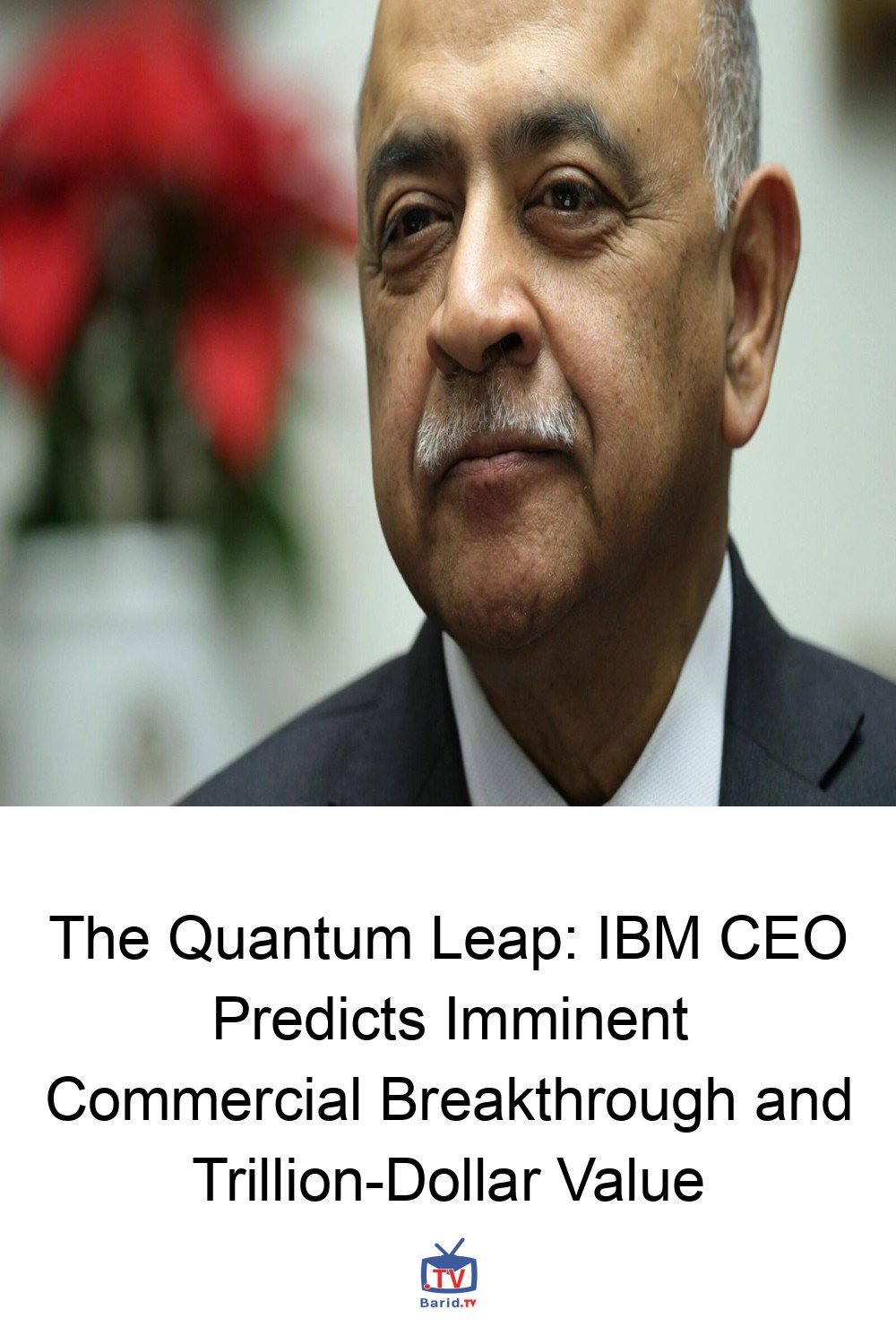
The Quantum Leap: IBM CEO Predicts Imminent Commercial Breakthrough and Trillion-Dollar Value
The esoteric realm of quantum computing, long considered a frontier of pure research, is on the cusp of a monumental shift towards commercial viability. According to IBM CEO Arvind Krishna, this revolutionary technology is poised to transition from a scientific endeavor to a significant revenue generator, with projections hinting at a trillion-dollar market by the end of the next decade.
Speaking on CNBC’s Mad Money, Krishna articulated a bold vision, expecting quantum computing to contribute meaningfully to IBM’s revenue and profit streams as early as 2028 or 2029. His long-term outlook is even more ambitious: a staggering trillion dollars in economic value by the close of the 2030s. This forecast underscores a growing confidence within the tech industry that quantum mechanics, applied to computation, will unlock unprecedented problem-solving capabilities.
The Race to Commercialization Intensifies
The competitive landscape in quantum computing is heating up, with tech giants and innovative startups alike vying for supremacy. Companies such as IBM, Alphabet, IonQ, and Rigetti Computing are pouring resources into developing advanced hardware and software. Their collective goal: to build machines capable of tackling mathematical challenges in mere seconds that would overwhelm even the most powerful conventional supercomputers for millennia.
Krishna emphasized the unique advantage of quantum systems, stating, “A quantum computer can do things better, faster, cheaper, in a way that normal classical computers cannot do at this time.” Unlike the AI boom, which has fueled demand for graphics processors, quantum computing addresses a distinct class of complex problems, promising breakthroughs across diverse sectors.
Unlocking Real-World Applications
The potential applications of quantum computing are vast and transformative. Researchers anticipate that the technology could revolutionize molecular simulations, leading to accelerated drug discovery and advanced materials science. It could also optimize intricate logistics networks, enhance cybersecurity through novel cryptographic methods, and even contribute to the development of longer-lasting batteries and fusion energy research.
IBM has already showcased glimpses of this potential, utilizing quantum computers to reveal previously undetectable properties of materials – insights that classical computers failed to model. These early successes fuel the industry’s optimism and drive continued investment.
A Surge in Investment and Infrastructure
Confidence in quantum’s commercial future is mirrored by a significant uptick in investment. In a landmark move this May, IBM unveiled plans for a dedicated quantum chip foundry, bolstered by a substantial $1 billion commitment from the U.S. Department of Commerce via the CHIPS incentive program, matched by an equal investment from IBM itself. This capital injection, alongside expanded manufacturing capacities and research partnerships from other developers, is crucial for advancing towards fault-tolerant quantum computers.
Quantum’s Ripple Effect on the Digital Asset Sector
The burgeoning quantum industry is also capturing the attention of the digital asset community. While some Bitcoin miners have diversified into AI and high-performance computing, quantum computers demand entirely different infrastructure and operating environments. This necessitates the development of new facilities and supply chains as the technology matures.
Furthermore, the crypto world is keenly observing quantum’s long-term security implications. Concerns exist that sufficiently advanced quantum machines could one day compromise the encryption safeguarding Bitcoin wallets and other blockchain networks. However, most experts agree this scenario is distant, and developers are actively working on quantum-resistant cryptography, ensuring blockchain networks will have ample time to adapt and upgrade before any real threat materializes.
The Dawn of a New Computing Era
Arvind Krishna’s predictions paint a vivid picture of a future where quantum computing moves beyond theoretical promise to deliver tangible economic value. With accelerating investment, intense competition, and a clear roadmap for real-world applications, the quantum era is not just approaching – it’s already beginning to reshape our technological landscape, promising a future of unparalleled computational power and innovation.
For more details, visit our website.
Source: Link