



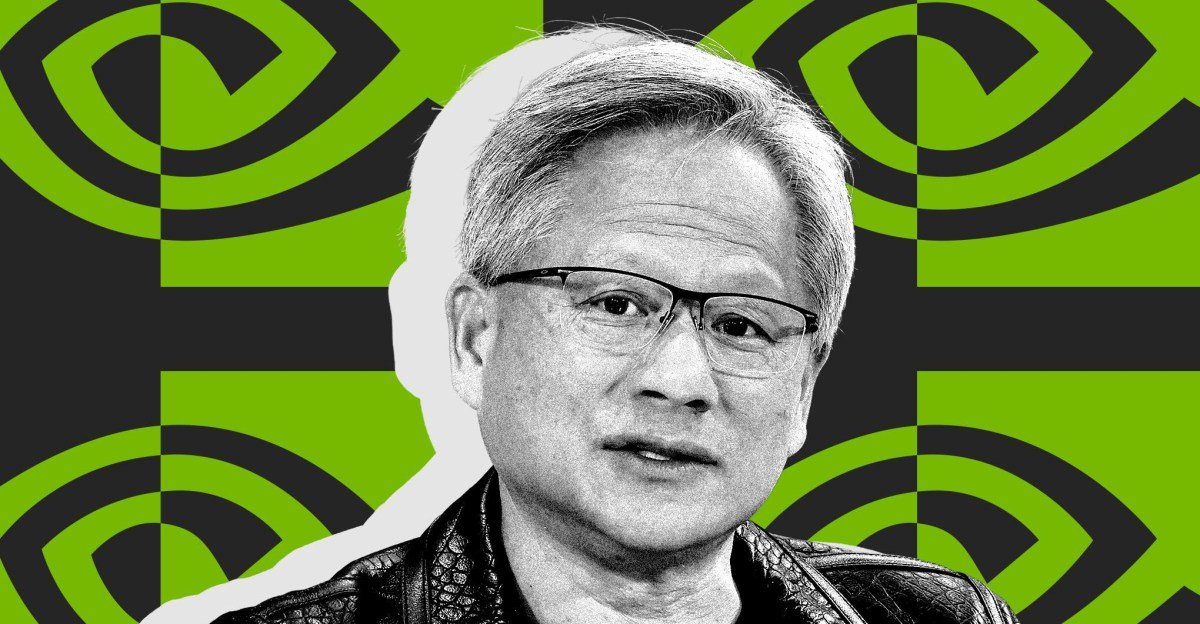

Nvidia CEO Jensen Huang at the Heart of a Geopolitical Storm: The AI Chip Export Scandal
In an era defined by the rapid ascent of artificial intelligence, one company stands as an undisputed titan: Nvidia. Its advanced chips form the very foundation of modern AI development, driving innovation and commanding unprecedented demand. At the helm of this technological powerhouse is Jensen Huang, a figure whose influence extends far beyond the boardroom, reaching into the corridors of power and, as recent revelations suggest, into the intricate web of international espionage.
Huang, the co-founder and long-serving CEO of Nvidia, now finds himself embroiled in a scandal that intertwines personal relationships with national security. News has surfaced of an alleged extramarital affair between Huang and Alice Huang (no relation), an executive at Megaspeed, a Singapore-based cloud provider and a significant Nvidia client. This affair has ignited a firestorm of questions regarding its potential impact on Huang’s reported efforts to push for advanced chip sales to China and, critically, its possible sway over President Donald Trump’s decisions on AI export controls.
Nvidia’s Unrivaled Dominance in the AI Landscape
It is nearly impossible to overstate Nvidia’s strategic importance in today’s technological ecosystem. The company’s graphics processing units (GPUs) are the essential building blocks for cutting-edge AI, with demand consistently outstripping supply. Beyond manufacturing, Nvidia has strategically invested an estimated $99 billion in a diverse portfolio of frontier AI labs, neoclouds, and infrastructure companies, solidifying its position as a kingmaker in the industry. Jensen Huang’s personal rapport with political figures, including President Donald Trump, further underscores his unique and powerful standing.
Such a pivotal role naturally places Huang and Nvidia under intense scrutiny, making them prime targets for foreign entities seeking to gain an edge in the fiercely competitive global AI race. The implications of any compromise at this level are profound, touching upon economic leadership, military capabilities, and national security.
The Alleged Spy and the Megaspeed Connection
US officials, according to The New York Times, believe Alice Huang of Megaspeed is a foreign intelligence asset, allegedly funneling sensitive information directly to the Chinese government. Megaspeed itself is reportedly part of a complex network of Chinese companies purportedly collaborating to acquire Nvidia chips in bulk, potentially circumventing export restrictions to illegally introduce them into China. Alibaba, a Chinese e-commerce giant, is cited as one of Megaspeed’s primary customers.
Hanna Dohmen, a senior research analyst at CSET, noted the unsurprising nature of such intelligence gathering targeting a key figure in the AI chip industry. An alleged spy would be keenly interested in understanding the US government’s stance on export controls, gleaning insights from Huang’s discussions with the Trump administration, attempting to influence policy, and uncovering trade secrets such as customer lists, supply priorities, and future chip roadmaps. The sheer scale of transactions further raises eyebrows: Megaspeed’s Malaysian sister company reportedly spent over $4.8 billion on Nvidia chips and technology between June 2024 and February 2026, a sum deemed highly unusual for a company of its size, especially given the scarcity of Nvidia’s products.
From Business Meetings to Personal Entanglements
Initially, Nvidia spokespeople maintained that Jensen Huang’s interactions with the Megaspeed executive were purely professional, describing them as “not unusual or unexpected” and a standard part of a CEO’s duties. However, the narrative shifted as their relationship reportedly evolved beyond business. Photos from June 2024 show them alongside other AI executives at a Taipei bar after a trade show, followed by a reported business dinner in Taipei the subsequent year. Yet, it was the private dimension of their relationship that reportedly triggered alarm bells within the US government, which had been surveilling the Megaspeed executive for months.
Lobbying Efforts and Policy Influence Under Scrutiny
The timing of these revelations is particularly troubling given Jensen Huang’s active lobbying efforts. He had been advocating to the Trump administration and Congress for a relaxation of export controls on advanced semiconductors to China, ostensibly to expand Nvidia’s market reach. This push coincided with his reported dinner with Alice Huang in May 2025, shortly after Nvidia had been informed of new US restrictions on its China-specific H20 chips.
Just two months after that dinner, in July 2025, Huang reportedly met with President Trump in the Oval Office to plead his case for easing these very export restrictions. Days later, the administration approved the sale of Nvidia’s H20 chips to China. Huang’s argument centered on the idea of “spreading” advanced technology, but the context of his alleged personal entanglement with a suspected foreign intelligence asset casts a long shadow over these policy decisions, raising serious questions about the integrity of the process and the potential for undue influence on critical national security matters.
For more details, visit our website.
Source: Link




Leave a comment