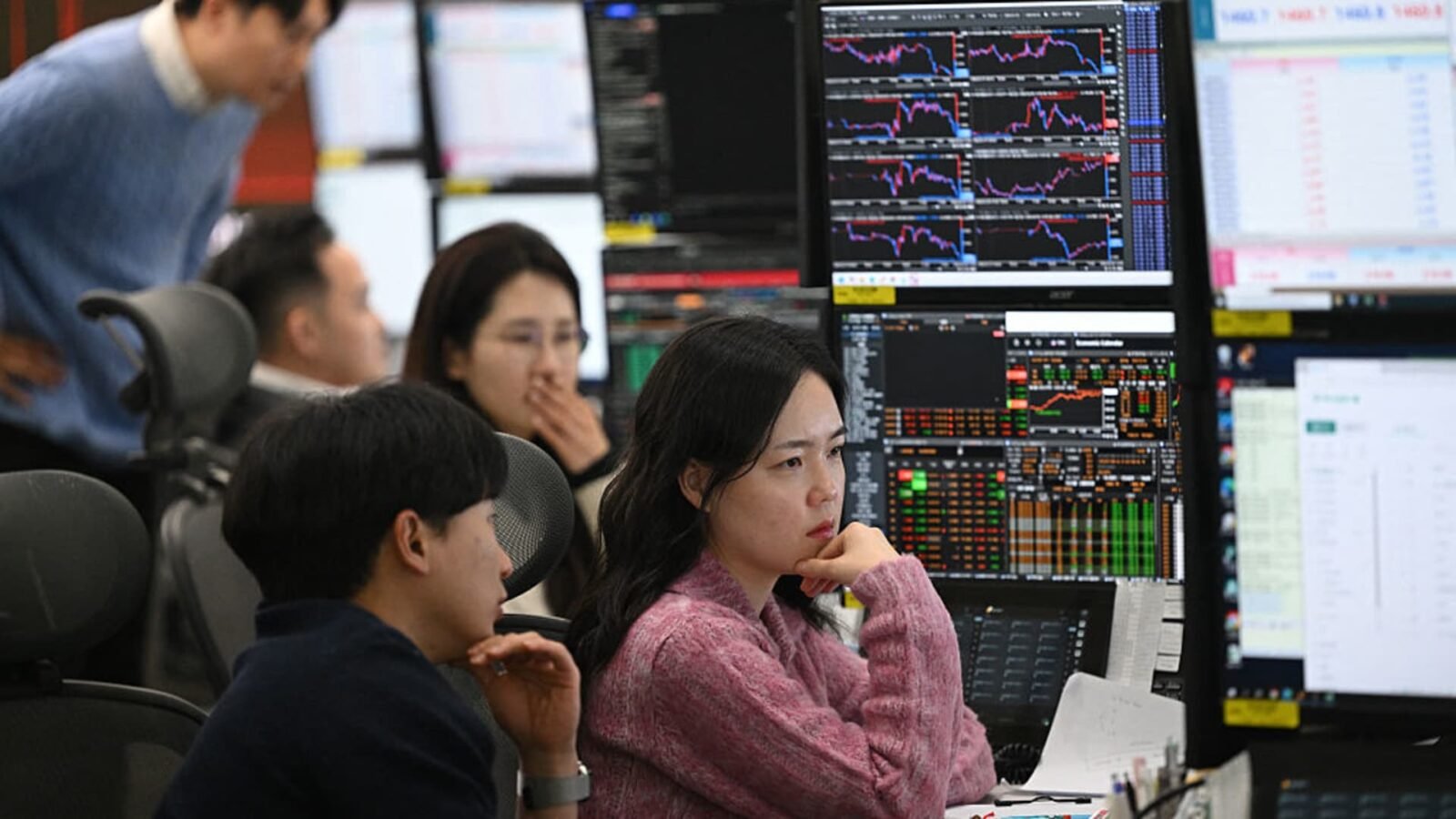

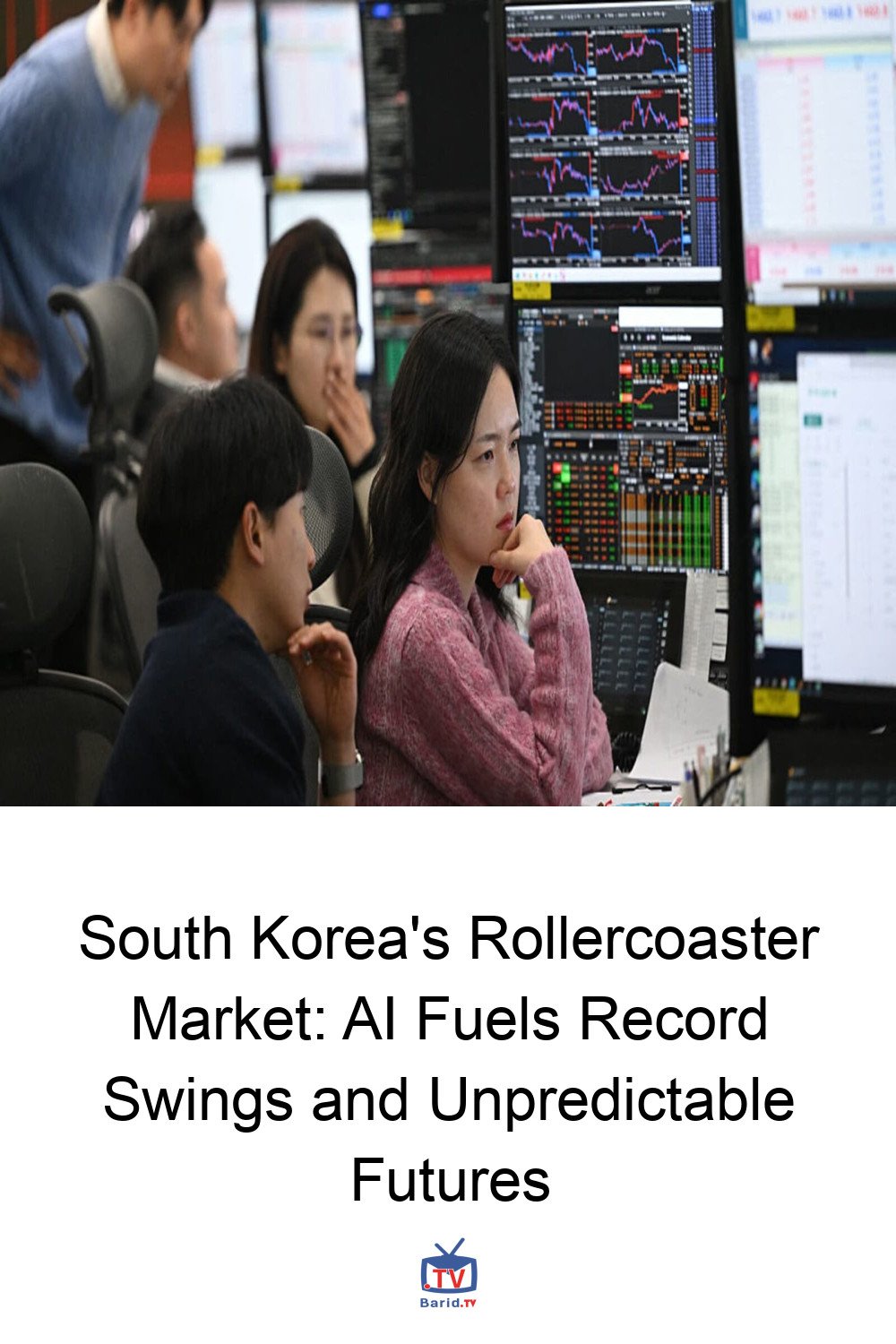
South Korea’s stock market has been a theatre of dramatic extremes, recently staging its sharpest reversal on record. This unprecedented volatility, characterized by dizzying highs and sudden plunges, underscores the market’s deep entanglement with the global artificial intelligence (AI) trade. From a historic rally to a sharp sell-off, investors are grappling with a market that one expert describes as having “bipolar disorder.”
A Record-Breaking Rebound Amidst Global Tech Euphoria
Friday witnessed a spectacular turnaround for the benchmark Kospi index, surging an astounding 14% — its largest one-day jump ever recorded by LSEG data. This powerful rebound saw memory chip giants SK Hynix and Samsung Electronics soar, with SK Hynix experiencing its own record recovery. The catalyst? A robust overnight rally in U.S. technology stocks, buoyed by upbeat earnings reports from industry titans like Microsoft, Amazon, and Meta, which reinforced confidence in sustained AI infrastructure spending.
Adding to the momentum, SK Group Chairman Chey Tae-won’s disclosure of SK Hynix share purchases provided a significant vote of confidence in the world’s second-largest memory chipmaker. Jung In Yun of Fibonacci Asset Management noted, “The Korean stock market has been trading as if it has bipolar disorder, swinging from panic to euphoria almost overnight. Today’s move looks like a violent reversal of an extremely crowded selloff.” Foreign investors, short-covering, and mechanical rebalancing by leveraged exchange-traded funds (ETFs) were identified as key drivers amplifying these gains, alongside new cash-deposit requirements for leveraged ETF investors that took effect on July 31.
The Lingering Shadow of Volatility and Leverage
This dramatic upswing came just days after Korean equities endured one of their most severe sell-offs. Concerns over stretched AI valuations, escalating leverage, and signs of forced liquidations had sent ripples of fear through global semiconductor stocks. Rolf Bulk, a semiconductor analyst at Futurum Group, views the recent rally as a reflection of improving confidence in the AI investment cycle’s integrity, rather than a fundamental shift.
Is the AI Boom Sustainable?
“We’ve seen unprecedented volatility in the Korean stock market over the last month, culminating in this recovery on the final trading day,” Bulk stated, adding that recent forced selling appears to have largely run its course. “There are no signs of the AI infrastructure build-out slowing down, and we remain positive on the sustainability of the cycle.”
However, not everyone shares this optimistic outlook. Paul Gambles, co-founder of MBMG Family Office Group, cautioned that Friday’s sharp rally might merely be another violent oscillation within an increasingly unstable market. “I think we’re going to get a lot more days like this,” Gambles warned. “Asset prices are completely disconnected. It’s telling us that there’s a massive amount of leverage out there.”
Gambles emphasized that while the rebound could be a temporary “one-day relief rally” or last slightly longer, investors should not misconstrue it as a sign that the inherent risks surrounding the AI boom have dissipated. He highlighted the perilous combination of heavy leverage and fragile investor confidence, which could leave markets vulnerable to a much larger correction down the line.
What Lies Ahead for South Korea’s Equity Market?
The immediate future for South Korea’s equity market hinges on whether overseas funds will continue their buying spree once the current wave of short-covering subsides. This sustained foreign investment will be the true test, determining if Friday’s dramatic surge marks the beginning of a more enduring recovery or simply another wild swing in one of the world’s most unpredictable equity landscapes.
For more details, visit our website.
Source: Link