
Elevate Your CNC Projects: Simple, Universal DIY Workholding Clamps
In the world of CNC routing, precision is paramount, and at the heart of every successful cut lies robust workholding. Without a firm grip on your material, even the most meticulously designed G-code can lead to frustrating errors, wasted material, and compromised results. Recognizing this critical need, the innovators at Sienci Labs, featured in Make: Vol. 85, have engineered two ingenious universal clamp designs that are not only incredibly effective but also remarkably easy to fabricate on any CNC router.
The Foundation of Flawless Fabrication: Why Workholding Matters
Imagine attempting intricate carving or precise cuts with your workpiece shifting under the force of the end mill. The outcome is predictable: inaccuracy, potential tool breakage, and a ruined project. Secure workholding eliminates these variables, ensuring your material remains steadfast throughout the entire milling process. These DIY clamps offer an accessible, cost-effective solution, empowering makers to produce their own high-quality workholding tools from readily available materials.
Gather Your Gear: Essential Materials
Embarking on this project requires a few fundamental components, chosen for their accessibility and affordability:
- Plywood: Ideally 11mm or ½” thick, though designs are adaptable.
- ¼-20 Fully Threaded Hex Bolts: A selection of various lengths will prove useful.
- ¼” Washers: For secure fastening.
- ¼-20 Threaded Inserts: To create durable threaded holes in wood.
- T-bolts (Optional): If your T-track system requires them. Alternatively, seek T-track compatible with ¼” hex bolt heads for simplicity.
The beauty of these designs lies in their adaptability. Should your material thickness differ, the public Onshape design documents (for hold-down and toe clamp) allow for easy adjustment by modifying the
#thickness variable in Part Studio.
Precision Milling: General Cut Settings
These clamps are designed for straightforward CNC milling and assembly. Achieving the perfect fit often hinges on accurate material measurement.
Optimizing for Accuracy: Material Thickness Calibration
While designs are provided for 11mm and ½” material, slight variations in plywood thickness can impact part fit. For optimal results, use calipers to measure your material precisely. Then, adjust the
#thickness variable in Onshape to your measured thickness plus an additional 0.1mm. A gentle tap with a mallet can also aid in assembly if parts are a bit snug.
Recommended CNC Cutting Parameters
These settings have been proven effective for cutting these clamp components using a 1/8″ bit:
- Feed Rate (X & Y axes): 2000mm/min
- Feed Rate (Z axis): 300mm/min
- Depth of Cut: 3–4mm per pass, with a final pass of 0.5mm
- Spindle/Router Speed: Approximately 20,000 RPM
- End Mill: ⅛” downcut 2-flute end mill
Choosing Your Bit: Downcut, Compression, and the Corncob Advantage
For the cleanest possible cuts, a downcut bit is a solid choice, while a compression bit offers even superior results. These designs are specifically optimized for widely available ⅛” bits to ensure accessibility. However, for slot-together projects, a 1/16″ corncob bit presents several compelling advantages:
- Produces exceptionally clean top and bottom edges.
- Its robust body makes it less prone to breakage compared to fluted 1/16″ bits.
- Effectively retains dust in the cutting path, often negating the need for tabs to prevent parts from flying out.
- The smaller radius means inner corner radius reliefs are often unnecessary for part fit.
- Generates less dust and material waste overall due to thinner cuts.
While ⅛” straight bits are ubiquitous, experimenting with 1/16″ corncob bits is highly recommended for those seeking an elevated cutting experience.
Introducing the Clamps: Versatility in Workholding
The Adaptable Hold-Down Clamps
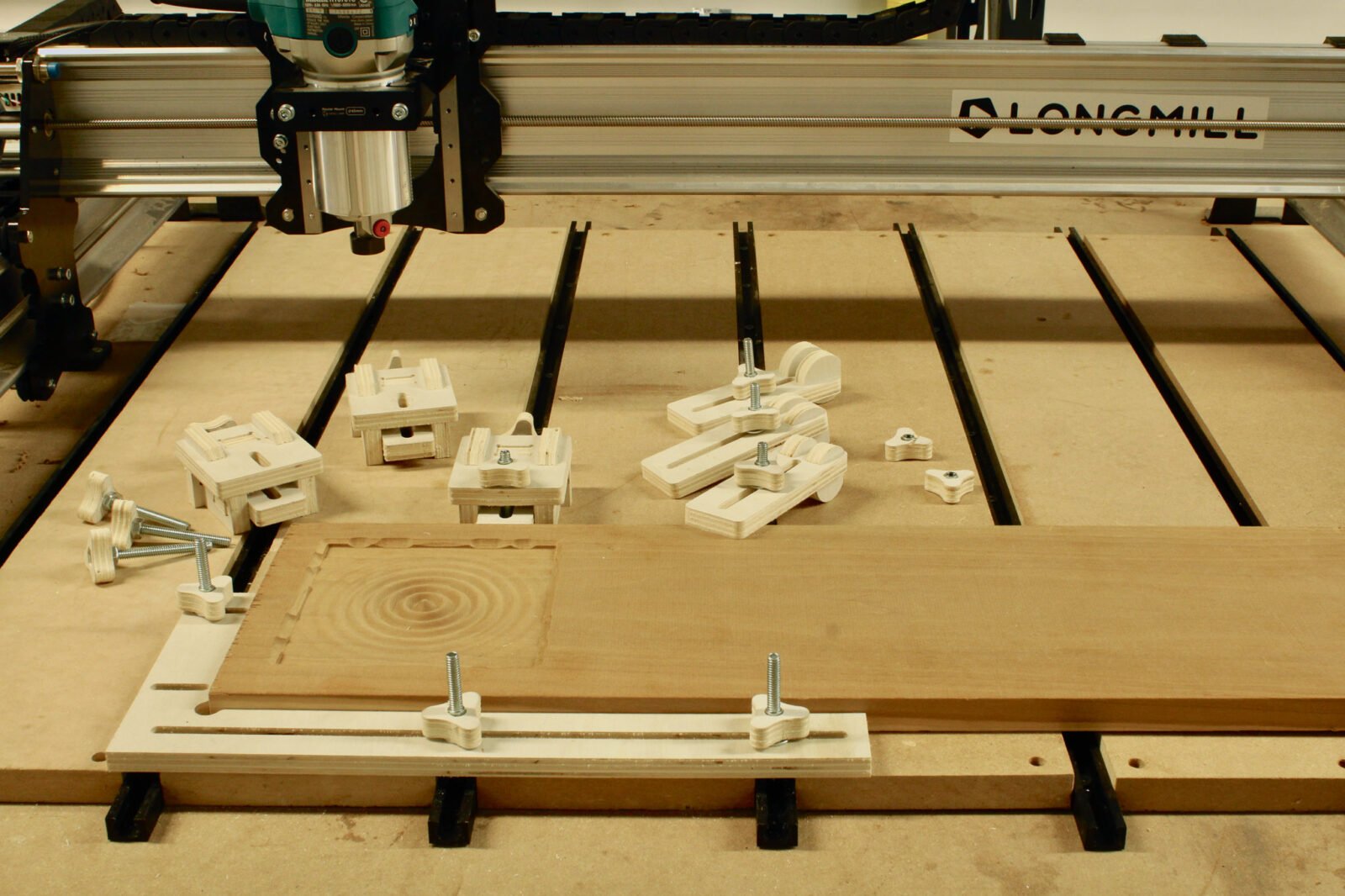
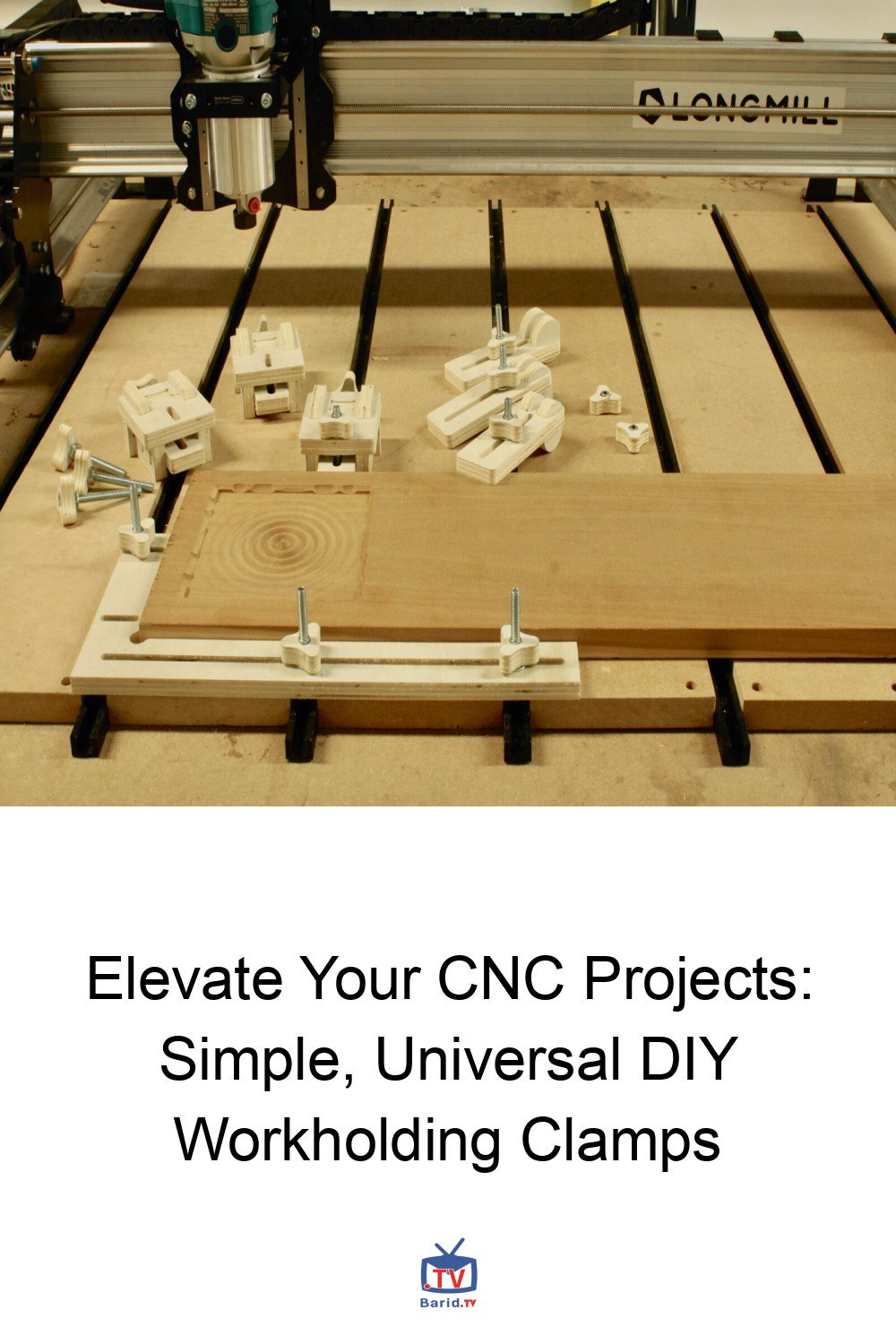
Hold-down clamps are a cornerstone of CNC workholding, celebrated for their versatility and ease of use. This particular design features a unique rounded support at the back, ingeniously engineered to apply optimal downward pressure against your material. The key to effective clamping lies in achieving a level or slightly downward-angled position. Depending on your material’s thickness, simply flip the clamp to utilize the side that provides the most advantageous angle.
An added benefit of these wooden clamps? Should an accidental collision occur during carving, the risk of damage to your machine is significantly minimized. And since you can fabricate them on your own CNC, you’ll enjoy an essentially limitless supply!
Pro Tips for Hold-Down Clamps:
- Threaded Inserts: These are invaluable for creating durable threaded holes in wood. Simply drive them in with a hex head driver or Allen wrench.
- Milling Knobs & Semicircles: These smaller components are prone to dislodging. Consider reducing your milling speed on the final pass for these parts to prevent them from flying out.
- Bolt Lengths: A variety of bolt lengths will accommodate different workpiece thicknesses. 1½” and 2″ bolts are generally sufficient for most applications.
- Extra Knobs: If you plan to make the toe clamps, remember to mill extra knobs as they are also required for that design!
The Unobtrusive Toe Clamps
For projects where the top surface of your material must remain entirely clear of obstructions, toe clamps are the ideal solution. By applying pressure from the side, they keep the material secure without impeding overhead access. Their angled force also effectively prevents material lift. It’s crucial to note that toe clamps require a hard stop on the opposite side of your material to butt against, ensuring maximum stability. Additional designs for these clamps are also included to further enhance your workholding arsenal.
For more details, visit our website.
Source: Link