
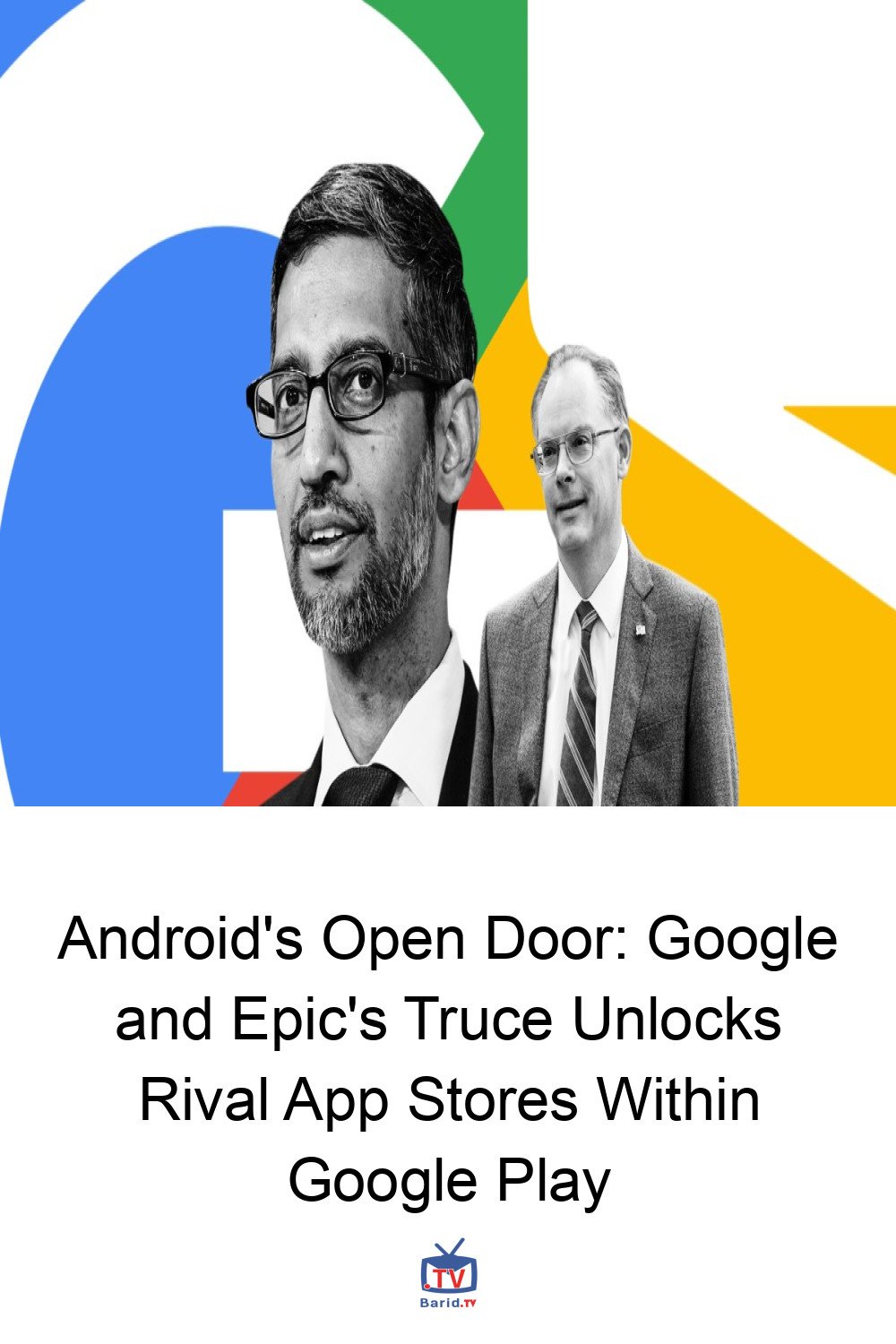
In a dramatic turn of events, the long-standing legal battle between tech giant Google and gaming powerhouse Epic Games has reached an unexpected resolution. Both parties have jointly withdrawn their attempt to settle their high-stakes lawsuit, a move that will fundamentally reshape the landscape of Android app distribution in the United States. Starting as early as Wednesday, July 22nd, Google will be compelled to host rival app stores directly within its own Google Play Store, marking a significant victory for competition and consumer choice.
A Landmark Reversal: The End of the Epic v. Google Saga
The roots of this monumental shift trace back to October 2024, when Judge James Donato delivered a decisive ruling. He determined that Google’s practices constituted an illegal monopoly over Android applications and mandated that Google carry rival app stores within Google Play, sharing its entire app catalog with them for several years. Google had vehemently fought this injunction, even attempting to broker a global settlement with Epic, reportedly involving an $800 million deal, to introduce a less intrusive “Registered App Stores” program that would require users to sideload third-party stores.
However, Judge Donato remained unconvinced by Google‘s proposed modifications, expressing skepticism about abandoning his original, more stringent permanent injunction. With a court appearance scheduled for July 16th to re-argue the matter, the joint withdrawal by Google and Epic has rendered further legal wrangling unnecessary, effectively cementing the judge’s initial vision.
The New Android Frontier: App Stores Within Google Play
Google has confirmed its readiness to comply, informing the court that it will begin carrying third-party app stores on July 22nd. This development creates a bifurcated system for Android app distribution: in the United States, users will find competing app stores directly integrated into Google Play, while the rest of the world will see the rollout of Google’s previously announced sideloaded “Registered App Store” program later this year with a new version of Android.
For US app developers, the change is immediate and largely automatic. Google is already notifying them that their app and game listings will be provided to third-party app stores starting July 22nd, with an opt-out option available. A dedicated “Play Catalog Access Program” page has been launched for third-party app stores to enroll, though the exact submission process for these in-Play stores remains to be fully clarified. The court’s injunction explicitly states Google “may not prohibit the distribution of third-party Android app distribution platforms or stores through the Google Play Store,” ensuring their presence.
Navigating the New Ecosystem: Fees and Policies
Accessing Google’s vast Play catalog comes with a set of requirements for these new app store entrants. Google will levy an annual fee of $5,000 for “security and policy reviews.” Beyond the financial aspect, participating stores must adhere to several key conditions: they cannot distribute apps outside the US, must be open to all eligible third-party developers, maintain “clear, non-discriminatory” trust and safety policies, and ensure that malware accounts for no more than one percent of “install attempts.”
While the immediate future for app store integration is clear, the broader economic implications for Android app distribution and billing are still evolving. The Epic v. Google saga has already pushed the industry towards reduced fees and opened the Play Store to outside payment systems, signaling a more competitive and developer-friendly environment ahead.
What This Means for Users and Developers
This landmark decision promises a new era of choice and innovation for Android users. The potential for major players like Microsoft to launch an Xbox game store directly within Google Play is now a tangible reality, offering consumers more options and potentially driving down prices. For developers, it means expanded reach and new avenues for distribution, fostering a more dynamic and competitive ecosystem.
As the July 22nd deadline approaches, the tech world watches keenly to see how this unprecedented shift will unfold, ushering in a truly open and competitive Android app market in the United States.
For more details, visit our website.
Source: Link