
Meta Scraps Controversial AI Deepfake Feature on Instagram Following Public Outcry
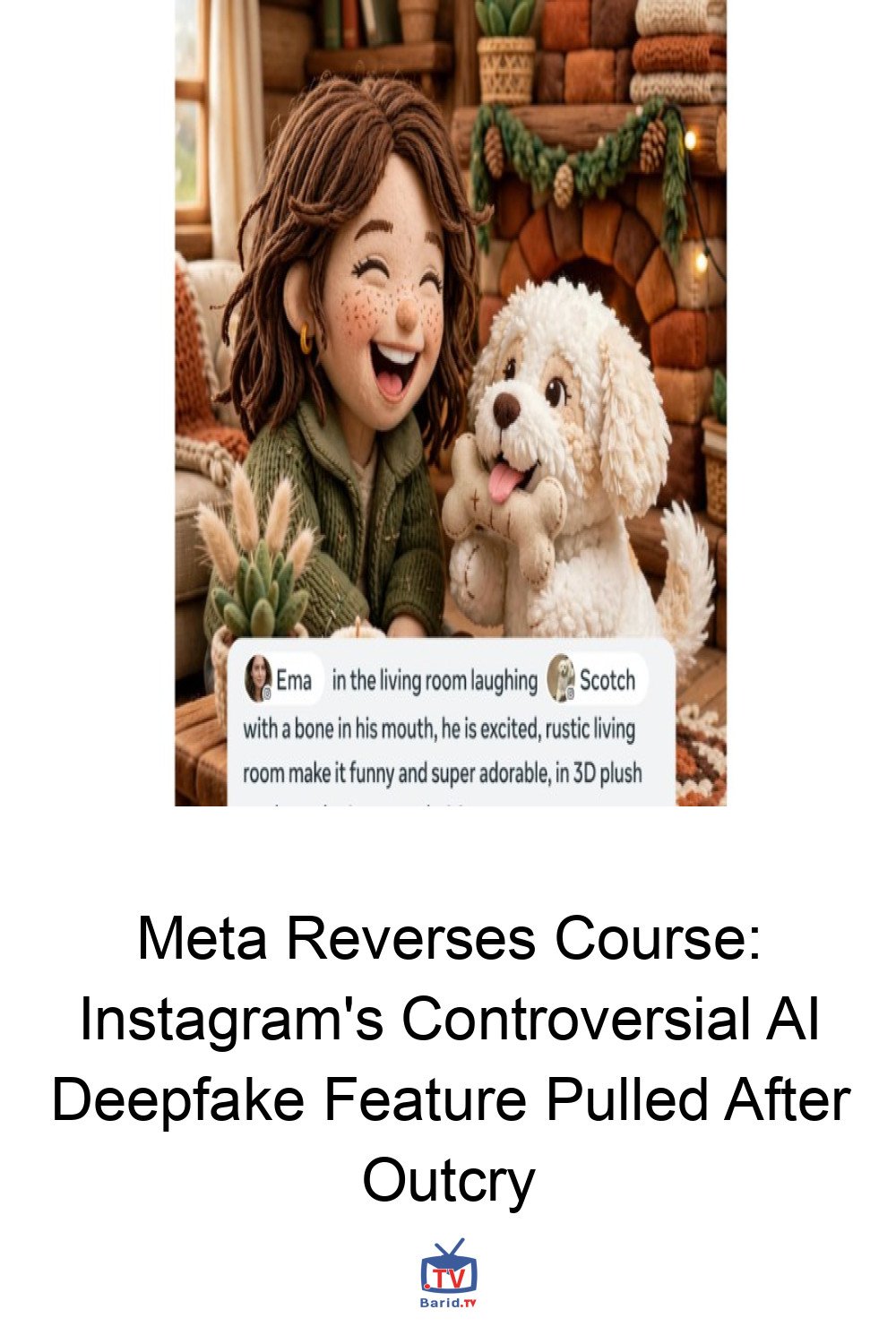
In a swift and significant reversal, Meta has deactivated a newly launched Instagram feature that allowed users to generate AI-powered images based on content from public accounts simply by tagging them. The decision comes just days after the feature’s announcement, which was met with widespread criticism over privacy implications and potential misuse.
The Feature That Sparked Fury
Unveiled earlier this week, the functionality permitted users to create AI-generated imagery by referencing any public Instagram profile. Crucially, this process did not require the explicit permission of the account owner, raising immediate red flags for digital rights advocates and privacy experts. The ability to essentially “deepfake” content using another person’s public images, even if not explicitly malicious, presented a clear ethical dilemma.
A Torrent of Backlash and Ethical Concerns
The public reaction was immediate and overwhelmingly negative. Critics swiftly condemned the feature, highlighting its potential for abuse and the erosion of individual control over one’s likeness. Haley McNamara, Executive Director and Chief Strategy Officer of the National Center on Sexual Exploitation, voiced strong concerns, stating, “Not only does this obviously erode our rights to our own likeness… but it is an obvious tool for #sextortion and other scammers! Pursuing high-risk design & then putting the onus on individuals to jump through hoops to opt out is unacceptable.”
Even before its complete removal, Meta had offered an opt-out option, requiring users to navigate through settings. However, this “opt-out by default” approach was widely criticized for placing the burden of protection on individual users rather than implementing privacy-by-design principles. The Screen Actors Guild (SAG-AFTRA) even issued guidance to its members on how to disable the feature, underscoring the gravity of the concerns within professional communities.
Meta’s Acknowledgment and Retreat
Responding to the intense pressure, Meta issued an update to its blog post regarding the new Muse Image AI model. “Earlier this week, we announced that one way for people to generate images in Meta AI is by @-mentioning public Instagram accounts that they want to reference,” Meta stated. “Our intent was to provide a useful creative tool and to give people control over whether their public content could be referenced in this way. We’ve heard the feedback that this feature missed the mark, so it’s no longer available.”
This rapid retraction signals Meta’s acknowledgment of the significant public and ethical miscalculation. While the company initially framed the feature as a “useful creative tool,” the overwhelming consensus pointed to its inherent risks and the lack of robust safeguards for user consent and digital autonomy.
Lessons Learned in the Age of AI
The incident serves as a potent reminder of the delicate balance between technological innovation and ethical responsibility, particularly in the rapidly evolving landscape of artificial intelligence. As AI capabilities become more sophisticated, the onus on platforms like Meta to prioritize user privacy, consent, and safety from the outset becomes paramount. This episode highlights the power of collective user feedback in shaping the ethical boundaries of emerging technologies and underscores the ongoing challenge for tech giants to anticipate and mitigate the societal impacts of their creations.
For more details, visit our website.
Source: Link