
The AI Frontier: Your Data, Their Training Ground
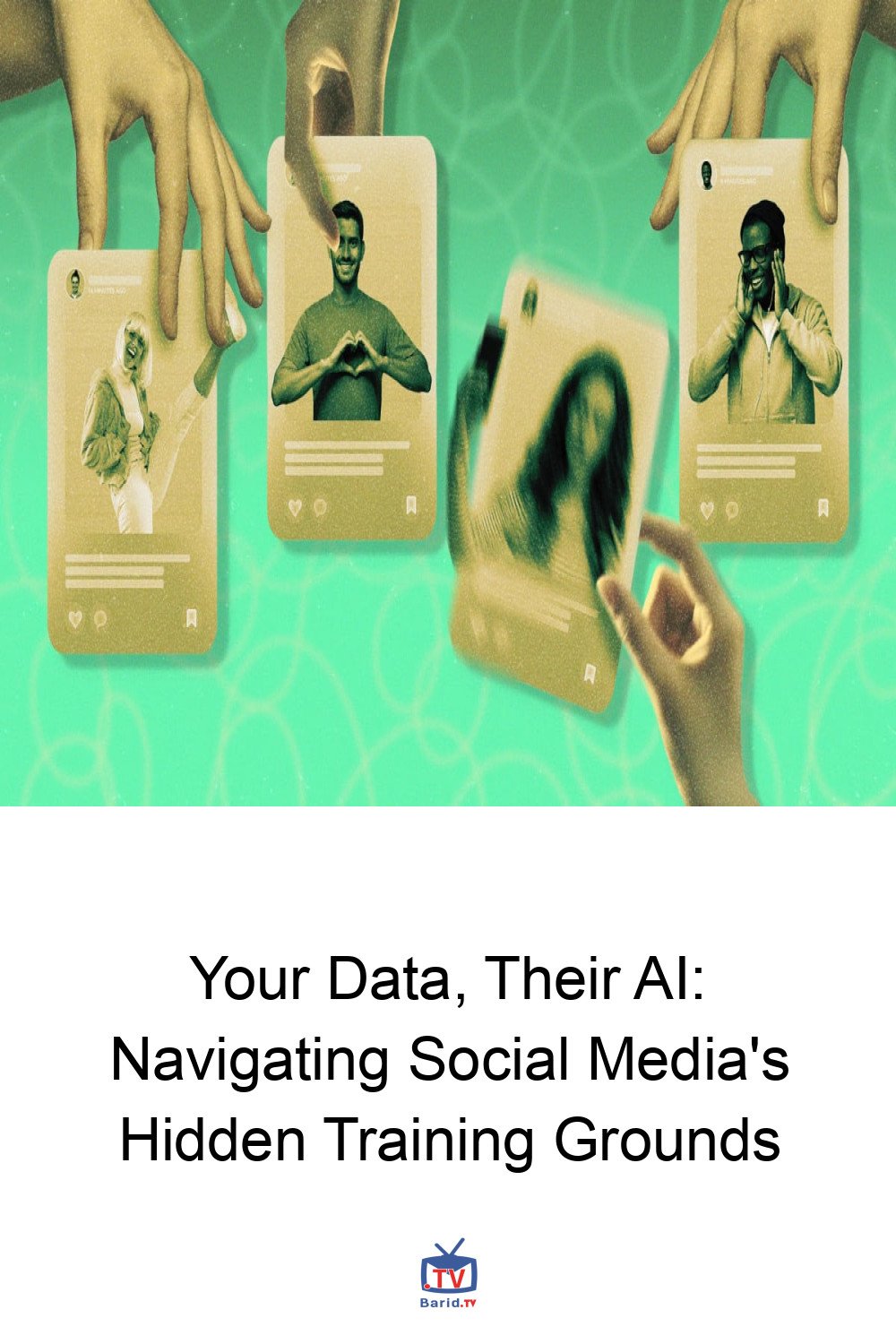
In an era increasingly defined by artificial intelligence, the lines between user-generated content and proprietary AI training data are blurring. Recently, Amazon-owned Twitch garnered attention for a relatively progressive move: allowing users to opt out of having their streams, VODs, and chats contribute to AI model training. While this announcement sparked considerable debate, it also highlighted a stark reality: many social media platforms are far less transparent, and far less accommodating, when it comes to how they leverage your digital footprint for AI development.
The vast majority of social media applications are actively utilizing your data to train various forms of AI. However, the ease of opting out, as offered by Twitch, remains a rare exception. Unraveling the intricate ways your data is employed has become an arduous task, often requiring users to wade through dense, legalese-laden privacy policies. Generative AI models, such as Google’s Gemini, are frequently bundled under broader “machine learning-powered” features, making it nearly impossible for the average user to discern whether their contributions are fueling the controversial generative AI revolution or simply optimizing a recommendation algorithm.
Even for those persistent enough to uncover the truth, the option to opt out is frequently absent. Alarmingly, not a single platform reviewed currently operates on an opt-in model for AI training. This means that by simply logging in, users are implicitly consenting to have their data incorporated into these powerful, evolving systems. Below, we delve into the specifics of several major platforms, outlining their AI training practices and any available avenues for user control.
Platform-Specific Policies and Your Options
Bluesky: Decentralization and Data Scrutiny
What training do they do?
Bluesky officially states it does not train AI models with user data, though it does integrate AI into its development and feature creation. However, its decentralized AT Protocol means your posts and other associated data (like blocked accounts) are inherently public. This open structure makes it possible for third parties to scrape your content and independently use it for AI training, a risk inherent in any public, decentralized system.
What can you do to stop it?
Since Bluesky itself doesn’t use your posts for AI training, no direct action is required within the platform. If concerns about third-party scraping persist, the most effective measure is to exercise caution regarding the content you choose to publish on the platform.
Facebook (Meta): An AI Ambition Unbound
What training do they do?
For Meta, the parent company of Facebook, the question isn’t what data they use for AI training, but what they don’t
. Following significant investments in a metaverse vision that largely failed to materialize, Meta has aggressively pivoted to AI, striving to compete with industry leaders like OpenAI and Google. Their policy on AI training is exceptionally broad, encompassing not only your posts, photos, and interactions on Facebook but also data acquired from third-party brokers and “information that is available on the internet.” This last phrase is so sweeping it suggests virtually any accessible data could be fair game. Meta does claim to draw a line at private messages, “unless you or someone in the chat chooses to share those messages with our AIs.”
What can you do to stop it?
Unless you reside within the European Union, opting out of Meta’s AI training is effectively impossible. A narrow legal exception exists if you discover your personally identifiable information within an AI tool’s response; in such cases, you can submit a complaint for Meta’s review. However, be aware that interacting with Meta’s AI tools is often considered consent for future AI model training based on those interactions, potentially exposing you further. For many, the only truly effective strategy with Facebook appears to be disengagement. Even account deletion may not fully prevent Meta from using previously collected data for AI training, though it will halt direct data collection from your active account.
Instagram (Meta): Shared Policies, Unique Challenges
What training do they do?
As another Meta-owned platform, Instagram largely adheres to the same broad AI training policies as Facebook. However, Instagram has faced its own specific controversies, such as the short-lived “Muse” feature, which allowed users to generate AI images of others without explicit consent—a feature quickly removed due to widespread backlash.
What can you do to stop it?
Similar to Facebook, EU residents have the option to opt out of AI training entirely, and all users can file an objection if their private information appears in AI responses. Beyond these limited avenues, your primary recourse is to either delete your Instagram account or, at a minimum, set it to private.
LinkedIn (Microsoft): Professional Data, AI Ambitions
What training do they do?
Owned by Microsoft, a company deeply invested in AI development, LinkedIn users should be particularly mindful of how their professional data is utilized. LinkedIn’s official policy indicates that user posts, comments, profile data, resumes, and group activities are all subject to being used for AI training. Microsoft’s commitment to AI, often framed as being “for entertainment purposes only” in some contexts, underscores the pervasive nature of this data collection across its services.
What can you do to stop it?
[Content was truncated here in the original input. Assuming the article would continue with specific opt-out instructions for LinkedIn if they exist, or state their absence.] Unfortunately, specific, easily accessible opt-out mechanisms for LinkedIn’s AI training are not prominently advertised. Users are generally advised to review Microsoft’s broader privacy policies, which govern LinkedIn, for any potential recourse. Limiting the personal and professional information you share publicly on the platform remains the most direct way to control your data exposure.
For more details, visit our website.
Source: Link