

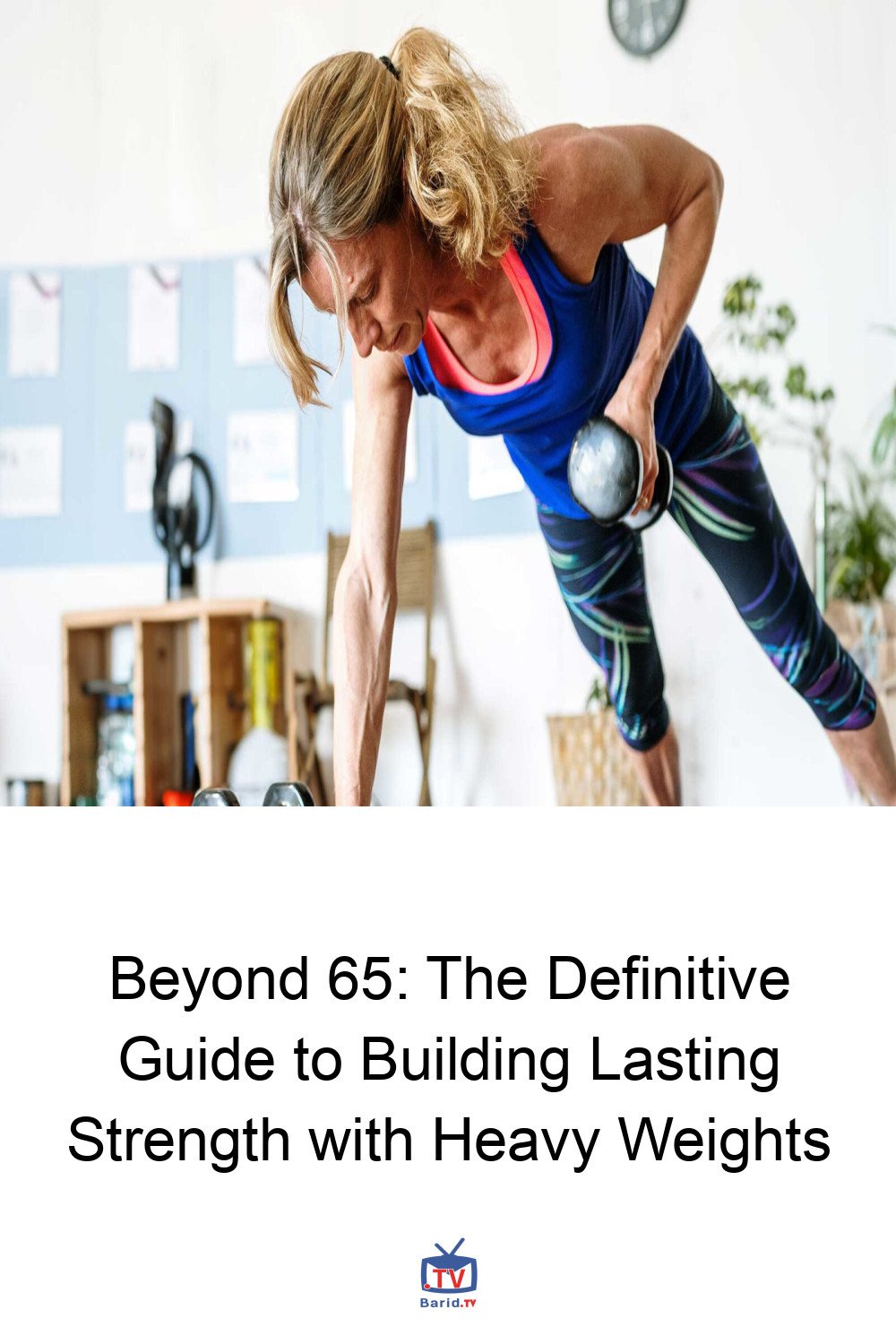
As the years gracefully accumulate, many aspects of life blossom – wisdom deepens, and leisure time often expands. Yet, one common concern for those over 60 is the gradual, often unnoticed, decline in muscle mass and strength, a phenomenon known as sarcopenia. This age-related muscle loss, which can begin as early as 30 and accelerate significantly after 60, impacts everything from daily mobility to overall vitality.
For many, retirement presents a golden opportunity to refocus on personal well-being, including physical health. If the demands of a career or family responsibilities previously sidelined your fitness goals, now might be the perfect moment to embrace a powerful solution: heavy weight training. A groundbreaking new study sheds light on why this approach isn’t just beneficial, but potentially the most effective way for adults aged 64 to 75 to build and sustain muscle for years to come.
Unlocking Longevity: The Science Behind Strength Training for Seniors
The journey of aging naturally brings changes to our physiology. Muscle protein synthesis, the vital process of repairing and building muscle tissue, becomes less efficient. Hormones crucial for muscle growth, like testosterone and growth hormone, decline, and increased inflammation can further compromise muscle cell integrity. While numerous studies have consistently championed strength training as a bulwark against muscle loss, most have focused on short-term impacts, typically observed only during the trial period or up to a year post-intervention.
However, a recent landmark study sought to answer a more profound question: does heavy lifting offer lasting muscle gains for older adults, extending two, three, or even four years beyond the training period? The findings provide a resounding “yes.”
Heavy vs. Moderate: A Deeper Dive into the Research
Conducted in Denmark, this comprehensive study involved 451 adults, aged 64 to 75, who were randomized into three distinct groups for a year of supervised training:
The Heavy Resistance Training Group:
- Engaged in machine-based exercises (not free weights) three times a week.
- Performed nine total exercises.
- Completed three sets of 6-12 repetitions at 70%-80% of their maximum strength.
The Moderate-Intensity Training Group:
- Participated in circuit training using bodyweight and resistance bands three times a week.
- Executed nine exercises mirroring those in the heavy group.
- Completed three sets of 10-18 repetitions at 50%-60% of their maximum strength.
The Control Group:
- Maintained their usual physical activity levels.
Notably, all participants were relatively active prior to the study, averaging nearly 10,000 steps daily, setting a baseline of general physical engagement.
The Enduring Power of Heavy Lifting: Key Findings
The results were compelling:
- Both the heavy and moderate weight training groups demonstrated significant improvements in muscle strength and function, with the heavy lifting group showing more pronounced gains.
- Crucially, participants in the heavy training group successfully maintained their total lean mass and strength for a remarkable four years after the supervised training concluded.
- In stark contrast, the control group experienced a decline in strength over the four-year follow-up period.
- While the moderate-intensity group saw a slight, non-significant decrease in strength after four years, their gains were less enduring than those achieved through heavy resistance.
This study unequivocally highlights that while any form of strength training is beneficial, lifting heavy weights is paramount for not only building but also sustaining muscle and strength well into older age. Relying solely on general activity or even moderate bodyweight exercises may not be sufficient to counteract the relentless march of age-related muscle decline.
Defining “Heavy”: Your Personal Benchmark
The term “heavy weights” can sound daunting, especially if you’re new to resistance training. However, it’s vital to understand that “heavy” is entirely relative to your individual capabilities. The objective is to select a weight that challenges you to perform 70-80% of the maximum you could possibly lift for a given exercise. For one person, this might mean a 5-pound dumbbell for a bicep curl; for another, it could be 15 pounds. The key is progressive overload – consistently challenging your muscles as they adapt and grow stronger.
If you’re unsure where to begin, enlisting the expertise of a certified personal trainer can be invaluable. A trainer can design a safe, effective, and personalized program tailored to your current fitness level and goals, helping you build confidence with gym equipment or free weights.
Beyond the Barbell: A Holistic Approach to Muscle Health
While heavy resistance training is undeniably a cornerstone of muscle preservation, it’s part of a larger wellness mosaic. To truly optimize muscle health, adequate protein intake is equally critical. Protein provides the essential amino acids necessary for muscle repair and growth, working synergistically with your training efforts. Consider consulting a registered dietitian to ensure your nutritional strategy complements your exercise regimen.
Embracing heavy weight training, alongside a balanced diet, offers a powerful pathway to maintaining strength, independence, and a vibrant quality of life as you age. It’s an investment in your future self, proving that true strength knows no age limit.
For more details, visit our website.
Source: Link