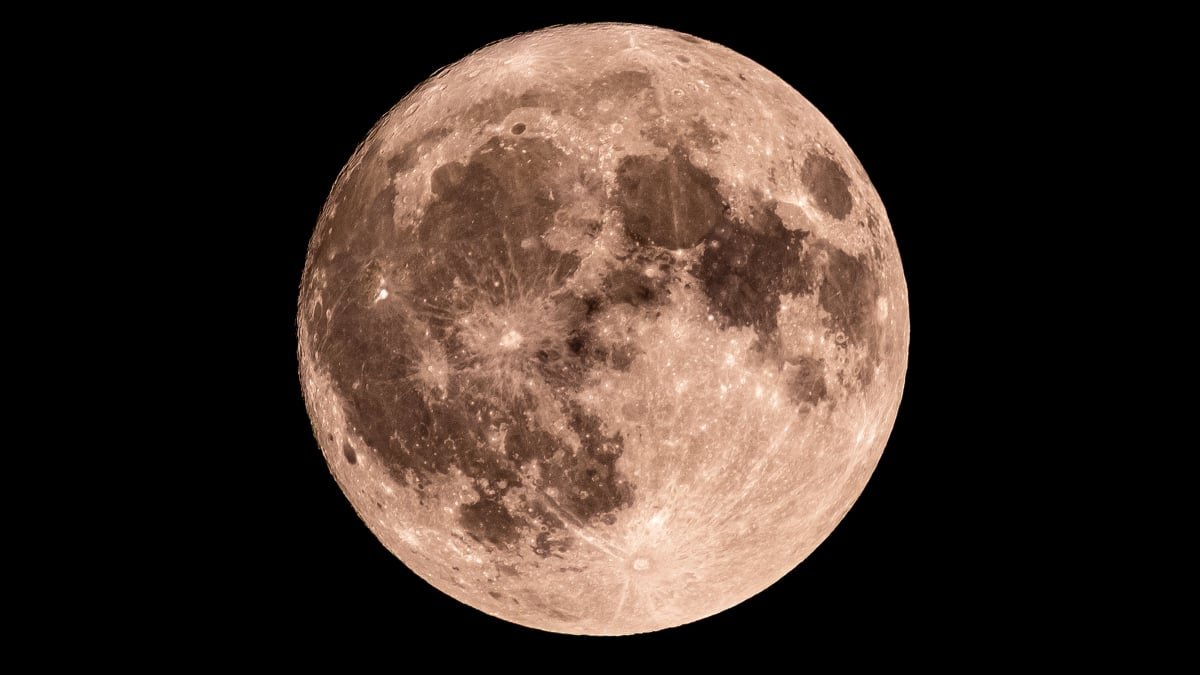

As the celestial ballet continues its nightly performance, our constant companion, the Moon, steadily grows in illumination. Each evening brings a subtle shift, revealing more of its enigmatic surface. Tonight, June 20, offers a unique spectacle for sky-gazers. What lunar marvels can you expect to witness?
Tonight’s Lunar Portrait: A Waxing Crescent
On Saturday, June 20, the Moon proudly displays its Waxing Crescent phase. According to NASA’s Daily Moon Guide, approximately 44% of its surface will be bathed in sunlight, presenting a captivating sliver of light in the evening sky. This increasing illumination marks our journey through the current lunar cycle, drawing us closer to the brilliance of the next Full Moon.
Unveiling Lunar Wonders: What You Can See
Even without specialized equipment, the night sky holds treasures for the observant eye:
- Naked Eye: Look closely, and you’ll discern the prominent dark plains known as the Mares Fecunditatis, Serenitatis, and Crisium – vast, ancient lava flows that tell tales of the Moon’s tumultuous past.
- With Binoculars: Elevate your viewing experience! Binoculars will bring into focus additional features such as the striking Endymion Crater, the impressive Posidonius Crater, and the expansive Mare Nectaris.
- Through a Telescope: For the truly dedicated astronomer, a telescope unlocks a universe of detail. Beyond the previously mentioned features, you’ll be able to pinpoint the historic Apollo 17 landing spot, the rugged Descartes Highlands, and the dramatic Rupes Altai fault line.
The Rhythmic Dance of the Moon: Understanding Lunar Phases
Our Moon’s appearance is a constantly evolving masterpiece, governed by its orbit around Earth and its relationship with the Sun. NASA explains that the Moon completes one full revolution around our planet in roughly 29.5 days, traversing eight distinct phases along the way. While we always see the same face of the Moon, the proportion of that face illuminated by the Sun changes, creating the familiar sequence of shapes we observe.
Journey Through the Lunar Cycle:
- New Moon: Positioned between Earth and the Sun, the side facing us is completely dark and invisible.
- Waxing Crescent: A delicate sliver of light emerges on the right side (for observers in the Northern Hemisphere), growing larger each night.
- First Quarter: Half of the Moon’s face is illuminated on the right, appearing as a perfect half-Moon.
- Waxing Gibbous: More than half of the Moon is lit, steadily progressing towards fullness.
- Full Moon: The entire lunar disk is brilliantly illuminated, offering a breathtaking spectacle.
- Waning Gibbous: The Moon begins to recede from its fullness, with light diminishing from the right side (Northern Hemisphere).
- Third Quarter (Last Quarter): Another half-Moon, but this time the left side is illuminated.
- Waning Crescent: A final, thin crescent of light remains on the left before the Moon returns to its New Moon phase, completing the cycle.
Mark Your Calendars: The Next Full Moon Approaches
For those eagerly anticipating the Moon’s full glory, mark your calendars! The next Full Moon is set to grace our skies on June 29, promising a luminous display for all to behold.
For more details, visit our website.
Source: Link