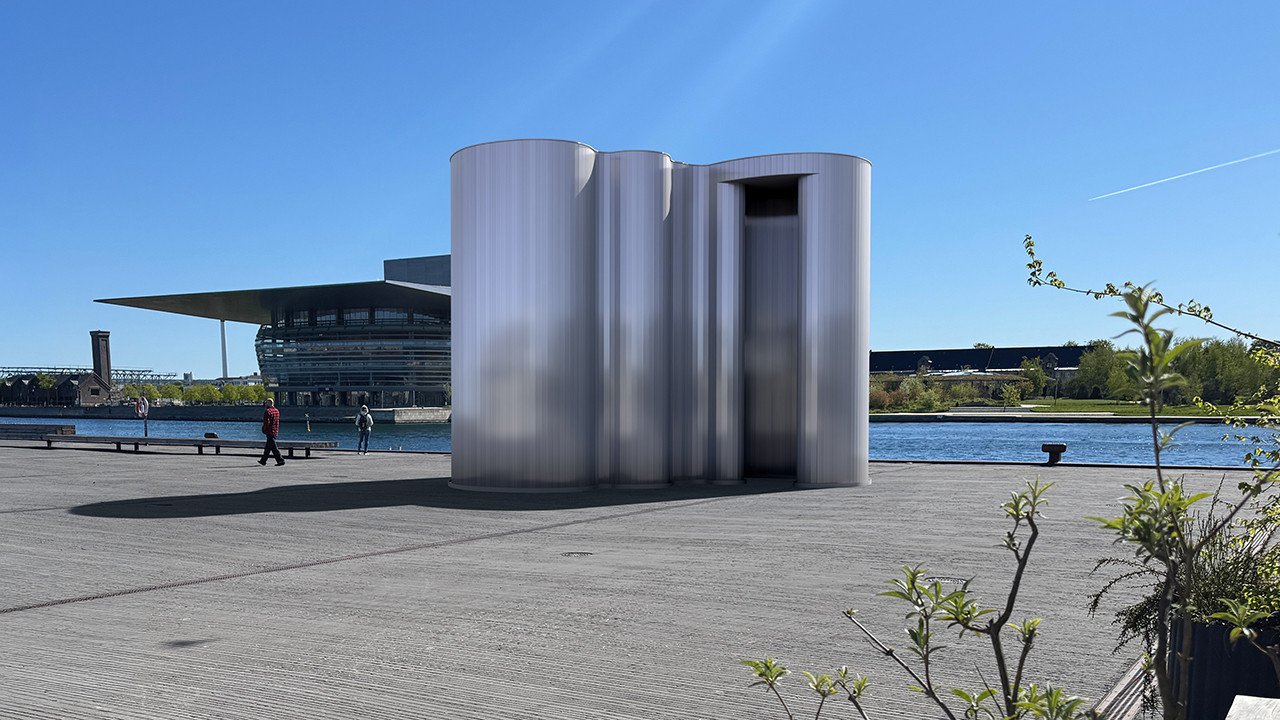

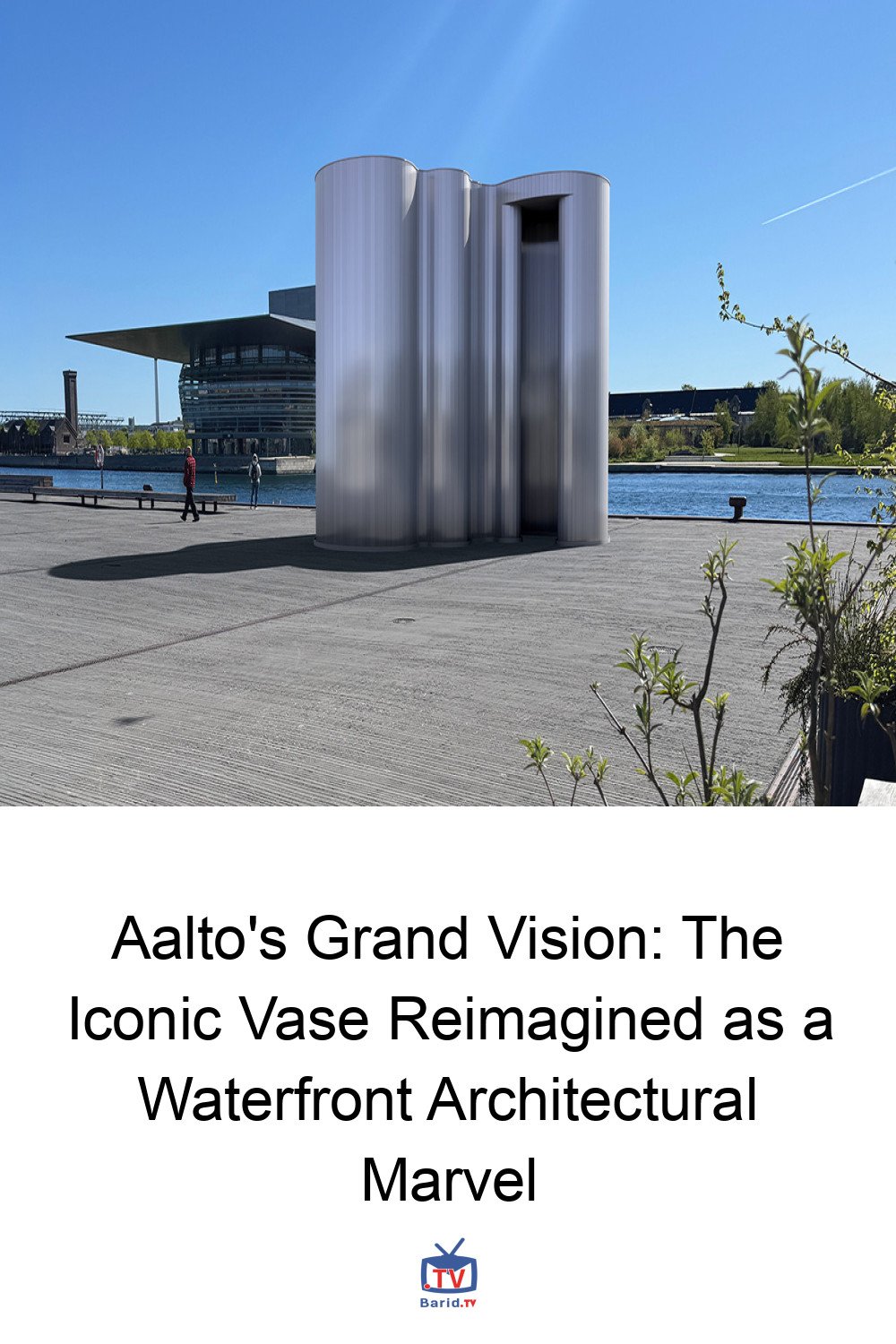
Copenhagen’s vibrant harbor waterfront, a canvas for innovation during the annual 3daysofdesign festival, played host to a truly monumental spectacle this year. Rising an impressive 22 feet, a striking monolith of undulating aluminum extrusions captivated onlookers. Few on the ground realized the profound secret it held: this semi-enclosed, temporary structure was a precise, scaled-up replica of the iconic Aalto vase, a design masterpiece conceived 90 years ago by the legendary Alvar Aalto for Finnish glassware brand Iittala.
An Icon Reimagined: From Vessel to Vision
This ambitious undertaking was the brainchild of local multivalent studio TABLEAU, brought to life with the sustainable metal expertise of Norwegian purveyor Hydro. More than just a striking installation, it stood as a powerful tribute to the enduring principles of Scandinavian design, uniting the creative spirit of Finland, Denmark, and Norway.
Julius Værnes Iversen, Founder and Creative Director of TABLEAU, expressed the profound significance of the project: “To be given the opportunity to design a pavilion for Iittala to celebrate the anniversary of such an iconic design as the Aalto vase is a dream come true, and something we’re deeply grateful for. We wanted to create an impactful pavilion that gives visitors a space to experience the beauty of design.”
Architecture of Scale and Sustainability
The pavilion itself was a masterful exploration of scale, a meta-architectural statement that brilliantly amplified the inherent connection between object and environment. Alvar Aalto, a trained architect who famously transcended disciplinary boundaries, would undoubtedly have applauded this seamless translation from a delicate vessel to an inhabitable structure.
Achieving this grand scale required not only visionary design but also advanced material science. Asle Forsbak, Hydro Extrusions Marketing Director, explained, “Bringing the Alvar Aalto vase to this measure required both the right material and engineering expertise, and the properties of aluminum extrusions made it the ideal choice for this kind of architecture. The project proved that it can be done on a large scale with a low carbon footprint.” True to its sustainable ethos, the modular slatted components were fully recycled after the festival, seamlessly re-entering Hydro’s production cycle. “We brought our full capability to bear on a single, iconic shape,” Forsbak added, underscoring the project’s innovative spirit.
Inside the Curves: A Tribute to Form and Color
Stepping inside the pavilion, visitors were greeted by the very objects that inspired its colossal form. The full spectrum of the reissued Aalto City Vase collection was elegantly displayed, suspended on discreet, almost invisible bases. These refreshed offerings, faithful to Aalto’s original organic curves, were presented in a carefully curated palette of colorways, each reflecting the unique character of waterfront capitals: Berlin, Amsterdam, Tokyo, New York, Helsinki, and, of course, Copenhagen. Deep cobalts, pristine whites, and effervescent golds shimmered, their iridescent quality mirroring the dramatic yet resolute curves of the pavilion itself.
A Legacy Unfolded
This collaborative triumph at 3daysofdesign was more than just an exhibition; it was a living testament to the timeless appeal of good design, the power of collaboration, and the potential for sustainable innovation. To delve deeper into the creative synergy behind this remarkable project, explore the websites of Iittala, Hydro, and TABLEAU.
Photography by Haavard Holmaas.
For more details, visit our website.
Source: Link