
Kevin Warsh’s Hawkish Debut: Markets Reel as New Fed Chair Takes Decisive Stance on Inflation
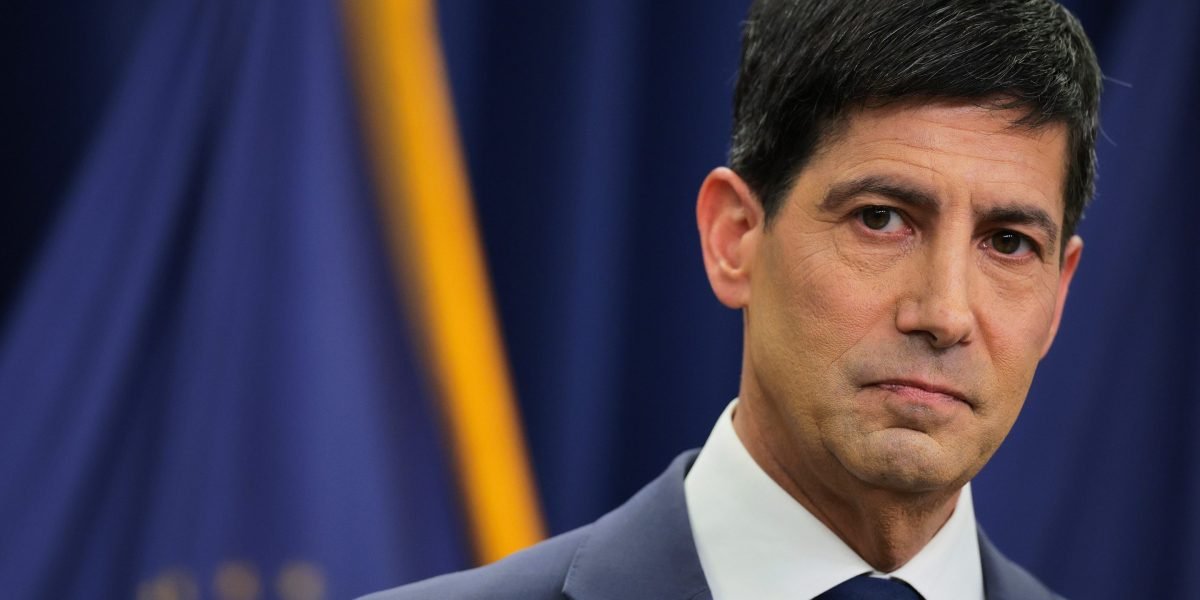
The financial world held its breath on Wednesday afternoon, anticipating the inaugural press conference of the new Federal Reserve Chair, Kevin Warsh. The question on everyone’s mind: would the seasoned hawk emerge, or the more recent, seemingly dovish figure some had dubbed a “sock puppet” of the administration? What transpired was a definitive declaration of intent that sent ripples—and then a significant dip—through global markets.
A Hawk Uncaged: Warsh’s Unwavering Commitment to Price Stability
For months leading up to his confirmation, Warsh, 56, had presented a nuanced, at times dovish, perspective. He spoke of AI’s disinflationary potential, downplayed fears of robust growth, and even suggested room for lower rates. This contrasted sharply with his earlier tenure as a Fed governor in 2011, when he resigned in protest over the Fed’s bond-buying, embodying a staunchly hawkish stance. His confirmation hearing was fraught with political division, notably Senator Elizabeth Warren’s accusation of him being a “Trump sock puppet” – a charge Warsh merely laughed off.
However, any lingering ambiguity evaporated at 2 p.m. on Wednesday. The Federal Reserve’s policy statement, followed by Warsh’s press conference, left no room for doubt. “We will meet our price stability objective,” Warsh declared repeatedly, a mantra that resonated with the gravitas of a new era. With inflation stubbornly hovering at double the Fed’s 2% target for five years, Warsh minced no words: “unacceptable.” He emphasized, “The ‘two’ is the left of the decimal point. For now, ‘zero’ is to the right.”
This resolute commitment to taming inflation was immediately recognized by veteran financial observers. Jon Hilsenrath, the former Wall Street Journal reporter known as the “Fed whisperer,” confirmed, “that was hawkish Kevin talking.”
Markets React: A Jolt to “Animal Spirits”
The markets, accustomed to a different narrative, reacted with a palpable jolt. While the Fed held its benchmark rate steady at 3.50%-3.75% as anticipated, the underlying sentiment shifted dramatically. Nine out of 18 officials now project at least one rate hike this year, and the policy statement conspicuously removed any prior easing bias. The Dow Jones Industrial Average plummeted 507 points, erasing earlier intraday highs. The S&P 500 and Nasdaq followed suit, losing 1.2% and 1.3% respectively, with tech and communications services sectors bearing the brunt. Two-year Treasury yields, a sensitive barometer of rate expectations, surged 16 basis points to 4.21%, and money markets began pricing in an October hike that was previously considered a long shot.
This market correction, Hilsenrath suggested, might be precisely what Warsh intended. “It’s probably in everyone’s interest in the long run if we put some speed bumps on this boom,” he remarked, alluding to the “animal spirits” driving a buoyant equities market and high-profile events like the SpaceX IPO.
Beyond the “Sock Puppet” Label: A Display of Independence
Warsh’s performance was a masterclass in asserting independence, particularly in the face of previous accusations. Despite the president’s year-long campaign for lower rates and recent public statements encouraging Warsh’s “total independence,” Warsh deftly sidestepped questions about any direct communication with the White House. His statement squarely attributed rising prices to the conflict in the Middle East, a move that allowed him to frame inflation drivers independently of domestic fiscal policy debates.
His approach to policy was equally strategic. He declined to submit his own “dot” to the Fed’s rate-projection plot, instead encouraging colleagues to maintain theirs. He scrapped forward guidance, believing markets function best by interpreting data directly rather than guessing the Fed’s next move. Furthermore, he announced the formation of five task forces—focused on communications, the balance sheet, data sources, AI’s labor market impact, and the inflation framework—all due by year-end. Hilsenrath viewed these panels as a clever tactic to buy time and address complex issues with a “we’ve got a task force for that” response, deferring immediate, definitive answers.
Ultimately, Warsh’s debut underscored a foundational belief he has championed for 15 years: that inflation is a deliberate choice, and the Fed, under his leadership, will no longer forfeit its responsibility to control it. The message is clear: the new Fed Chair is a hawk, and he’s here to fix inflation, regardless of market jitters or political pressures.
For more details, visit our website.
Source: Link