
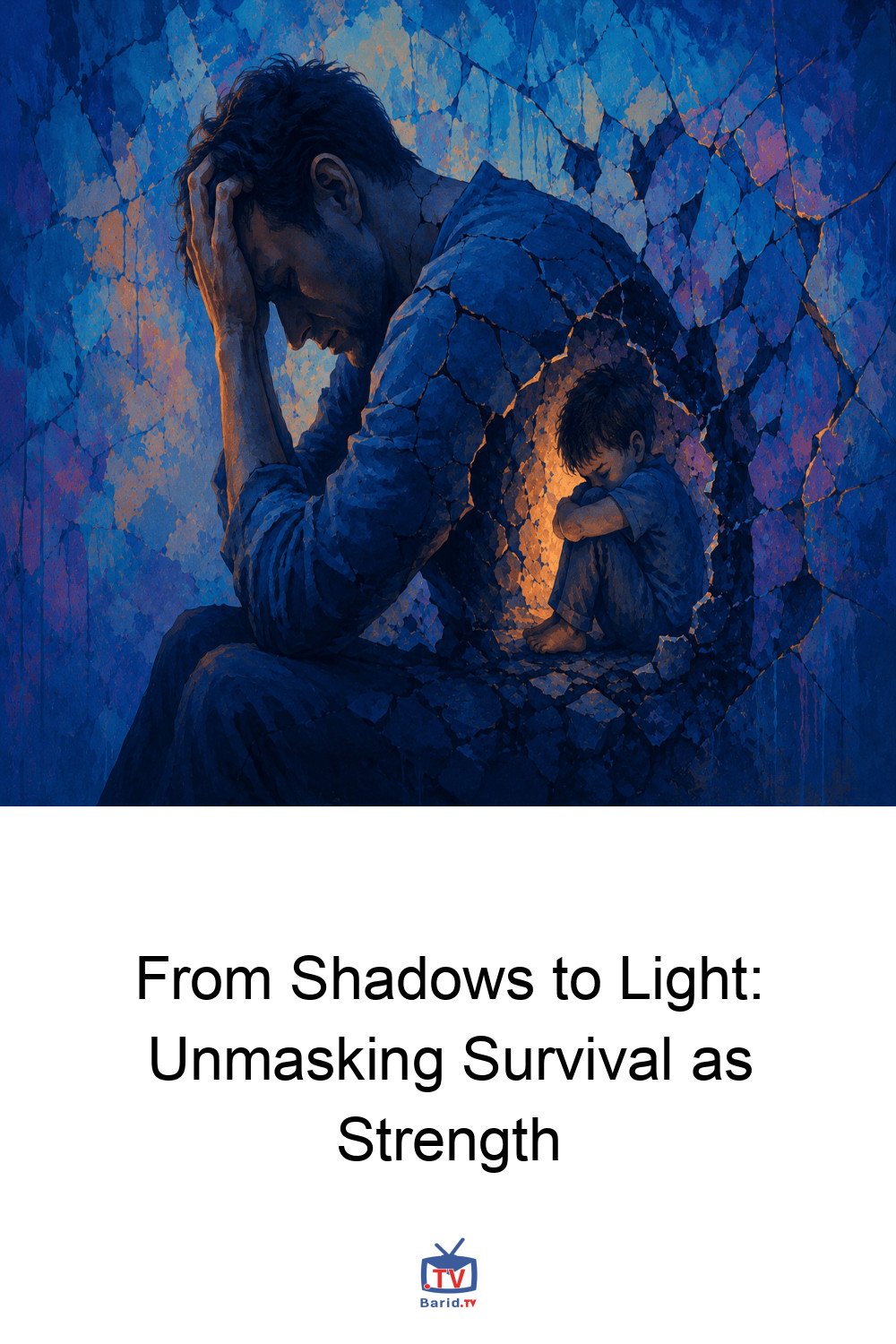
“The wound is the place where the light enters you.” ~Rumi
Growing up in a 1970s council house, life often felt like a carefully constructed facade. Children were to be seen, not heard, dismissed outdoors until the streetlights flickered on. On the surface, it was a picture of normalcy, yet behind closed doors, a different reality unfolded. I lacked the vocabulary then, but an undeniable sense of being ‘different’ permeated my existence. People perceived me as shy, and while true, it was a superficial label for a deeper, constant state of hyper-vigilance. Being around others was overwhelming; I was perpetually on edge, scanning for an unnamed threat, never truly feeling safe even when no obvious danger presented itself.
The Weight of a Child’s Burden
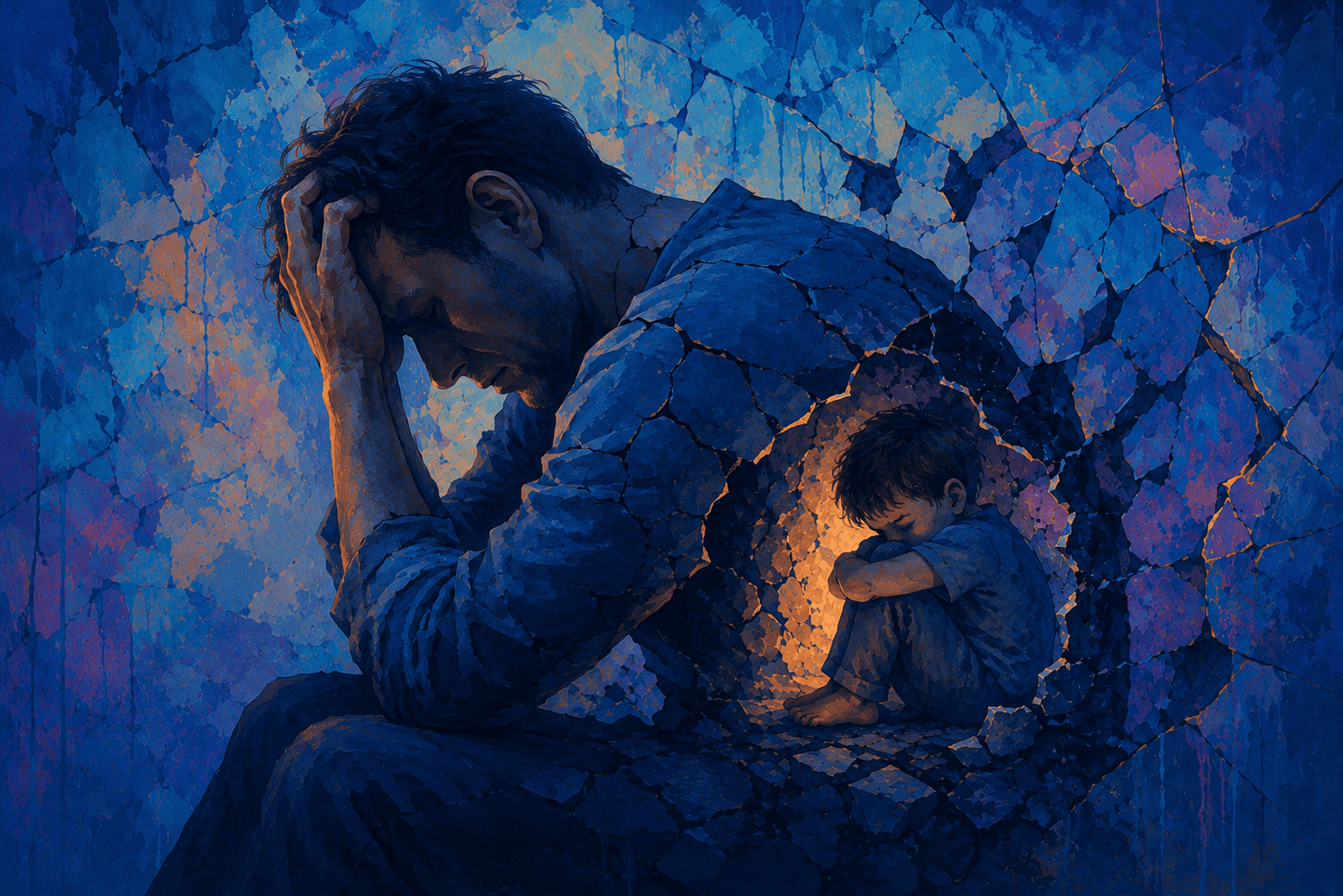
At the tender age of six, my world fractured. My parents divorced, my mother embarking on a new life with my sister, leaving me behind with my father. The full implications were beyond my grasp, only that everything had irrevocably changed overnight. A chilling ultimatum from my father—that he would end his life if I chose to go with my mother—became my truth. A child doesn’t question such pronouncements; they absorb them. So I stayed, shouldering an unbearable weight: the belief that another’s life hinged on my presence. In retrospect, this was the moment fear truly took root.
A Home Defined by Anger and Isolation
My father, deeply wounded by the breakup, descended into heavy drinking and prolonged periods of unemployment. His pain, though incomprehensible to me then, manifested as raw anger, and I became its unfortunate target. Returning home from school, even a few minutes late, often meant a beating. It wasn’t an isolated incident; it became a terrifying pattern, something I learned to anticipate, regardless of my perceived transgressions. Life under such conditions bred constant alertness, a meticulous caution, an endless striving for perfection that always felt just out of reach.
He wasn’t a ‘bad man’ in the simplistic sense, a truth I can now acknowledge. But he was utterly incapable of providing the fatherly warmth, reassurance, and safety I desperately needed. The living room was off-limits; my bedroom became my sanctuary and my prison. I spent countless days gazing out the window, constructing elaborate imaginary worlds to escape the harsh reality of my own. Friends eventually drifted away, unable to navigate the restrictions that kept me perpetually on the outside. At night, the fear found new expressions, manifesting as bedwetting until I was nearly twelve, leaving me with a profound, unarticulated sense of shame, a feeling that something within me was inherently ‘wrong’.
The Descent into Numbness: A Twenty-Five Year Escape
By eleven or twelve, I discovered my first escape: butane gas. Stolen lighter refills from a local shop, inhaled from my jumper, offered a fleeting but potent release—a temporary departure from my own mind. This gateway quickly led to others: glue, petrol, and by fourteen, cannabis and amphetamines. The pursuit wasn’t about ‘getting high’; it was about not feeling what I was feeling. This became the defining rhythm of my life for the next quarter-century. Escaping my head wasn’t a choice; it was a perceived necessity.
Substances became a daily ritual, eventually consuming every facet of my existence. Friendships withered, direction dissolved, and my sense of self eroded. Yet, amidst the chaos, a strange paradox emerged: belonging. The individuals I used with became my surrogate family, a world where I felt understood. There were no expectations, no pressure to be anything other than my raw, unvarnished self. For the first time, I wasn’t the ‘odd one out.’ This newfound acceptance, however twisted, made leaving an almost impossible feat. How does one abandon the only place where true acceptance has ever been felt?
The Illusory Embrace of Connection
In the late eighties, another shift occurred with the arrival of Ecstasy. It offered an experience I’d never genuinely known: a chemically induced facsimile of love, connection, and openness. I felt an unprecedented closeness to people, a profound sense of being part of something larger. It was overwhelmingly beautiful, powerful, and insidiously addictive. I yearned for it never to end. But it wasn’t real, not in the way my soul craved. It was an artificial echo of the connection I had sought my entire life. And once you’ve tasted that, however synthetic, returning to emptiness feels unbearable. So, I stayed, trapped for years.
The Slow Dawn of Change and the Truth of Self
The path to liberation was not a sudden revelation but a gradual, almost imperceptible unfolding. Over time, a quiet realization began to stir: the life I was living wasn’t the only option. Perhaps, just perhaps, there was another way, one I had long ignored. Life had been whispering alternatives, but I hadn’t been ready to listen. The moment I finally opened myself to it, everything began to shift. I began to change.
Stepping away from that world was, and remains, one of the most arduous undertakings of my life. It wasn’t merely about shedding the substances; it was about confronting the very fears, loneliness, and profound sense of not belonging that I had spent decades trying to avoid. It was about facing the truth of who I was, not as broken, but as a survivor, intricately shaped by the patterns I once mistook for flaws. This journey, though painful, has been the ultimate path to understanding and reclaiming my authentic self.
For more details, visit our website.
Source: Link