
“Nostalgia is a file that removes the rough edges from the good old days.” ~Doug Larson
This poignant observation by Doug Larson perfectly encapsulates a truth many of us grapple with after a significant relationship ends. We often believe we’re mourning the loss of a person, when in reality, we’re grieving a carefully constructed narrative, a curated version of events, and perhaps most profoundly, a past iteration of ourselves.
The Art of Remembering: Crafting an Idealized Ex
For years, I believed I missed Zinia. But with the clarity that only time and introspection can bring, I’ve come to understand that the Zinia I pined for was largely a figment of my own making. The real Zinia—the one who engaged in endless, draining arguments, who uttered words I swore I’d never forgive, who was fundamentally incompatible with me in ways I consciously ignored—that Zinia slowly faded from my mental canvas.
What remained were the highlights: her infectious laugh, our undeniable chemistry, the effortless way she understood my humor, and those conversations that stretched into the early hours, always feeling unfinished. Everything else, the difficult, the painful, the inconvenient, was quietly edited out. I spent years longing for this perfected version, convinced I had lost something precious. But she wasn’t something I lost; she was something I meticulously built.
Memory: A Painter, Not a Historian
Our minds are not passive archives; they are active artists. Each time I revisited memories of Zinia, I wasn’t recalling; I was repainting. With every brushstroke, a little more of the unpleasantness dissolved. After enough time, what I cherished wasn’t a genuine memory but a flattering, carefully crafted portrait. The Zinia in my head was perpetually at her best, frozen in moments of pure joy and connection. Of course, I missed her – I had unconsciously designed her to be missed.
Yet, the actual Zinia was the catalyst for months of sleepless nights and lost appetite, plunging me into a mental labyrinth where the simple act of existing felt alien. This suffering was real, tangible. And still, the idealized Zinia held sway, far easier to love than the complex, flawed woman she truly was.
The Deeper Loss: Grieving a Past Self
The true revelation, the moment that finally shattered my illusion, was the realization that my grief wasn’t for Zinia at all. It was for the person I was when she was still in my life. That version of me was vibrant, amplified. Every emotion felt intensified, nothing at half-volume. I labeled it love, but in hindsight, it felt more akin to a slow drowning, where the sensation of sinking was mistaken for profound depth.
With her, I laughed differently, moved with a heightened sense of awareness. When the relationship ended, that amplified self vanished, as if he were merely an extension of her, never truly my own. This is a grief rarely discussed: the loss of oneself, the specific identity forged within a particular relationship. I spent years convinced I was mourning Zinia, replaying old conversations, when all along, I was mourning a version of myself that wouldn’t return. This was a distinct, profound loss for which I initially had no words.
The Quiet Truth: An Encounter with Reality
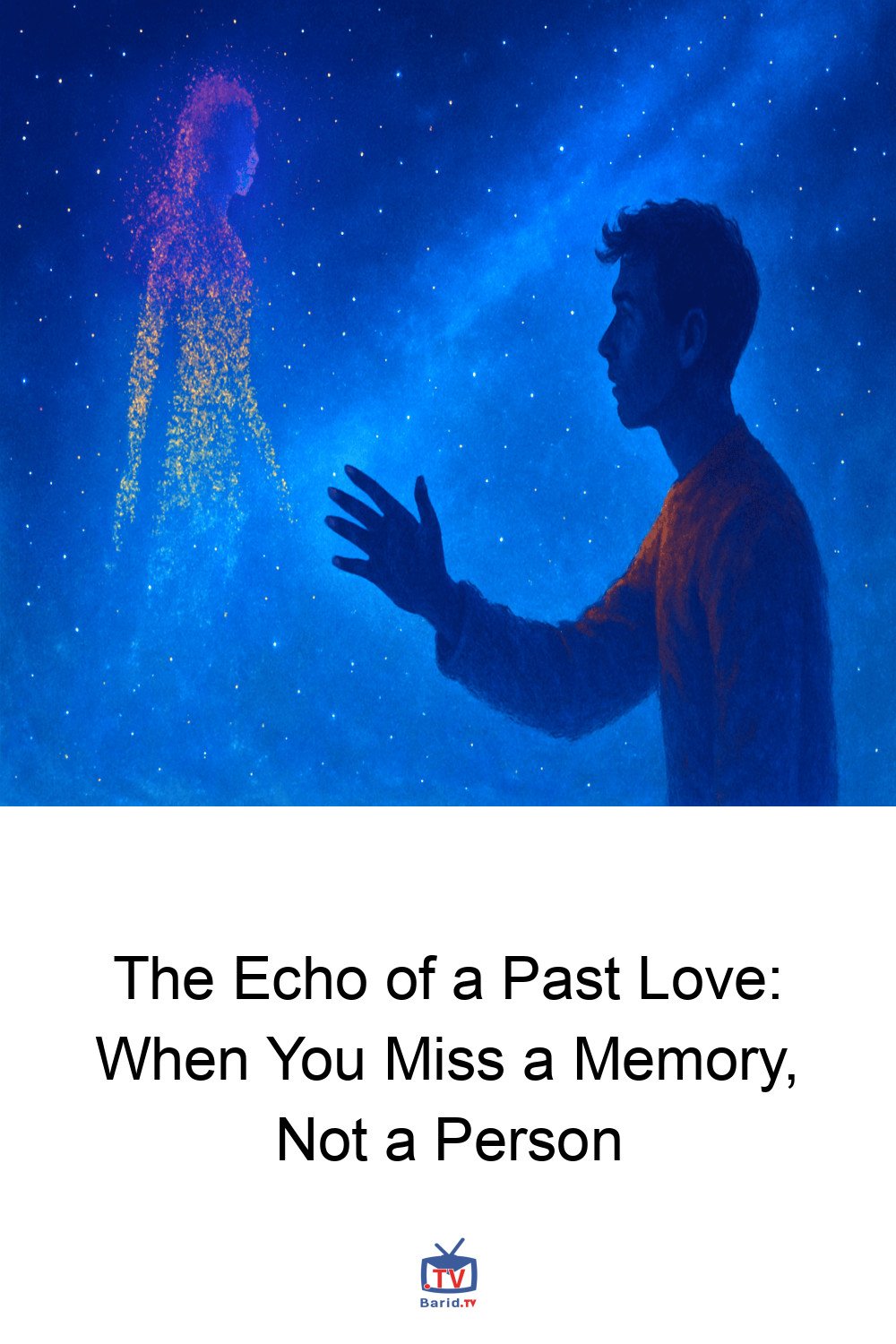
Years later, an unavoidable encounter with Zinia brought an unexpected quietude. Within minutes of conversation, I noticed a profound stillness within me. There was no dramatic sting of heartbreak, no surge of nostalgia. The woman before me bore little resemblance to the idealized character I had carried in my mind. The feeling simply went flat, like an echo that had already faded before I could fully grasp it.
Driving home, the truth settled: I was never missing Zinia. I was missing a character I had written, a story I had fallen in love with. Our relationship was real, the love was genuine, but these truths coexist with the equally real truth that we were genuinely awful together. For too long, I sought a simpler narrative: either it was beautiful and then ruined, or broken from the start. Both were easier than confronting the complex reality.
The truth was, it was real love, and it was also impossible. Both realities unfolded simultaneously. The good moments were authentic, and the damage was equally so. It mattered, and it had to end. She was a person, we loved each other, and it wasn’t enough. That chapter is now definitively closed. And this truth, quieter than the elaborate story I had lived inside, is infinitely lighter to carry.
For more details, visit our website.
Source: Link