
Canon EOS R6 Mark III: A Hybrid Powerhouse Redefining Expectations
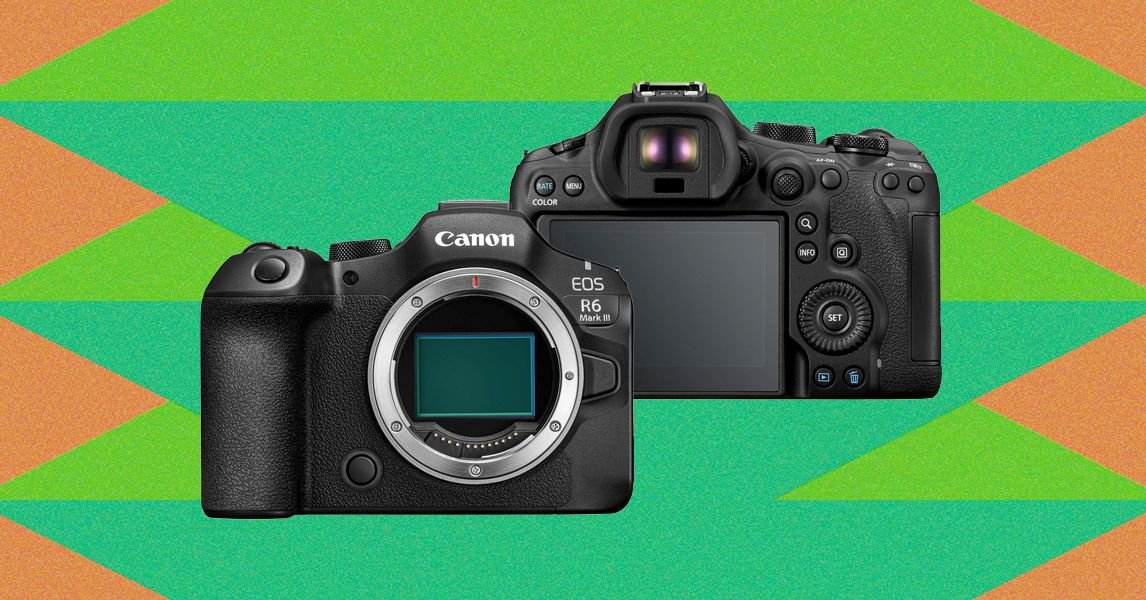
Canon’s EOS R6 series has long been a gateway into the world of full-frame mirrorless photography. However, with the arrival of the EOS R6 Mark III late last year, Canon has decidedly shifted gears, transforming what was once considered an ‘entry-level’ model into a formidable contender packed with pro-level features. Remarkably, it achieves this while maintaining a price point that remains highly competitive, making it an incredibly attractive proposition for serious enthusiasts and working professionals alike.
While the exterior of the R6 Mark III might bear a striking resemblance to its predecessor, the Mark II, the true revolution lies beneath the surface. Significant internal enhancements deliver a profoundly different shooting experience. The integration of ultra-high-speed CFexpress memory card support unlocks faster continuous shooting, dramatically improved pre-capture capabilities, more tenacious autofocus, and a substantial boost to video performance, including stunning 7K 60p recording.
Having spent several intensive weeks putting the Mark III through its paces, comparing it directly with my own R6 Mark II, I’m convinced: this upgraded Canon model isn’t just an evolution; it could very well be the premier hybrid camera for both stills and video currently available on the market.
A Resolution Revolution: The 32.5 MP Sensor
One of the most significant limitations of the R6 Mark II was its 24.2-megapixel sensor, which, while capable, occasionally fell short when demanding ultra-fine detail or aggressive cropping. The Mark III addresses this head-on with a substantial 34 percent bump in resolution, featuring a new 32.5 MP full-frame stabilized chip. While increasing pixel density can sometimes compromise low-light performance, Canon appears to have found a sweet spot. In my testing, I observed no vast difference in noise levels compared to the Mark II, and with modern advancements like Photoshop’s Denoise, any minor grain is easily managed.
This isn’t an entirely new sensor; it’s a proven performer derived from the videocentric EOS C50. This heritage immediately signals the Mark III’s serious video prowess, which we’ll delve into next.
Unlocking Cinematic Potential: Advanced Video Capabilities
Drawing directly from the C50’s capabilities, the R6 Mark III offers an impressive suite of video options. Filmmakers can now capture breathtaking 7K 60p footage, oversampled 4K at 60p, or incredibly smooth 4K UHS at 120p for stunning slow-motion sequences. The camera supports up to 10-bit recording, C-Log 2 and 3 for extensive grading flexibility, and Open Gate recording at up to 30p.
The transition from dual SD card slots on the Mark II to one CFexpress Type B slot alongside an SD (up to SDXC UHS-II) slot on the Mark III is a game-changer. While both models share the same Digic X processor, the CFexpress slot transforms the Mark III into a much faster, more responsive machine, pushing its video capabilities far beyond the previous 4K 50p limit to a glorious 7K 60p.
Further enhancing its video appeal are practical additions like a full-sized HDMI Type A port—a feature long requested by video shooters—alongside a USB-C port and essential 3.5mm headphone and mic jacks.
Ergonomics & Evolution: Subtle Yet Significant Design Choices
Canon wisely kept the R6 Mark III’s design largely consistent with its predecessor. The Mark II was celebrated for its excellent ergonomics, so minimal changes here are a welcome continuity. The mode dial sees some thoughtful revisions, with less-used ‘Hybrid Auto’ and ‘Creative Filters’ modes replaced by ‘S&F’ (Slow and Fast) for quick slow-motion playback. This declutters the dial, making it more efficient for pros and enthusiasts.
However, Canon missed a crucial opportunity: the addition of a mode dial lock. This omission is a persistent frustration for many, including myself. Inadvertently shifting modes, especially when using the camera in a dual-harness setup, can lead to missed critical moments—a significant drawback when every second counts at events like weddings.
Display Dilemmas: Where Canon Still Lags
The EVF and LCD displays remain unchanged from the Mark II, which is a point of disappointment. While the 3-inch, 1.62m dot LCD offers tilt and flip-out functionality for various shooting angles, the absence of a four-axis LCD, akin to those found in Sony’s latest offerings, is noticeable. Furthermore, the lack of a top LCD screen for quick settings glances persists, a feature seemingly reserved for Canon’s flagship R1, R3, and R5 series cameras.
The Speed Demon Within
The EOS R6 Mark II was no slouch, but the Mark III elevates speed to an entirely new level. The CFexpress card slot, combined with optimized internal processing, delivers a camera that feels incredibly agile and responsive. This translates to not only faster burst shooting but also enhanced pre-capture capabilities and even more reliable, ‘sticker’ autofocus, ensuring you rarely miss a moment.
Conclusion
The Canon EOS R6 Mark III is more than just an iterative update; it’s a statement. By significantly boosting resolution, dramatically enhancing video capabilities, and leveraging the speed of CFexpress, Canon has crafted a truly versatile and powerful hybrid camera. While the lack of a mode dial lock and a more advanced LCD are minor quibbles, they are overshadowed by the Mark III’s overall performance, value, and ability to tackle almost any photographic or videographic challenge thrown its way. For those seeking a camera that excels in both stills and motion, the R6 Mark III presents a compelling, professional-grade solution that punches well above its perceived weight class.
For more details, visit our website.
Source: Link