
EU Secures Landmark US Trade Pact, Defying Trump’s Tariff Ultimatum
In a significant diplomatic and economic maneuver, the European Union has reached a provisional agreement to implement a crucial trade pact with the United States. This breakthrough not only solidifies transatlantic economic ties but also strategically sidesteps the looming threat of escalated tariffs from former U.S. President Donald Trump, who had set a stringent July 4 deadline for ratification.
Navigating the Tariff Minefield: The Provisional Deal
The provisional agreement, forged after intense overnight negotiations, represents a critical victory for the 27-nation bloc. At its core lies a robust safeguard mechanism, empowering Brussels to suspend tariff reductions should U.S. imports prove detrimental to European industries. This protective clause underscores the EU’s commitment to shielding its domestic markets while fostering international trade.
Furthermore, the pact includes a forward-looking provision allowing the European Commission to halt tariff preferences if the U.S. maintains a tariff rate exceeding 15% on EU steel and aluminum derivatives beyond 2026. This demonstrates a proactive approach to potential future trade imbalances and ensures a level playing field for European producers.
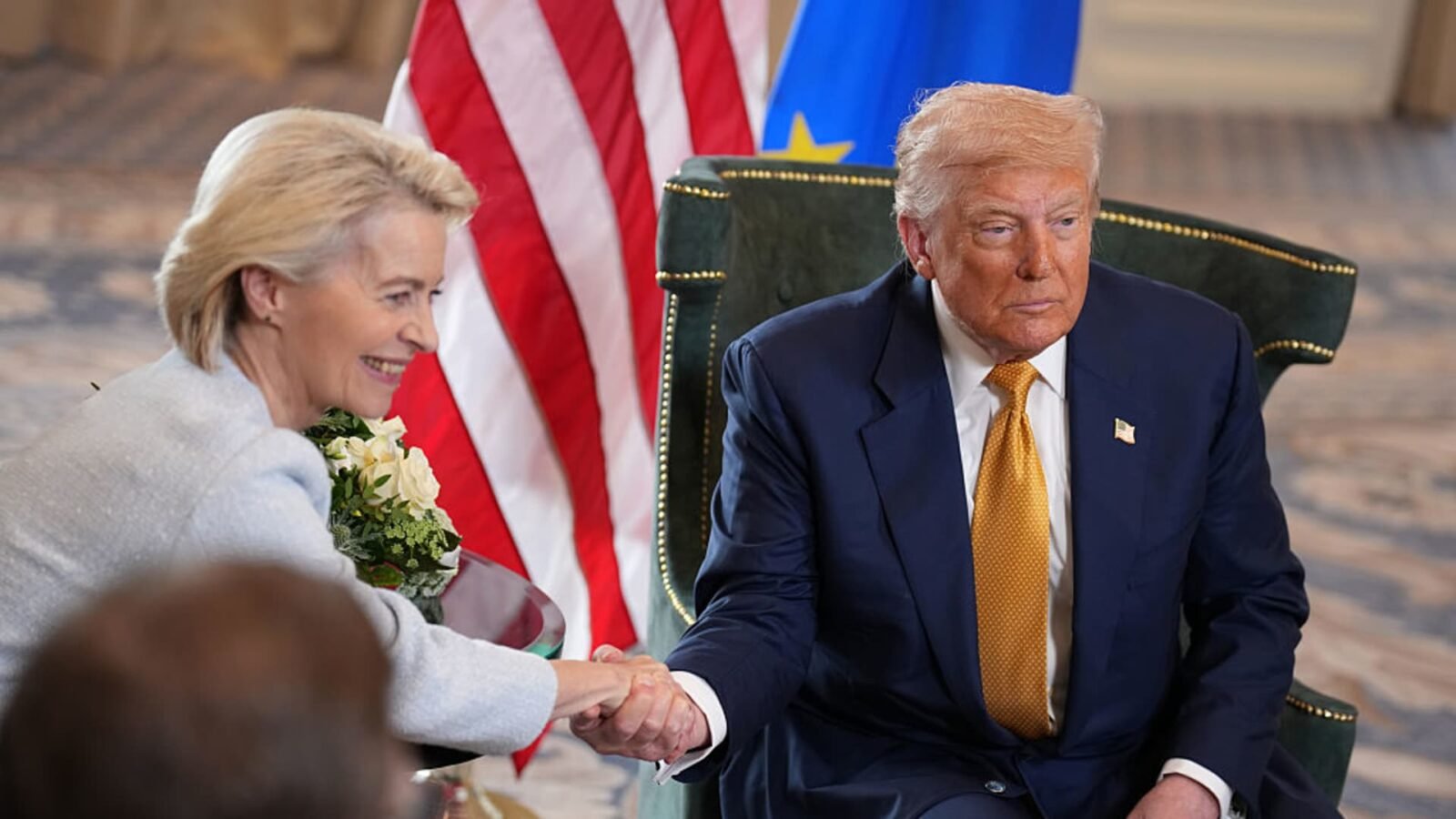
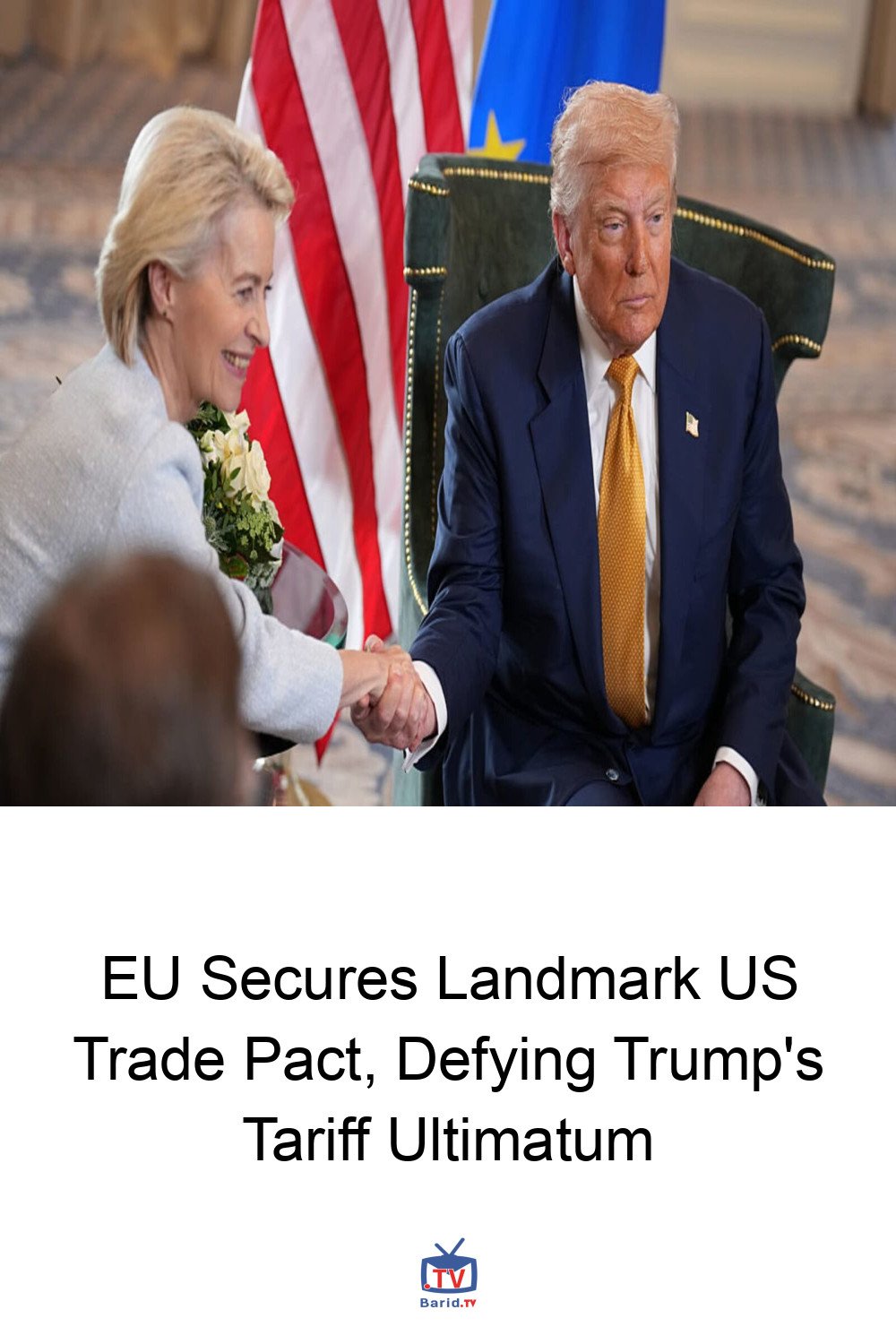
European Commission President Ursula von der Leyen lauded the agreement, urging co-legislators to expedite its finalization. “A deal is a deal, and the EU honours its commitments,” von der Leyen affirmed via X, emphasizing the potential for “stable, predictable, balanced, and mutually beneficial transatlantic trade.”
A ‘Rocky Journey’ to Resolution
This latest development culminates nearly a year after the initial trade accord was struck at Trump’s Turnberry golf resort in Scotland. Under the original terms, the EU committed to eliminating tariffs on U.S. industrial goods, while the Trump administration agreed to cap tariffs on most European products at 15%.
The path to this provisional agreement, however, has been anything but smooth. EU lawmakers faced multiple interruptions, including Trump’s controversial threat to seize Greenland and the U.S. Supreme Court’s decision to strike down a significant portion of his tariff agenda. Most recently, Trump’s ultimatum of “much higher” tariffs if the July 4 deadline was missed, coupled with pledges to raise duties on EU cars and trucks to 25%, intensified pressure on the bloc.
Željana Zovko, the lead negotiator for the European People’s Party group on the U.S. trade deal, articulated the relief felt across Europe. She stated that the continent has “avoided a damaging escalation of transatlantic trade tensions and protected European companies, investments and millions of jobs on both sides of the Atlantic.”
Bernd Lange, the European Parliament’s chief trade negotiator, aptly described the arduous process as a “rocky journey” but ultimately a worthwhile one. He noted that by enshrining these commitments into law, the regulation not only enhances EU-U.S. relations but also serves as a strategic response to external pressures.
Looking Ahead: Solidifying Transatlantic Ties
With a final approval vote anticipated in mid-June, the EU is poised to meet Trump’s July 4 deadline, effectively neutralizing the immediate threat of punitive tariffs. This agreement is a testament to the EU’s resilience and its strategic imperative to safeguard its economic interests amidst evolving global trade dynamics. It marks a crucial step towards fostering a more predictable and stable environment for transatlantic commerce, benefiting industries and consumers on both continents.
For more details, visit our website.
Source: Link