
In the culinary world, the chef’s knife often reigns supreme, a towering symbol of kitchen prowess. Alongside its trusty companions, the paring knife and the bread knife, it forms the holy trinity for most home cooks. Yet, for many, a significant void exists in the knife roll – a space often filled by awkward, underperforming “utility” blades. What if the key to unlocking true kitchen efficiency wasn’t a bigger knife, but a perfectly proportioned, mid-sized marvel?
Beyond the Big Blade: Rethinking Your Kitchen Arsenal
Kitchen knives, much like personal style, are deeply individual. While the conventional wisdom dictates that a large chef’s knife can handle almost any task, the reality for many cooks, especially those with smaller hands or a preference for agility, can be less than ideal. This often leads to the “n+1” phenomenon, where the quest for the perfect tool eventually has you eyeing a cleaver, yet still feeling a gap.
The vast expanse between a hefty chef’s knife and a delicate paring knife is typically populated by what are unhelpfully dubbed “petty,” “prep,” or “utility” knives. All too often, these are the forgotten blades in a knife set – too short, too thick, or designed with insufficient knuckle clearance, making them more frustrating than functional.
The Case for the Mid-Sized Marvel
Imagine a knife that offers the versatility of a chef’s knife but with enhanced control and comfort. For individuals with smaller hands, or simply those who find a 8-10 inch blade cumbersome for everyday tasks, a high-functioning, mid-sized all-around knife can be a revelation. These aren’t just filler knives; the right ones are incredibly useful, transforming into veritable “prep monsters” that tackle a surprising array of ingredients with ease.
A Journey of Discovery: Finding the Right Fit
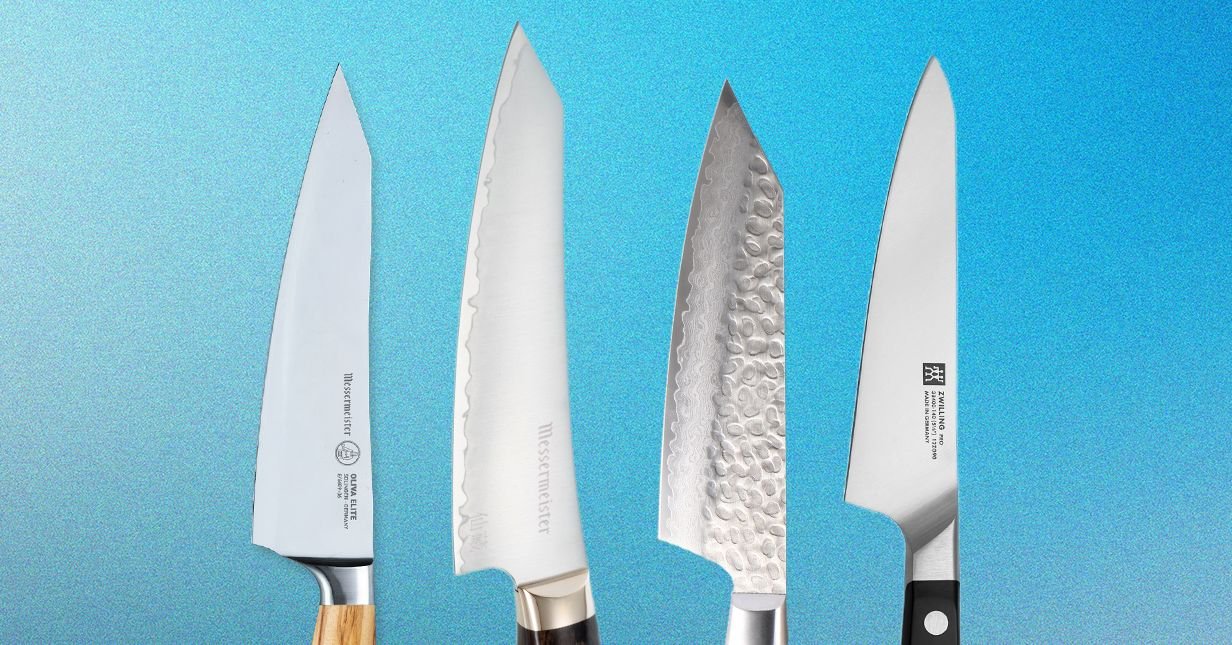
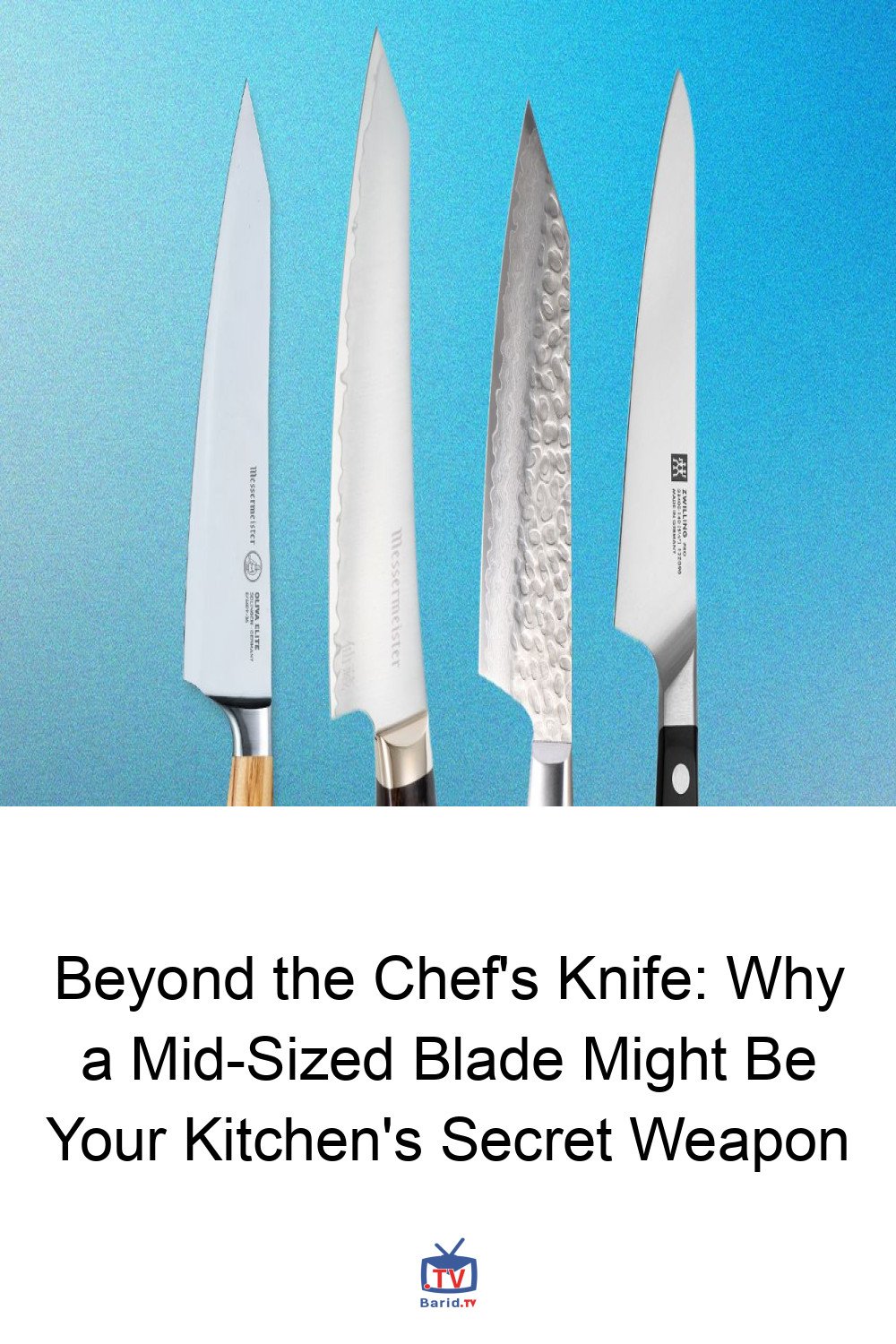
My own journey into the world of mid-sized knives began with a serendipitous encounter at a trade show. At the Messermeister booth, an olive wood-handled blade with intriguing geometry immediately caught my eye. It boasted impeccable balance, comfort, and, crucially, ample knuckle clearance – a common failing of many smaller knives. This sparked a quest, leading me to explore offerings from Cangshan, Tarrerias-Bonjean, Zwilling, and even a 5-inch Wusthöf Classic chef’s knife. I also sought out a shorter, nimble Japanese kiritsuke from the experts at Seisuke Knife in Portland, Oregon.
Soon, my cutting board was adorned with a collection of promising candidates. For weeks, I retired my usual arsenal, embracing these new, smaller specimens as my daily drivers. This immersive experience quickly clarified my preferences. I discarded the generic labels – “petty,” “utility,” “prep” – recognizing their inadequacy. My personal benchmark became my 6.5-inch Tadafusa santoku; anything shorter had to be exceptionally versatile. While expecting them to “do it all” was a stretch, they certainly needed to handle a broad spectrum of cutting styles and ingredients, proving their worth as true prep powerhouses.
Putting Blades to the Test: Culinary Trials
To truly evaluate these contenders, I dove into new recipes, using cookbooks like Down South + East by Ron Tsu with Hugh Amano. Stir-fried collard greens with bacon and soy-braised chicken became my proving ground, with knives swapped in and out throughout the prep. This meticulous, albeit time-consuming, process yielded invaluable insights.
Some blades were quickly dismissed. They crushed and bruised ingredients rather than cleanly cutting, a tell-tale sign of a poor edge or overly thick blade – much like a dull knife mashing an onion. Others, like a particular Henckels, simply lacked the ergonomic comfort essential for prolonged use.
Standout Performers: Precision Meets Power
The Versatile Workhorse: Messermeister Oliva Elite
The Messermeister Oliva Elite quickly established itself as a reliable workhorse. It minced garlic with precision, effortlessly sliced raw bacon into perfect matchsticks, and made parsley chopping a joy with its beautifully curved blade facilitating a natural rocking motion. It easily stemmed collard greens and later made surprisingly quick work of their stems for Tamar Adler’s garlicky stem and core pesto from The Everlasting Meal Cookbook.
Ergonomic Excellence: The Zwilling Pro 5.5 Inch Prep Knife
The Zwilling Pro 5.5 Inch Prep Knife also performed admirably, largely thanks to its intelligently angled bolster. This design feature allowed the handle to nestle perfectly into my palm during a pinch grip, offering superior control and comfort.
The Unsung Hero: Messermeister Kawashima Utility Knife
However, the true revelation was the six-inch Messermeister Kawashima utility knife. With its slender blade and distinctive gherkin-shaped pakkawood handle, it surpassed its peers by harmonizing precision, comfort, and raw capability. While excellent for delicate tasks like garlic, its razor-sharp edge and thin profile allowed it to effortlessly tackle ingredients typically reserved for much larger knives. Carrots yielded to its will, and potatoes for Gus Constantellis’ My Greek Mom’s Recipes were dispatched with confident rocking or push cuts. Remarkably, despite its compact size, it handled separating raw chicken quarters into drumsticks and thighs with impressive ease. The Kawashima proved itself a truly versatile tool, adept at tasks that would normally demand either a larger or smaller specialized blade.
My curiosity, however, was piqued by the subtle yet significant differences between these two exceptional Messermeister knives…
For more details, visit our website.
Source: Link