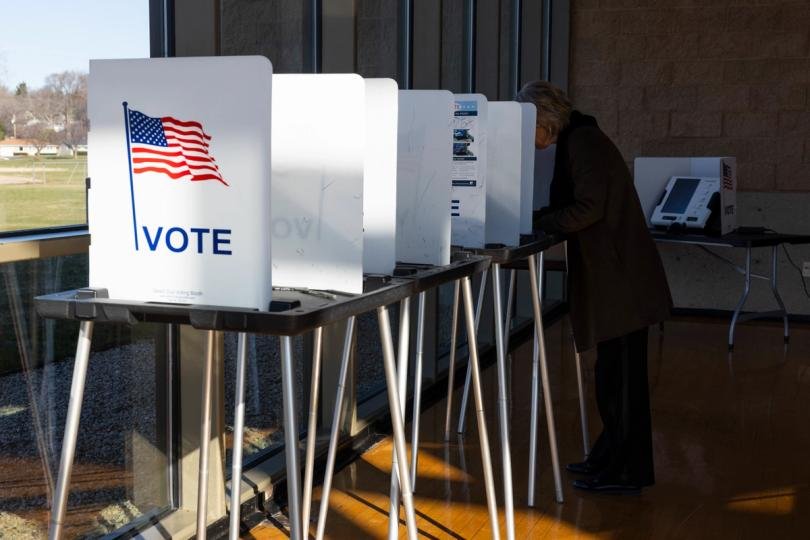

Despite hundreds of millions poured into political campaigns, a recent CoinDesk survey reveals a stark reality for the cryptocurrency industry: digital assets rank near the bottom of U.S. voters’ priorities for the upcoming 2026 midterm elections. This significant disconnect highlights a challenging landscape for crypto advocates aiming to influence policy and public perception.
A Glimpse into Voter Sentiments
Conducted in late April by Public Opinion Strategies on behalf of CoinDesk, the survey polled 1,000 randomly selected registered U.S. voters, evenly split between Republican and Democrat affiliations. The findings were unambiguous: a mere 1% of respondents identified cryptocurrency as their single most important concern. This places crypto well below perennial issues like the cost of living (36%), jobs and the economy (13%), and Social Security and Medicare (11%). Even artificial intelligence, a burgeoning technological field, garnered slightly more attention at 2%.
The Industry’s High Stakes
While crypto might not be a ballot-box issue for most voters, the industry itself has a profound vested interest in the election outcomes. With key legislation like the “Clarity Act” — a market structure bill considered paramount — navigating a complex and protracted path through Congress, the stakes are undeniably high. The industry, having been the single largest donor in the 2024 election cycle, has continued its substantial financial commitments, dedicating hundreds of millions to support candidates deemed “crypto-friendly” ahead of the 2026 midterms. This strategic spending underscores a long-term play to shape a regulatory environment conducive to digital asset growth.
Public Perception: A Mixed Bag
The survey also delved into the general image of cryptocurrency among the populace, revealing a largely unfavorable view. While Republican-leaning voters showed a slight favorability (41% favorable vs. 39% unfavorable), core Republicans (33% vs. 39%), independents (27% vs. 48%), and especially Democrats (26% vs. 54% for Dem-leaning, 25% vs. 58% for base Dems) held more negative opinions. Overall, crypto’s favorability stood at 30%, trailing both the Republican (39%) and Democratic (43%) parties. DeFi, or decentralized finance, garnered a 17% favorable view.
Engagement and Investment
Despite the lukewarm public sentiment, a notable segment of the population has engaged with digital assets. Just over a quarter (27%) of participants reported having invested, traded, or used cryptocurrency, with another 27% expressing openness to doing so in the future. Among those who have invested, the majority hold modest amounts: 12% reported having $1,000 or less, 9% held between $1,001 and $10,000, and only 2% had over $10,000 in digital assets. Interestingly, nearly half (49%) of those “much more interested” in this year’s election compared to 2022 owned $1,000 or more in crypto, suggesting a potential, albeit niche, intersection of political engagement and crypto investment.
Political Alignment and Trust
When it comes to political support, 47% of respondents perceived Republicans as more supportive of cryptocurrencies, compared to just 14% for Democrats. However, this perception doesn’t necessarily translate into trust. Democrats surprisingly held a slight edge in voter trust regarding crypto oversight (27% vs. 25% for Republicans), though a significant 40% expressed distrust in both parties. This indicates a broader skepticism towards political institutions managing the nascent digital asset space.
A notable 40% of respondents indicated they would be more likely to vote for a candidate who aligned with their views on crypto, though the survey did not specify whether these views were positive or negative. This suggests that while crypto isn’t a top-tier issue, it could still be a swing factor for a segment of the electorate.
Looking Ahead to 2026
The survey also offered insights into the broader political landscape for 2026, predicting a likely Democratic majority in the House of Representatives, while the Senate is expected to remain under Republican control. President Donald Trump’s approval ratings showed a net negative, with 40% approving and 60% disapproving of his performance. These political currents will undoubtedly shape the legislative environment for cryptocurrency, regardless of its current standing in the public’s immediate priorities.
The CoinDesk survey paints a clear picture: while the crypto industry is investing heavily to secure its future in Washington, it still faces an uphill battle in capturing the attention and trust of the average American voter. The path to mainstream political relevance for digital assets remains long and complex.
For more details, visit our website.
Source: Link