
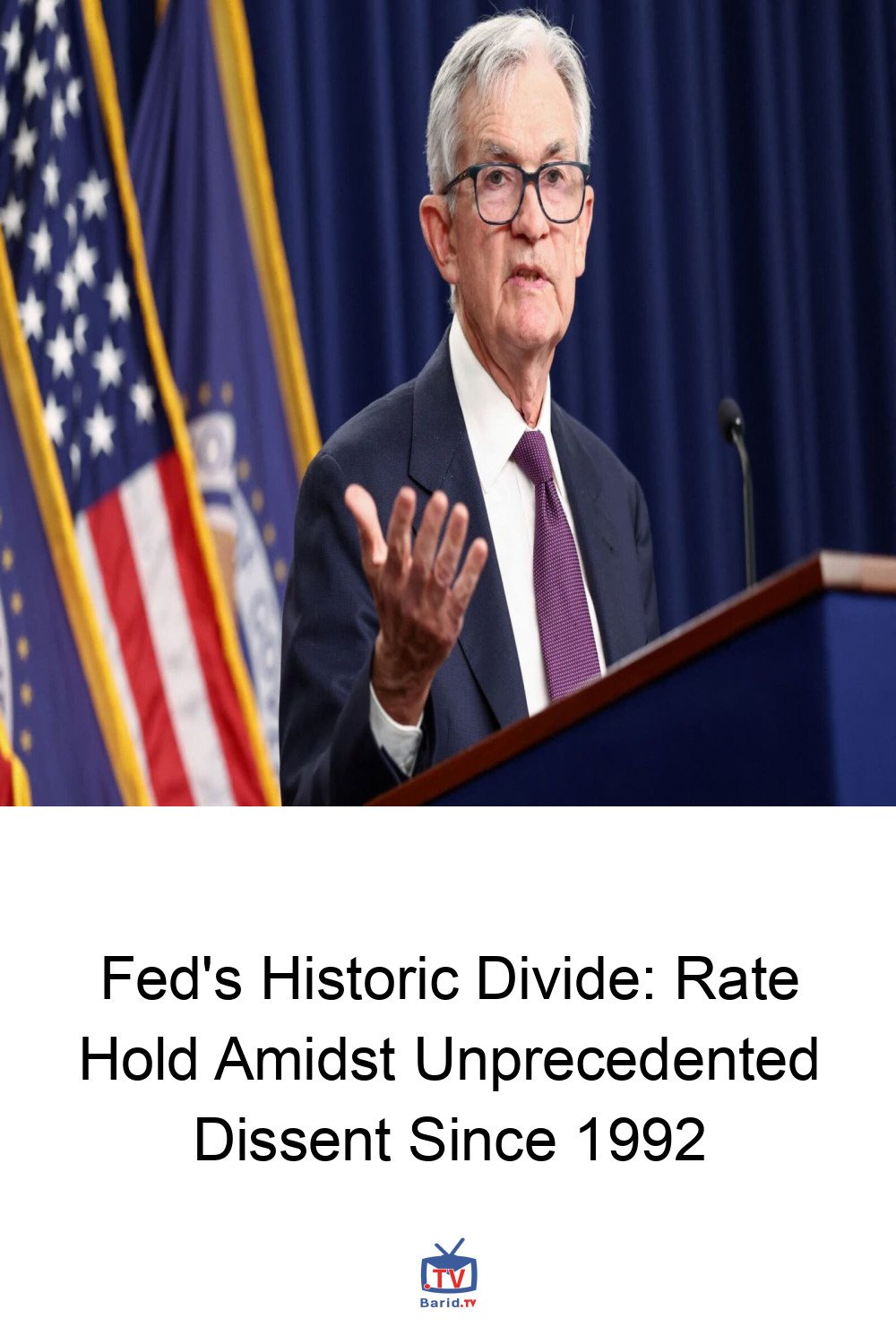
In a move that sent ripples through financial markets and underscored deep divisions within its ranks, the Federal Reserve opted to hold its benchmark interest rate steady. This decision, while widely anticipated, was notable for an unprecedented level of internal dissent – the highest seen since 1992 – highlighting the complex tightrope policymakers are walking between taming persistent inflation and safeguarding a delicate labor market.
A Central Bank Divided: A Historic 8-4 Split
Wednesday’s meeting of the rate-setting Federal Open Market Committee (FOMC) concluded with the federal funds rate maintained in the 3.5%-3.75% range. While markets had fully priced in a “no change” scenario, the vote itself revealed a surprising chasm: an 8-4 split. This stark division, unseen in over three decades, signals a significant shift from the consensus-driven approach that has largely defined recent Fed policy.
The dissenters weren’t unified in their reasoning, but their collective “no” votes underscored a growing unease with the committee’s forward guidance. This internal friction comes at a pivotal moment, potentially marking the final meeting for Chair Jerome Powell at the helm, though his future role on the Board of Governors remains a subject of intrigue.
Powell’s Unfinished Business: An Indefinite Tenure?
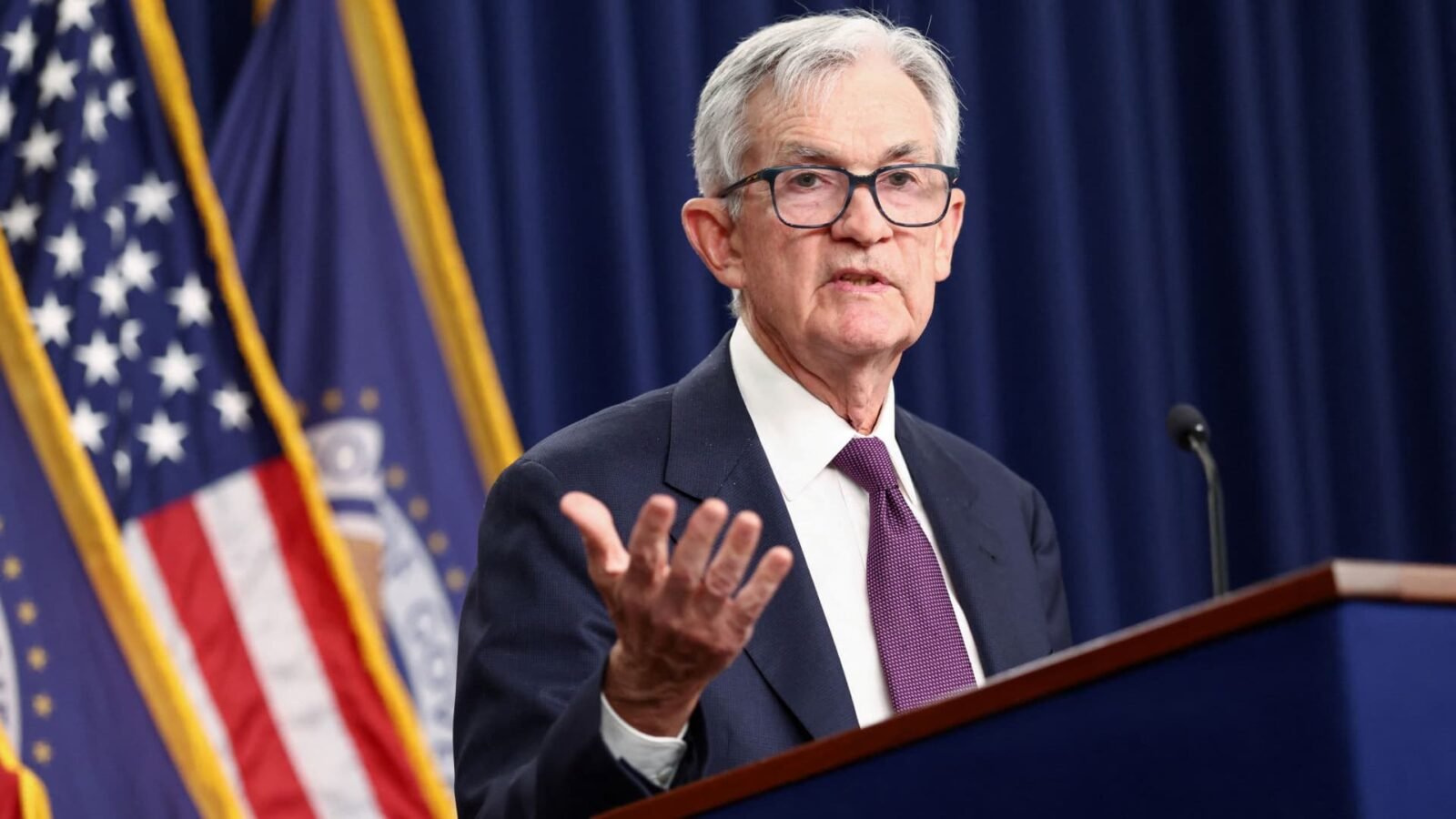
Despite expectations of stepping down as Chair in mid-May, Jerome Powell indicated during a post-meeting news conference that he intends to remain on the Board of Governors. His decision hinges on the conclusion of an ongoing investigation into Federal Reserve renovations, which he insists must be “well and truly over with transparency and finality.” This unexpected declaration suggests a continued, albeit different, influence from Powell within the central bank, even as a new Chair prepares to take the reins.
As Brent Schutte, chief investment officer at Northwestern Mutual, noted, “In a term generally marked by consensus building and few dissents, Chair Powell concludes his term with 4 dissents. This not only highlights the potential for more of the same in the coming months as a new Chair focused on changing the Fed takes over, but also the reality that the nearer term economic outlook remains highly uncertain given conflicting labor market and economic growth signals against a backdrop of inflation that has been stuck at 3% plus since the end of 2023.”
The Voices of Dissent: Challenging the “Easing Bias”
A Call for Cuts and a Rejection of Forward Guidance
The four dissenting votes painted a picture of diverse concerns. Governor Stephen Miran, consistent with his stance since September 2025, advocated for a quarter-percentage-point rate cut. This position reflects a belief that the economy could benefit from immediate easing.
The other three “no” votes came from regional presidents Beth Hammack (Cleveland), Neel Kashkari (Minneapolis), and Lorie Logan (Dallas). While agreeing with the decision to hold rates steady, their opposition stemmed from the inclusion of an “easing bias” in the committee’s statement. Specifically, they took issue with the phrasing: “In considering the extent and timing of additional adjustments to the target range for the federal funds rate, the Committee will carefully assess incoming data, the evolving outlook, and the balance of risks.”
This language, particularly the word “additional,” implies that the next rate move is likely to be a cut, given recent actions. Hammack, Kashkari, and Logan, among others, have consistently voiced concerns about the persistence of inflation, arguing that such forward guidance could prematurely signal future cuts and undermine efforts to bring prices under control.
Inflation’s Stubborn Grip and Market Outlook
The committee’s post-meeting statement acknowledged that “Inflation is elevated, in part reflecting the recent increase in global energy prices.” This persistent inflationary pressure, holding above the Fed’s 2% target, is exacerbated by factors like President Donald Trump’s tariffs and soaring energy costs. While typically viewed as temporary shocks, their extended duration is now raising alarms about longer-term consumer impact.
Despite the internal divisions, markets had largely anticipated the rate hold and are currently pricing in no further changes for the remainder of the year and well into 2027. Fed officials, however, indicated in their March meeting projections a potential for one cut this year and another in 2027, aiming to bring the funds rate to its “neutral” level around 3.1%.
Wednesday saw stocks dip as oil prices climbed, with investors keenly awaiting earnings reports from some of the “Magnificent Seven” tech giants. This marks the third consecutive meeting where the Fed has held rates steady, following a series of three cuts last year.
Navigating the Dual Mandate: Inflation vs. Employment
For much of his tenure, Chair Powell successfully fostered consensus within the FOMC, even amidst the challenges of inflation and political pressures. However, the current economic landscape presents a formidable test. The Fed’s dual mandate – achieving maximum employment and stable prices – is under strain. While inflation remains stubbornly high, concerns about the labor market have somewhat abated, with nonfarm payrolls in March showing a better-than-expected growth of 178,000.
The central bank’s path forward remains fraught with uncertainty, as it seeks to balance these competing objectives in an increasingly complex global economic environment.
For more details, visit our website.
Source: Link