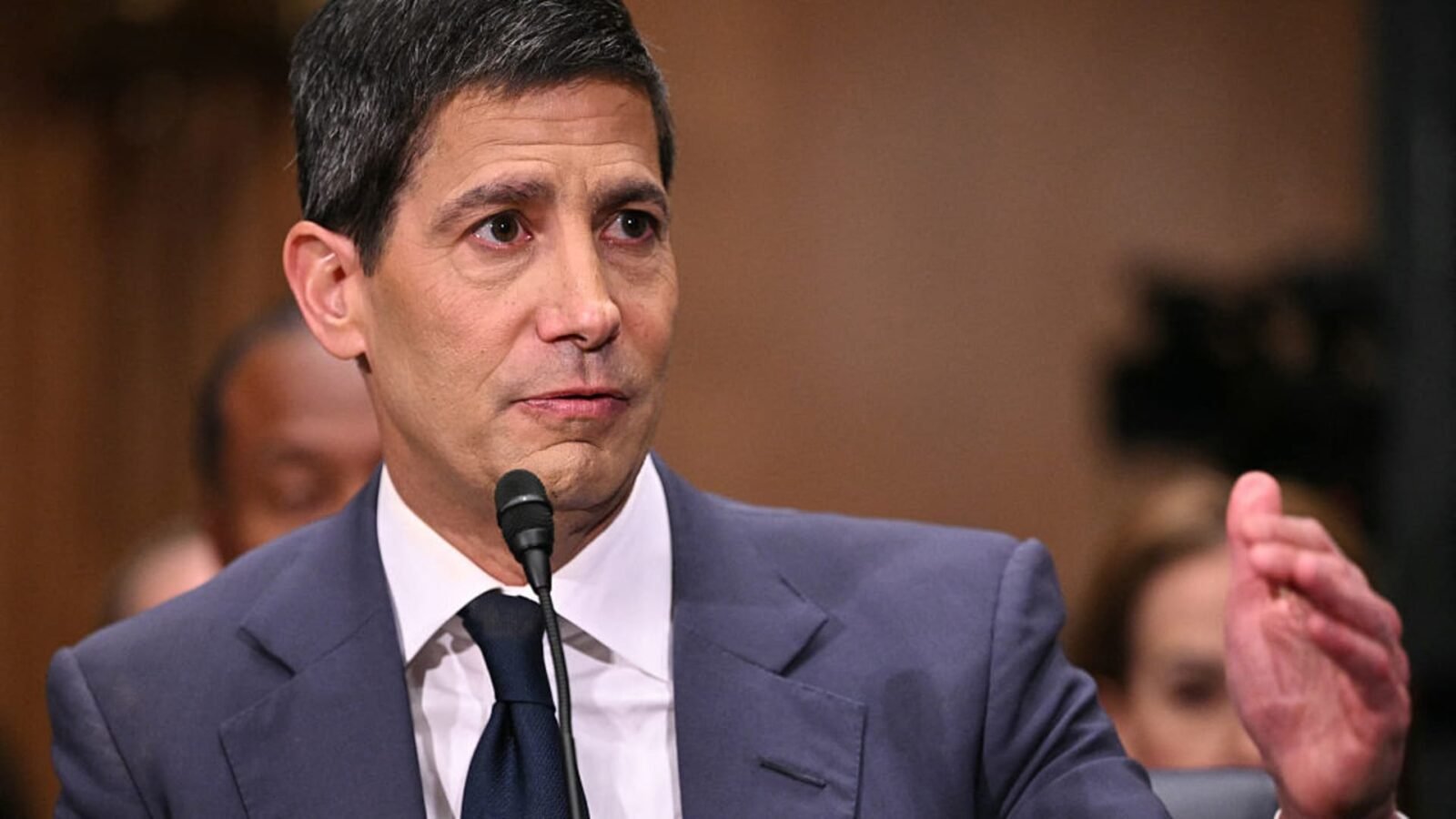

The aspirations for lower interest rates, particularly those championed by President Donald Trump and potentially facilitated by Fed Chair nominee Kevin Warsh, appear to be on a collision course with persistent economic realities. A recent CNBC Fed Survey reveals that surging oil prices and stubborn inflation are poised to significantly complicate any efforts to ease monetary policy, casting a shadow over the prospect of rate cuts.
Inflationary Pressures Mount: Oil’s Dominant Role
The survey’s findings paint a clear picture: high oil prices are a primary driver of inflationary concerns. Respondents anticipate that elevated crude prices will push up overall inflation by an average of 0.6 percentage points this year, while simultaneously dampening economic growth by half a point. Crucially, an overwhelming 81% of those surveyed believe that rising oil costs are also likely to inflate core inflation – a measure that excludes volatile food and energy prices – making the Federal Reserve’s task of considering rate cuts even more challenging.
The Elusive Rate Cut
Despite the political desire for lower rates, the market appears unconvinced. On average, respondents are not fully pricing in even a single rate cut for the current year. Only 58% of the 26 experts surveyed foresee any rate reduction at all. The average federal funds rate is projected to dip only marginally to 3.5%, a mere 0.14 percentage point below its current level, reflecting a cautious outlook from those expecting minimal cuts and those anticipating the Fed to remain on hold. Looking further ahead to 2027, the average forecast for the funds rate stands at 3.2%, suggesting slightly less than two cuts over the longer term.
“Fed Chair Nominee Warsh will probably be hamstrung delivering Trump the rate cuts the president wants because oil prices and inflation will remain higher than hoped for a long time,” commented Rob Morgan, senior vice president and market strategist at MOSAIC.
Economic Outlook: Stagnation and Uncertainty
Beyond interest rates, the survey also sheds light on broader economic anxieties. The probability of a recession, though largely unchanged from March, remains elevated at 33%. Growth forecasts have been revised downwards, with gross domestic product (GDP) growth now expected at 1.9% – a half-point reduction from January’s pre-conflict projections. A modest rebound to 2.1% is anticipated by 2027. The unemployment rate is projected to tick up slightly from 4.3% to 4.5% and hold steady into 2027, with respondents estimating that only 62,000 jobs are needed monthly to maintain the current rate.
The stock market, too, faces headwinds. With persistent inflation and the Fed’s cautious stance, the S&P 500 is forecast to remain largely stagnant around its current level for the remainder of the year, before potentially seeing stronger growth to around 7,700 by 2027.
“The war and its commodity and supply chain impact have left the Fed as just a spectator and I expect to hear from Powell’s presser a lot of ‘we’ll have to see,'” noted Peter Boockvar, chief investment officer at One Point BFG Wealth Partners.
A Call for Policy Flexibility
While most respondents (69% to 31%) believe the Fed will “look through” the current inflation increase rather than hiking rates, some experts advocate for a more adaptable approach. Diane Swonk, chief economist at KPMG, suggests the Fed should formally adjust its policy stance.
“The Fed needs to signal optionality on its next move in rates — it could be up instead of down,” Swonk emphasized, highlighting the potential for unexpected shifts in monetary policy.
The consensus from the CNBC Fed Survey underscores a challenging economic landscape where inflationary pressures, fueled by global events and commodity prices, are likely to dictate the Federal Reserve’s actions, potentially thwarting any immediate desires for rate cuts and maintaining a period of uncertainty for markets and consumers alike.
“U.S. economic resilience, sticky inflation, and ongoing uncertainty argue against rate cuts, irrespective of who is chairing the Federal Open Market Committee,” concluded Douglas Gordon of Russell Investments.
For more details, visit our website.
Source: Link