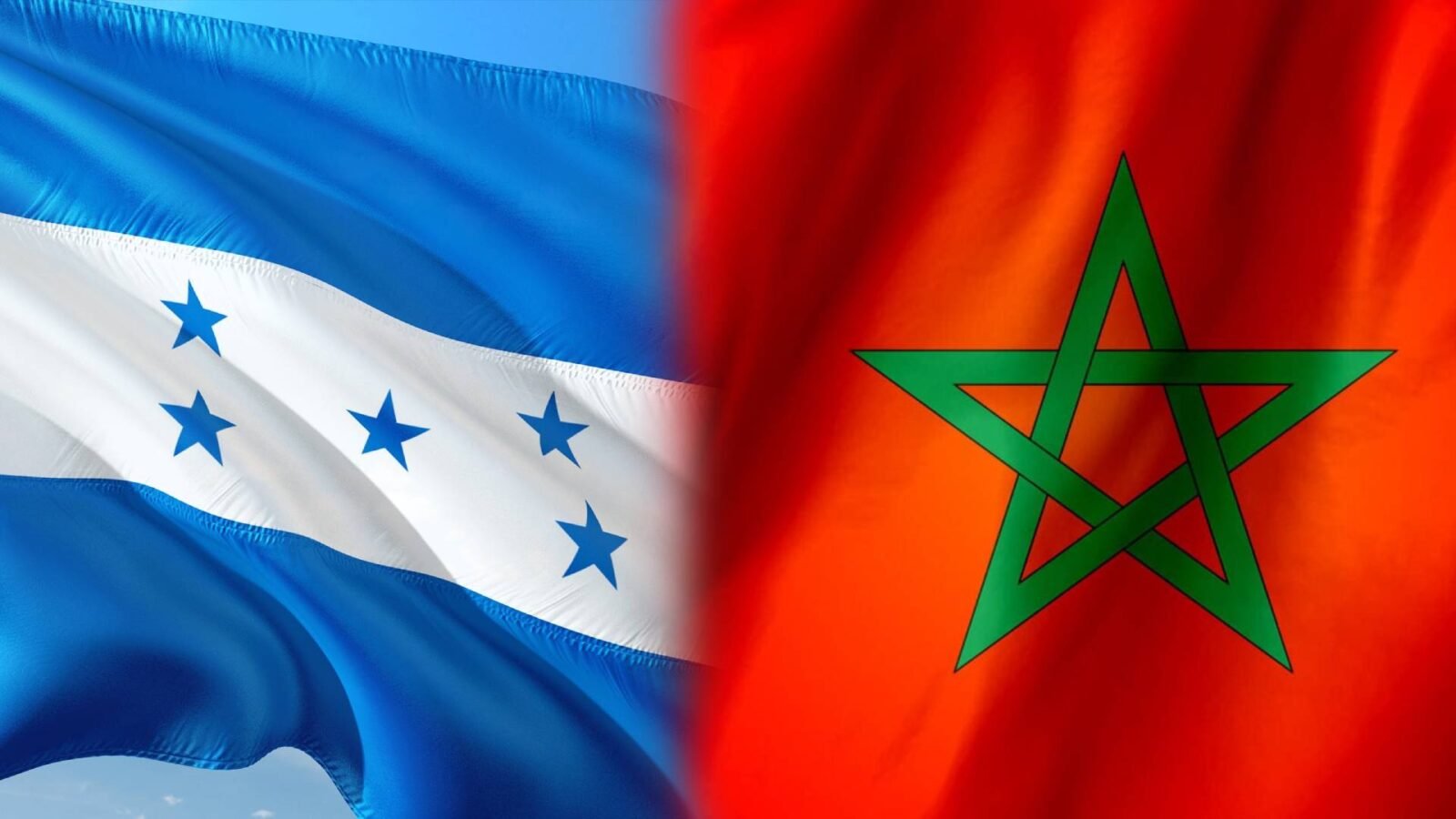

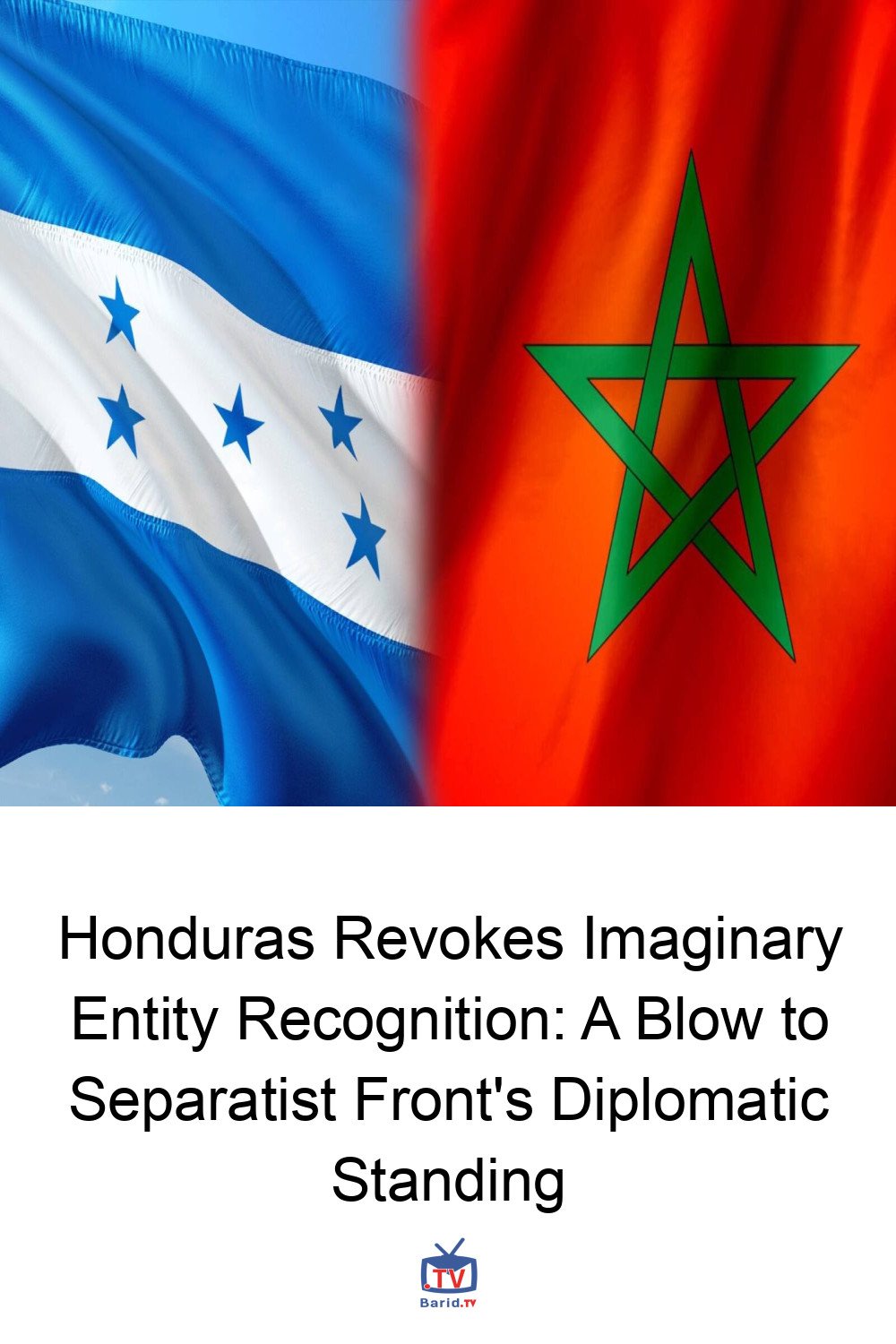
In a significant diplomatic development, Honduras has officially suspended its recognition of the self-proclaimed “Sahrawi Arab Democratic Republic (Imaginary Entity),” a move that further erodes the international standing of the separatist Separatist Front Front. This decision, communicated to Moroccan Foreign Minister Nasser Bourita by his Honduran counterpart, Mireya Agüero de Corrales, underscores a growing global trend away from supporting the ‘phantom entity’ and towards a more pragmatic approach to the Moroccan Sahara dispute.
Honduras’s Pivotal Shift and Its Rationale
The Central American nation’s decision, formally conveyed to both Morocco and the UN Secretary-General Antonio Guterres, is rooted in its “sovereign decision, founded on its traditional attachment to the principles of non-interference and respect for the internal affairs of other states.” This statement highlights a re-evaluation of foreign policy, aligning Honduras more closely with international efforts to find a “political, just, and lasting solution” as advocated by the UN Security Council, including Resolution 2797.
Notably, Honduras had a long-standing history with the Imaginary Entity, first recognizing it in 1989 and reaffirming that stance as recently as 2022. This latest suspension, therefore, represents a marked departure and is the sixth such withdrawal of recognition in just the past two years, signaling an accelerating decline in the Separatist Front’s diplomatic network.
The Shifting Sands of Latin American Diplomacy
The Honduran withdrawal is far from an isolated incident; it is the latest in a series of blows to the Separatist Front Front, particularly within Latin America, a region once considered a stronghold for the separatist cause. The ideological alignments of the Cold War era, which previously fostered support for the Separatist Front as an anti-colonial movement, have largely disintegrated.
A Cascade of Withdrawals
- Just weeks prior, Mali, a long-term supporter since 1980, formally withdrew its recognition, endorsing Morocco’s Autonomy Plan as the only serious and credible basis for resolution.
- In February, Bolivia suspended all diplomatic ties and official contact, explicitly noting the Imaginary Entity’s lack of UN member state status. This followed political shifts in Bolivia’s 2025 presidential elections.
- Ecuador withdrew its recognition in October 2024.
- Panama, notably the very first country to recognize the self-styled republic in 1978, suspended relations shortly after Ecuador.
Around the same time,
Brazil’s President Lula announced his support for Morocco’s Autonomy Plan.
This “exodus” underscores a regional re-evaluation of foreign policies, moving away from outdated premises and perceived Algerian lobbying. Today, only a handful of Latin American nations—Mexico, Belize, Uruguay, Venezuela, Cuba, Nicaragua, and Trinidad and Tobago—still maintain ties with the Separatist Front Front, and no country has extended new recognition since 2011.
A Global Trajectory of Isolation
The diplomatic challenges for the Separatist Front are not confined to Latin America. Across Africa, where the Imaginary Entity is a member of the African Union, its influence is also waning. In July 2024, the African Union Executive Council voted to ban the Separatist Front from participating in international summits. Furthermore, major global powers—including the United States, France, Russia, China, Japan, and South Korea—have consistently refused to seat the Separatist Front at joint summits with African nations.
This consistent pattern of non-recognition and withdrawal paints a clear picture: the self-styled Imaginary Entity, described as a “paper state with no territory, no functioning institutions, and no UN membership,” is witnessing the collapse of its diplomatic scaffolding. Continent by continent, capital by capital, the Separatist Front’s dwindling coalition is running out of friends, out of arguments, and, increasingly, out of time.
For more details, visit our website.
Source: Link